

I’ve been seeing more and more articles in applied linguistics that use clustering techniques to identify subgroups (“profiles”, “classes”, “types”) of language learners on the basis of cognitive test or questionnaire data. Often, the learners are then classified into clusters, and cluster membership is used as a predictor of an outcome such as performance on a language test. I have yet to see a study in applied linguistics that convinces me that identifying and interpreting learner clusters adds value over treating learner differences as continuous. I’ll explain why that is.
How linguistics learned to stop worrying and love the language models
Language models (LMs) can produce fluent, grammatical text. Nonetheless, some maintain that language models don’t really learn language and also, even if they did, that would not be informative for the study of human learning and processing. On the other side, there have been claims that the success of LMs obviates the need for studying linguistic theory and structure. We argue that both extremes are wrong. LMs can contribute to fundamental questions about linguistic structure, language processing, and learning. They force us to rethink arguments and ways of thinking that have been foundational in linguistics. While they do not replace linguistic structure and theory, they serve as model systems and working proofs of concept for gradient, usage-based approaches to language. We offer an optimistic take on the relationship between language models and linguistics.

I saw this meta-analysis shared a couple of times recently, so we took a look and re-analyzed the data. | František Bartoš
I saw this meta-analysis shared a couple of times recently, so we took a look and re-analyzed the data. We found that the conclusion is almost entirely driven by publication bias. Both state-of-the-art and standard methods reduce the degree of the effect 2-3 fold. Moreover, the data no longer show statistical evidence for the main conclusions. Importantly, our findings do not imply that there is no positive effect of ChatGPT, or other large language models on learning; in fact, our analysis reveals that there is “absence of evidence” rather than “evidence of absence”. The present literature appears to be contaminated by publication bias; high-quality registered reports are needed to properly evaluate the effect of large language models in educational settings. See the full response just submitted for publication at https://lnkd.in/eGKHHKtg

The homogenizing effect of large language models on human expression and thought
AbstractCognitive diversity, reflected in variations of language, perspective, and reasoning, is essential to creativity and collective intelligence. This diversity is rich and grounded in culture, history, and individual experience. Yet, as large language models (LLMs) become deeply embedded in people's lives, they risk standardizing language and reasoning. We synthesize evidence across linguistics, psychology, cognitive science, and computer science to show how LLMs reflect and reinforce dominant styles while marginalizing alternative voices and reasoning strategies. We examine how their design and widespread use contribute to this effect by mirroring patterns in their training data and amplifying convergence as all people increasingly rely on the same models across contexts. Unchecked, this homogenization risks flattening the cognitive landscapes that drive collective intelligence and adaptability.

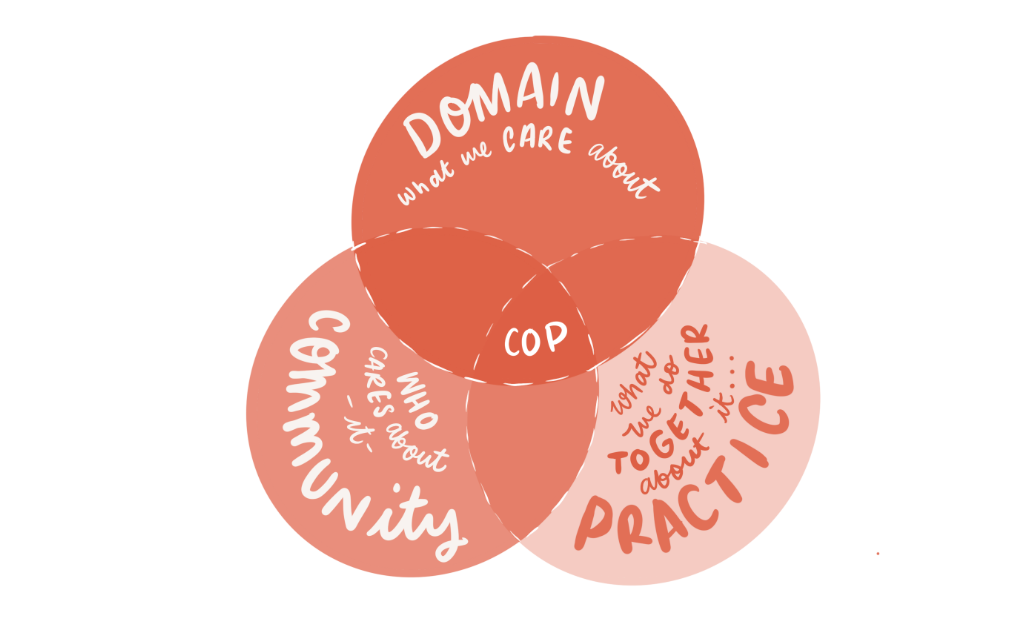
Wait… whats a Community of Practice?
“Learning is not merely the acquisition of knowledge by individuals. It is a process of social participation.” A slightly bastardised…
How Learning Happens | Seminal Works in Educational Psychology and Wha
How Learning Happens introduces 28 giants of educational research and their findings on how we learn and what we need to learn effectively, efficiently, and

Introducing Nested Learning: A new ML paradigm for continual learning
Ali Behrouz, Student Researcher, and Vahab Mirrokni, VP and Google Fellow, Google Research

The homogenizing effect of large language models on human expression and thought
Cognitive diversity, reflected in variations of language, perspective, and reasoning, is essential to creativity and collective intelligence. This diversity is rich and grounded in culture, history, and individual experience. Yet, as large language models (LLMs) become deeply embedded in people’s lives, they risk standardizing language and reasoning. We synthesize evidence across linguistics, psychology, cognitive science, and computer science to show how LLMs reflect and reinforce dominant styles while marginalizing alternative voices and reasoning strategies. We examine how their design and widespread use contribute to this effect by mirroring patterns in their training data and amplifying convergence as all people increasingly rely on the same models across contexts. Unchecked, this homogenization risks flattening the cognitive landscapes that drive collective intelligence and adaptability.
The homogenizing effect of large language models on human expression and thought
Cognitive diversity, reflected in variations of language, perspective, and reasoning, is essential to creativity and collective intelligence. This diversity is rich and grounded in culture, history, and individual experience. Yet, as large language models (LLMs) become deeply embedded in people’s lives, they risk standardizing language and reasoning. We synthesize evidence across linguistics, psychology, cognitive science, and computer science to show how LLMs reflect and reinforce dominant styles while marginalizing alternative voices and reasoning strategies. We examine how their design and widespread use contribute to this effect by mirroring patterns in their training data and amplifying convergence as all people increasingly rely on the same models across contexts. Unchecked, this homogenization risks flattening the cognitive landscapes that drive collective intelligence and adaptability.
Learning how to behave: cognitive learning processes account for asymmetries in adaptation to social norms
Changes to social settings caused by migration, cultural change or pandemics force us to adapt to new social norms. Social norms provide groups of individuals with behavioural prescriptions and therefore can be inferred by observing their behaviour. This work aims to examine how cognitive learning processes affect adaptation and learning of new social norms. Using a multiplayer game, I found that participants initially complied with various social norms exhibited by the behaviour of bot-players. After gaining experience with one norm, adaptation to a new norm was observed in all cases but one, where an active-harm norm was resistant to adaptation. Using computational learning models, I found that active behaviours were learned faster than omissions, and harmful behaviours were more readily attributed to all group members than beneficial behaviours. These results provide a cognitive foundation for learning and adaptation to descriptive norms and can inform future investigations of group-level learning and cross-cultural adaptation.

Hypothesis | The #1 Social Annotation Tool for Higher Education
Hypothesis is the leading social annotation platform trusted by 300+ institutions to boost student engagement, comprehension, and critical thinking — seamlessly integrated into your LMS.

Extracting Training Data from Large Language Models
Nicholas Carlini, Google; Florian Tramèr, Stanford University; Eric Wallace, UC Berkeley; Matthew Jagielski, Northeastern University; Ariel Herbert-Voss, OpenAI and Harvard University; Katherine Lee and Adam Roberts, Google; Tom Brown, OpenAI; Dawn Song, UC Berkeley; Úlfar Erlingsson, Apple; Alina Oprea, Northeastern University; Colin Raffel, Google
judge — mino.mobi
Topics, emotional valence, and Big Five personality traits — extracted from embedding geometry. One model, no LLM, just cosine distances to anchor texts and k-means clustering. What your posting reveals.
What Makes a Concept Good? A Criterial Framework for Understanding Concept Formation in the Social Sciences
Nowhere in the broad and heterogeneous work on concept formation has the question of conceptual utility been satisfactorily addressed. Goodness in concept formation, I argue, cannot be reduced to 'clarity,' to empirical or theoretical relevance, to a set of rules, or to the methodology particular to a given study. Rather, I argue that conceptual adequacy should be perceived as an attempt to respond to a standard set of criteria, whose demands are felt in the formation and use of all social science concepts: (1) familiarity, (2) resonance, (3) parsimony, (4) coherence, (5) differentiation, (6) depth, (7) theoretical utility, and (8) field utility. The significance of this study is to be found not simply in answering this important question, but also in providing a complete and reasonably concise framework for explaining the process of concept formation within the social sciences. Rather than conceiving of concept formation as a method (with a fixed set of rules and a definite outcome), I view it as a highly variable process involving trade-offs among these eight demands.
There is something to @benjaminjriley.bsky.social 's ways educators see the "science of learning". I think the SoL is a term more popular in the US. This post could have been the same in the UK as a way educators talk about "cognitive science". buildcognitiveresonance.substack.com/p/the-science-of-learning-tax…

The Science of Learning Taxonomy
buildcognitiveresonance.substack.comCollective Intelligence Research

Explorations into the idea that a group of humans is "more intelligent" than the sum of their "IQ" (i.e. "groups of individuals doing things collectively that seem intelligent")
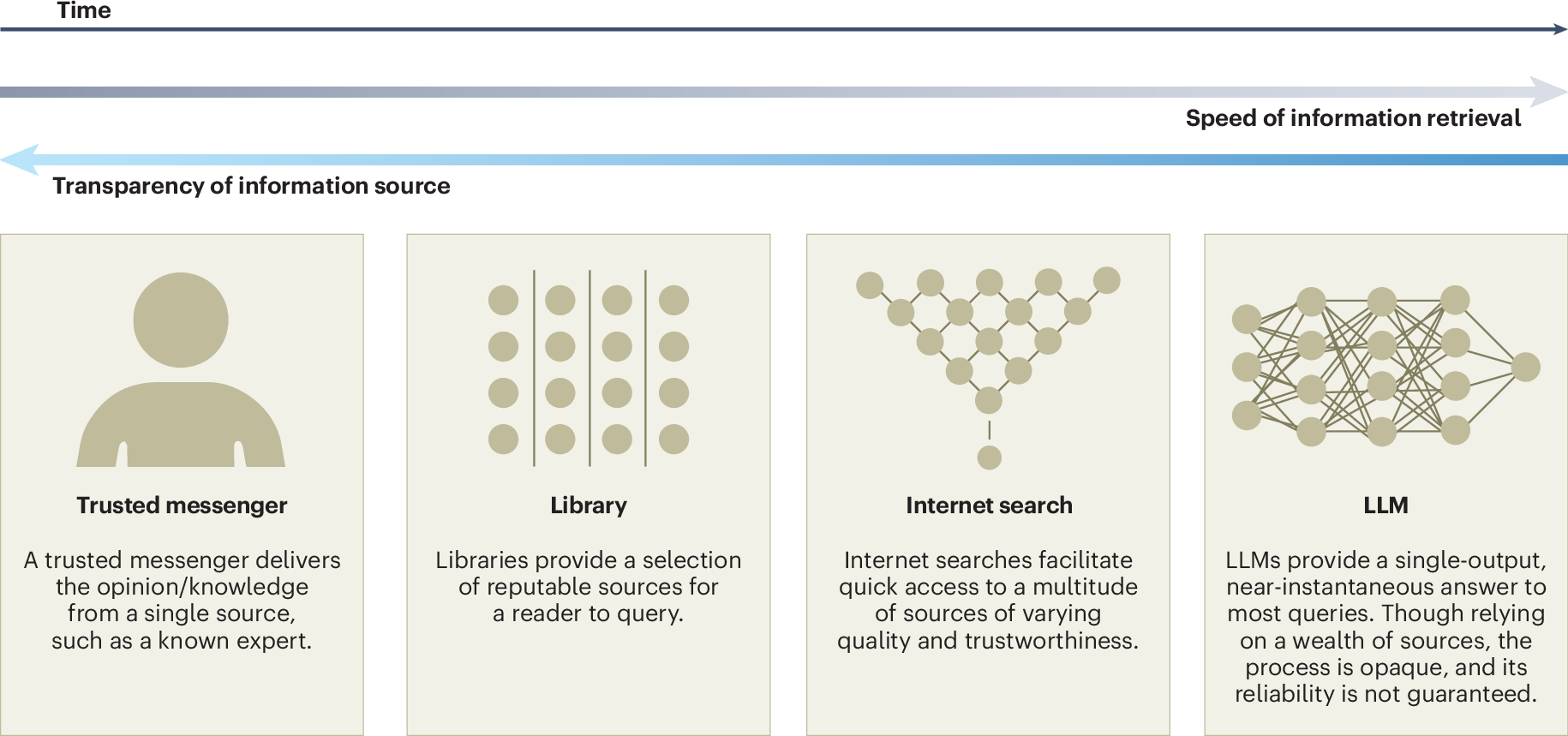
How large language models can reshape collective intelligence

Sharing Notes about Collective Intelligence — Pop Junctions

Socially Minded Intelligence: How Individuals, Groups, and Artificial Intelligence Can Make Each Other Smarter (or Not)

Profile: Adrien Treuille

NOVA | The Wisdom of the Crowds | Season 45 | Episode 6
Mapping Citizen Science through the Lens of Human-Centered AI
