


A framework for skillful decision-making under turbulent conditions.
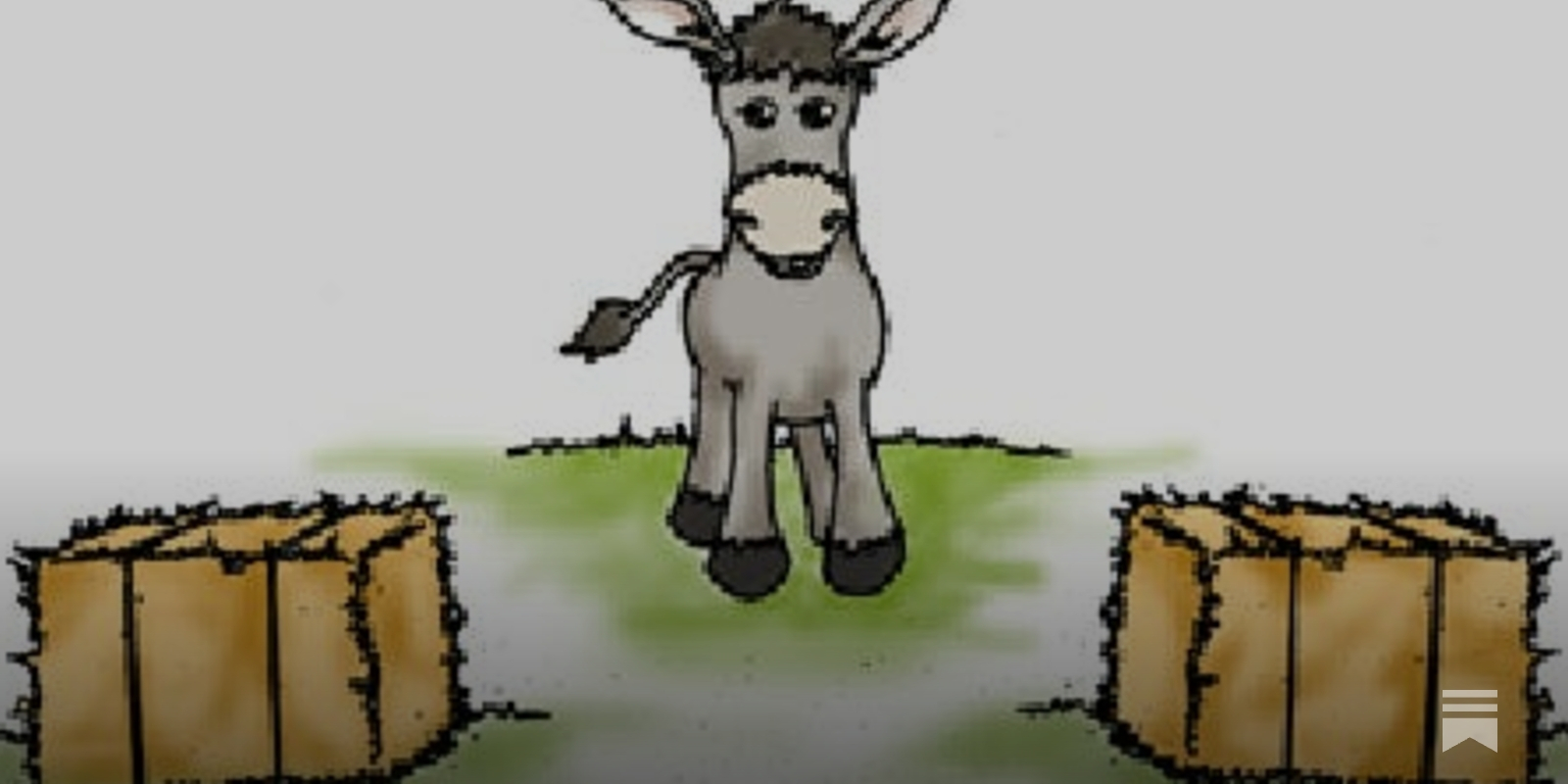
People Spend Too Much Time On Decisions with Equally Satisfying Outcomes
The pitfalls of analysis paralysis
People Reject Algorithms in Uncertain Decision Domains Because They Have Diminishing Sensitivity to Forecasting Error
Will people use self-driving cars, virtual doctors, and other algorithmic decision-makers if they outperform humans? The answer depends on the uncertainty inherent in the decision domain. We propose that people have diminishing sensitivity to forecasting error and that this preference results in people favoring riskier (and often worse-performing) decision-making methods, such as human judgment, in inherently uncertain domains. In nine studies ( N = 4,820), we found that (a) people have diminishing sensitivity to each marginal unit of error that a forecast produces, (b) people are less likely to use the best possible algorithm in decision domains that are more unpredictable, (c) people choose between decision-making methods on the basis of the perceived likelihood of those methods producing a near-perfect answer, and (d) people prefer methods that exhibit higher variance in performance (all else being equal). To the extent that investing, medical decision-making, and other domains are inherently uncertain, people may be unwilling to use even the best possible algorithm in those domains.

Seeing is not enough: manipulating choice options causes focusing and preference change in multiattribute risky decision‐making
Abstract We show that preferences depend on the attributes that can be directly manipulated when people need to integrate multiple sources of information because direct manipulation causes focusing bias. This effect appears even when all relevant information is simultaneously and explicitly presented at the time the decisions are made. Participants decided how much to save, what investment risk to take and observed the future financial consequences in terms of the mean and variability of the expected retirement income. Participants who manipulated only the future income distribution saved more and took less risk. This effect disappears when the risk‐related variables are removed, which indicates that task complexity is a mediator of such focusing effects. A more balanced trade‐off between the choice attributes was selected when all attributes were manipulated. However, when there is a dichotomy between manipulating versus observing choice attributes, then decisions were based mostly on the manipulated attributes. Copyright © 2008 John Wiley & Sons, Ltd.

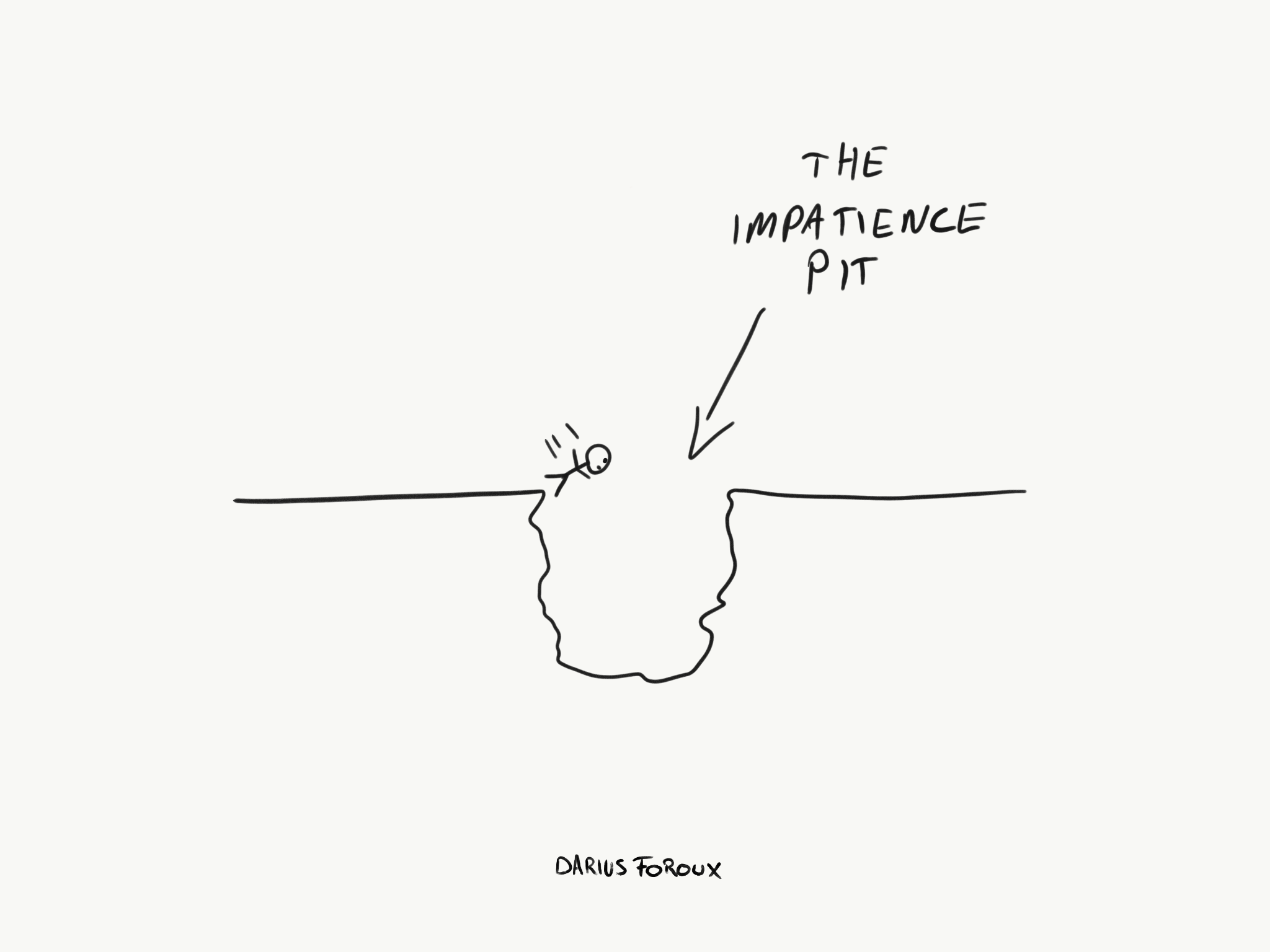
Impatience: The Pitfall of Every Ambitious Person
Big splashes don’t happen. Overnight success doesn’t exist. We have to remind ourselves of that whenever we show impatience.
Self-Distancing: What It Is and How You Can Use It to Make Better Decisions – Effectiviology
It’s hard to set your emotions aside when you’re faced with a difficult decision. This is problematic, since our emotions often cause us to make the wrong decision in important areas of life, including in our relationships, our finances, and our health.
Why efficiency is dangerous and slowing down makes life better | Psyche Ideas
The urge to do everything faster and better is risky. Far wiser to do what’s good enough for the range of possible futures

Navigating ambiguity.
Perceiving the layers of context in problems will unlock another stage of career progression as a Staff-plus engineer, but there’s at least one essential skill to develop afterwards: navigating ambiguity. In my experience, navigating deeply ambiguous problems is the rarest skill in engineers, and doing it well is a rarity. It’s sufficiently rare that many executives can’t do it well either, although I do believe that all long-term successful executives find at least one toolkit for these kinds of problems.

Via Negativa: The Process of Making Good Decisions By Eliminating Bad Ones
When we set goals—both personal and professional—we tend to focus on what we should do, rather than focussing on what we should avoid. Humans naturally know more about what is wrong, what is bad, what is harmful, or what won’t work, more than they know about what is right and what would work.

Judging VC Skill: The Hardest Open Problem in Finance?
One life skill working in finance teaches people is how to act disappointed, even insulted, at being offered an absurd amount of money for…

This Is What Uncertainty Feels Like
When you're taking action in the face of uncertainty, you have to make peace with the idea that you're never going to know if you're doing the right thing. This pandemic is one way of remembering what that's going to feel like.

Why major life decisions should be approached with ‘epistemic humility’ | Psyche Videos
At a crossroads in life? No matter how much you deliberate, one unknowable remains: the person you will be on the other side

Time-inconsistent Preferences and Consumer Self-Control
Abstract Why do consumers sometimes act against their own better judgment, engaging in behavior that is often regretted after the fact and that would have been rejected with adequate forethought? More generally, how do consumers attempt to maintain self-control in the face of time-inconsistent preferences? This article addresses consumer impatience by developing a decision-theoretic model based on reference points. The model explains how and why consumers experience sudden increases in desire for a product, increases that can result in the temporary overriding of long-term preferences. Tactics that consumers use to control their own behavior are also discussed. Consumer self-control is framed as a struggle between two psychological forces, desire and willpower. Finally, two general classes of self-control strategies are described: those that directly reduce desire, and those that overcome desire through will power.
3 Mental Shifts Highly Successful People Make Right Before Their Careers Take Off
Prioritize "clarity over cleverness."

Impact, agency, and taste
understand + work backwards from the root goal • don’t rely too much on permission or encouragement • make success inevitable • find your angle • think real hard • reflect on your thinking
Human Adults and LLMs as Scientists: Who Benefits from Active Exploration?
A long-standing finding in the causal learning literature is that adults struggle to identify conjunctive causal rules, where an effect requires the simultaneous presence of multiple causes, while...

Arvind Narayanan (@aisnakeoil)
There’s a big, under-appreciated reason why people may have very different experiences and opinions about using AI for work — are they using it for tasks they’re already an expert at, or tasks they can’t do themselves? The former leads to a growth cycle and the latter leads to a dependence spiral. When I use AI to do something I’m an expert at, like coding, I treat it as a tool. I can build quickly, maintaining an understanding of the code, knowing that if necessary, I can fix the code myself. It feels empowering. It frees up my time to think about the complex, judgment-oriented parts of software engineering that I can’t or won’t delegate to AI. That means my own skills improve rapidly, and I get to climb the ladder of complexity and develop higher-level skills, much more so than when I write the code myself. I feel in control. I can lock in and achieve a flow state — when AI is working, I’m reviewing, building understanding, and planning the next steps. I never get the feeling that the tool is about to replace me. This is the growth cycle. (Of course, the growth cycle is not automatic. I still need to exercise agency to use AI responsibly. But it’s the same challenge with any productivity-enhancing technology, and those who’ve navigated such transitions before are well-equipped to navigate it with AI as well.) On the other hand, if I use it for tasks I don’t understand and haven’t learned to perform myself, I have no choice but to treat it as a superintelligence. If something breaks, the best I can do is ask AI to fix it and hope for the best. I generally can’t evaluate the quality of the output myself. The only way to find out if it's any good is if and when the work is ultimately reviewed by an actual expert. The experience is confusing, unsettling and disempowering. And forget about flow state. By over-relying on AI, I risk losing whatever skill I had at the task in the first place, even if it boosts productivity in the short term. This is the dependence spiral. It’s no wonder that entry-level workers and students preparing to enter the workforce find themselves in a bind. To compete with the AI-enabled productivity of more seasoned workers, they must adopt AI themselves, but doing so risks the dependence spiral. I have some thoughts on solutions that I will share in later posts, but I think having a clear diagnosis of the problem is a useful first step.
