


How to deliver value by rearchitecting knowledge pipelines around AI constraints.
Why LLM Wiki? 🧠 Future Of Knowledge For Agentic AI & Humans

AI Agents: Key Concepts and How They Overcome LLM Limitations
An AI agent is an autonomous software entity that is often used to augment a large language model. Here's what developers need to know.

LLMs Give You Power User Abilities
How to use AI to unlock deep capabilities latent in your tech stack.

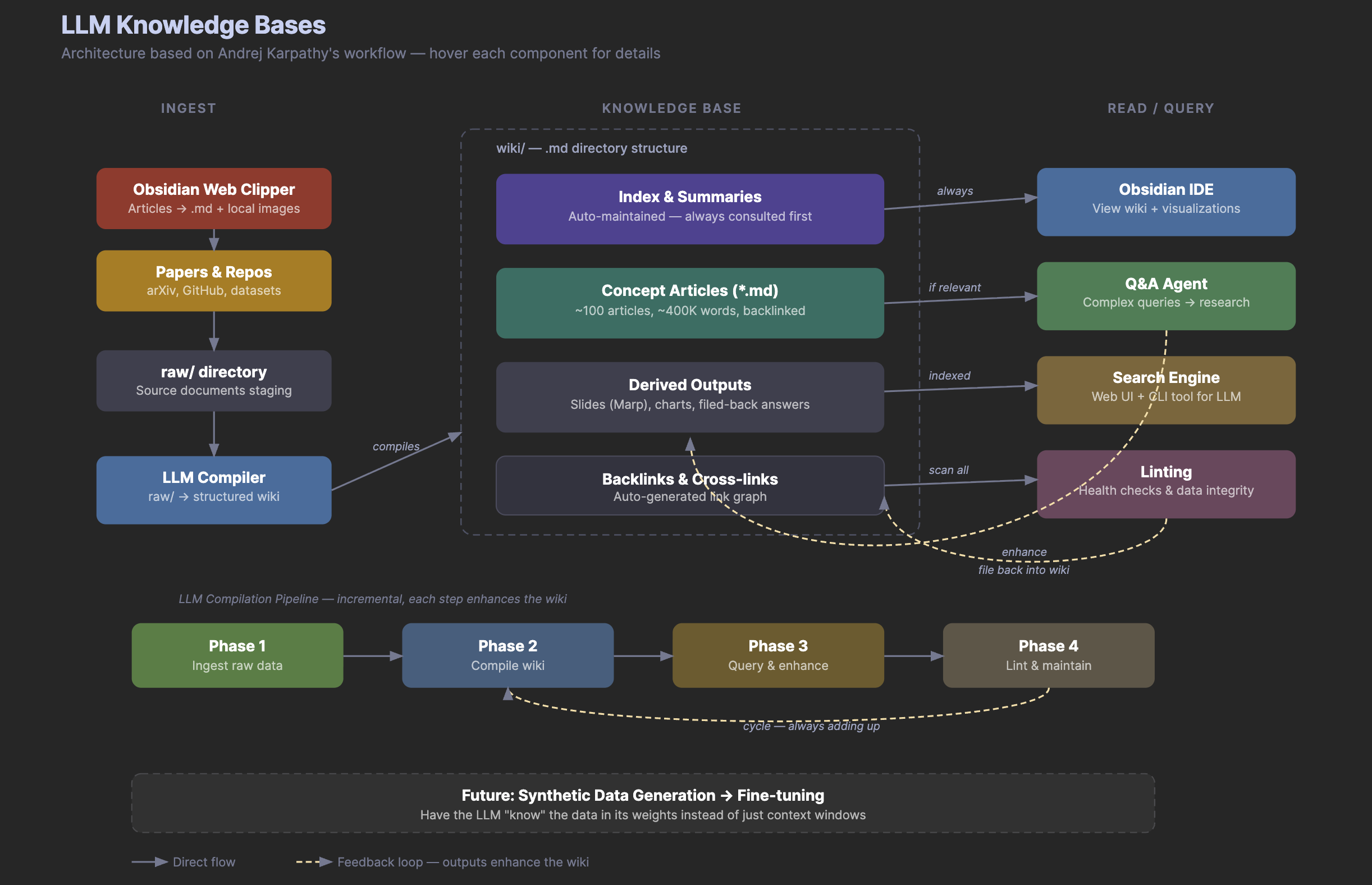
LLM Knowledge Bases
A visual breakdown of Andrej Karpathy's approach to building personal knowledge bases powered by LLMs. Learn the 4-phase pipeline: ingest, compile, query, and maintain - with an interactive architecture diagram.
Solving a Million-Step LLM Task with Zero Errors
LLMs have achieved remarkable breakthroughs in reasoning, insights, and tool use, but chaining these abilities into extended processes at the scale of those routinely executed by humans,...

LLMs as Parts of Systems - Marc's Blog
Over on the Kiro blog, I wrote a post about Kiro and the future of AI spec-driven software development, looking at where I think the space of AI-agent-powered development tools is going. In that post, I made a bit of cheeky oblique reference to a topic I think is super important. I asked Kiro to build a Towers of Hanoi game.

Stevens: a hackable AI assistant using a single SQLite table and a handful of cron jobs
There’s a lot of hype these days around patterns for building with AI. Agents, memory, RAG, assistants—so many buzzwords! But the reality is, you don’t need fancy techniques or libraries to build useful personal tools with LLMs.

ADD / XOR / ROL: A non-anthropomorphized view of LLMs
In many discussions where questions of "alignment" or "AI safety" crop up, I am baffled by seriously intelligent people imbuing almost magic...
MainPage8
The InfoCentral project has historically been focused more heavily upon the symbolic (human-meaningful) side of AI. This included derivatives of Semantic Web and related knowledge representation research, which were dependent on human effort to curate and categorize structured data. The symbolic approach to AI has largely lost the race to the neuro/neuro-symbolic (opaque vectors, statistical) side of AI research, notably the success of the Large Language Model (LLM) paradigm. Due to its faculties with natural language, remarkably little human involvement is needed to infer structure and meaning from traditional (mostly unstructured) information. As such, some of the approaches previously explored in the InfoCentral project have lost relevance. That said, LLM-based tools can perhaps help us finish the symbolic side of the grand AI project, by doing the tedious work that humans were reluctant to do! It has long been theorized that a combination of approaches will ultimately provide the most robust and performant systems, able to work with messy transient unstructured information while also building networks of verifiable persistent structured information that both humans and machines can cross-verify. This may prove useful in both ensuring that future AI systems remain aligned to human goals and values and that inevitable abuses and failures can be easily recovered from. To that end, some research results of this project may be re-usable in a new context.
MemGPT: Towards LLMs as Operating Systems
Letta is the platform for building stateful agents: AI with advanced memory that can learn and self-improve over time.
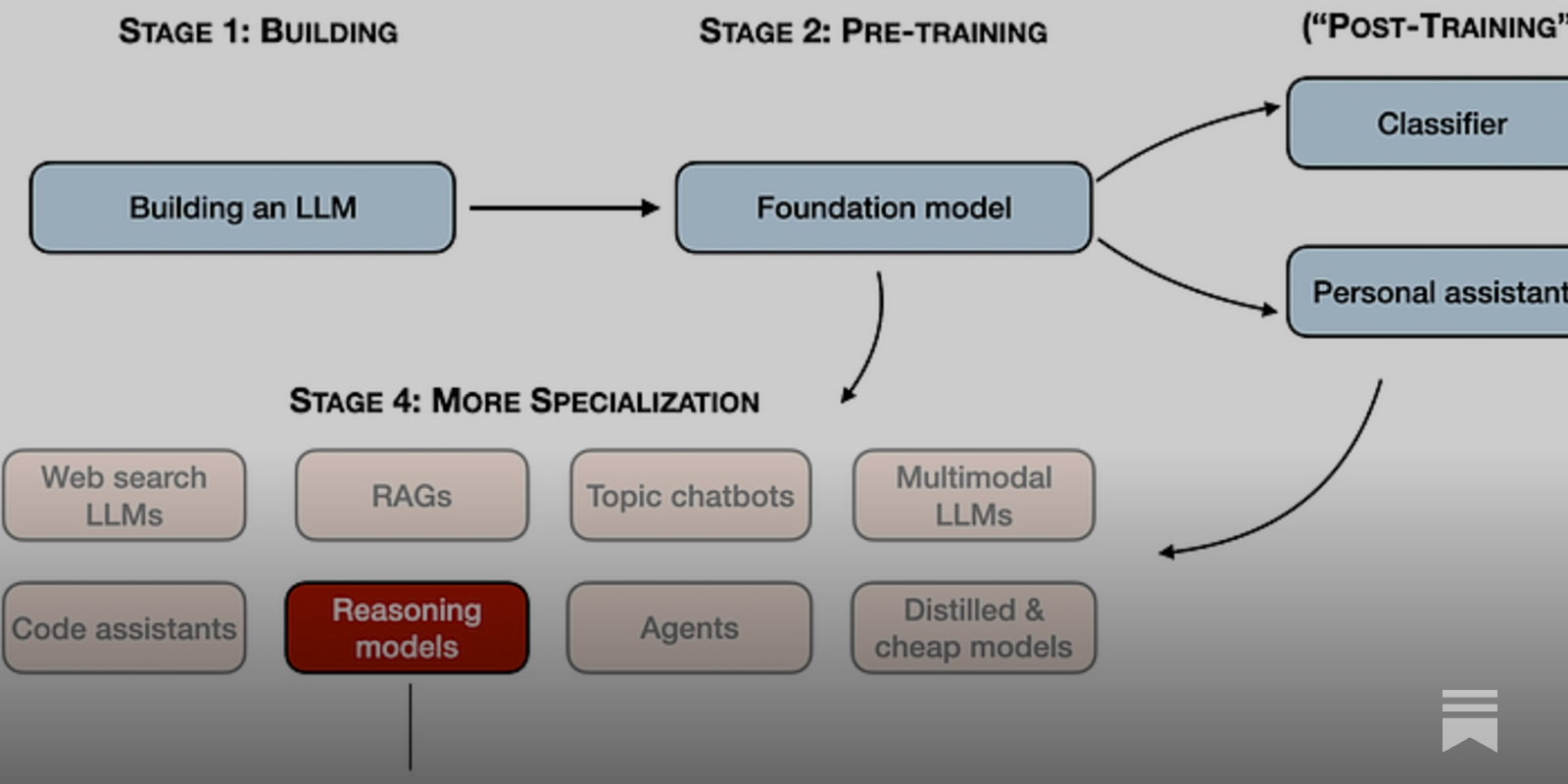
Understanding Reasoning LLMs
Methods and Strategies for Building and Refining Reasoning Models
Karpathy's LLM Wiki: What It Means & How to Build One
LLM Agents are simply Graph — Tutorial For Dummies
Ever wondered how AI agents actually work behind the scenes?

LLM Agents are simply Graph — Tutorial For Dummies
Ever wondered how AI agents actually work behind the scenes?