

Browsers allow people to treat the data spread across the Internet as a cohesive whole. Web browsers integrate the function of fetching the data with figuring out what it is and displaying it. One of the most important file types browsers understand is the hypertext markup language (HTML). HTML allows text data objects to embed simple formatting information and references to other objects.
Hypermedia Systems
The revolutionary ideas that empowered the Web. A simpler approach to building applications on the Web and beyond with htmx and Hyperview. Enhancing web applications without using SPA frameworks.
web browser
A web browser is a client program for accessing the World Wide Web. Its main feature is the loading of HTML pages over HTTP(S) connections and rendering them. There are moderate-sized web browsers as well as huge and bloated ones.
HTML papers on arXiv -- why it is important, and how we made it happen
In October 2023, arXiv made HTML formatted papers available to readers. This was the exciting outcome of over a year of accessibility research and development with the scientific community. Currently, only 2.4% of research outputs meet accessibility guidelines. Informed by scientists who rely on assistive technology, our analysis demonstrates that offering HTML is the most impactful step arXiv can take. Scientists need HTML now, and emphasize to not let perfect be the enemy of good enough. In this paper we share with you how arXiv is achieving HTML conversions from LaTeX now, and our plans for future improvements.

Blog | FixBrowser
This blog post describes the rich text component used in FixBrowser web browser to display HTML pages and for interaction with the user.
Hot Page
Hot Page is a web site builder based on open standards. Write HTML, CSS and JavaScript in a drag-and-drop page builder with live preview and visual tools.

HotJava
HotJava was a modular, extensible web browser from Sun Microsystems implemented in Java. It was the first browser to support Java applets, and was Sun's demonstration platform for the then-new technology. It has since been discontinued and is no longer supported. Furthermore, the Sun Download Center was taken down on July 31, 2011, and the download link on the official site points to a placeholder page saying so.

Position Paper for the W3C Workshop on Web Applications and Compound Documents
This document represents the consensus opinion of the Mozilla Foundation and Opera Software in the context of standards for Web Applications and Compound Documents.
BFTML/docs/notes.md at main · npetrangelo/BFTML
Blazingly Fast Text Markup Language. Standards designed for web apps. Browser implementation in Rust. - npetrangelo/BFTML
How to implement a web-based rich text editor in 2023?
Since 2011 I’ve been spending a great junk of my time taming web browsers to behave correctly and predictably when editing rich text. If you’ve ever tried to include a custom rich text editor in your web application, you know it’s a rather difficult problem to solve. I’d even predict that you’ll mos…

BFTML/docs/motivations.md at main · npetrangelo/BFTML
Blazingly Fast Text Markup Language. Standards designed for web apps. Browser implementation in Rust. - npetrangelo/BFTML
cssEarth: the universe in HTML and CSS
Explore planets, moons, stars and galaxies built from open space data as 3D HTML and CSS, without WebGL or canvas.

the html review 05
the html review is an annual journal of literature made to exist on the web
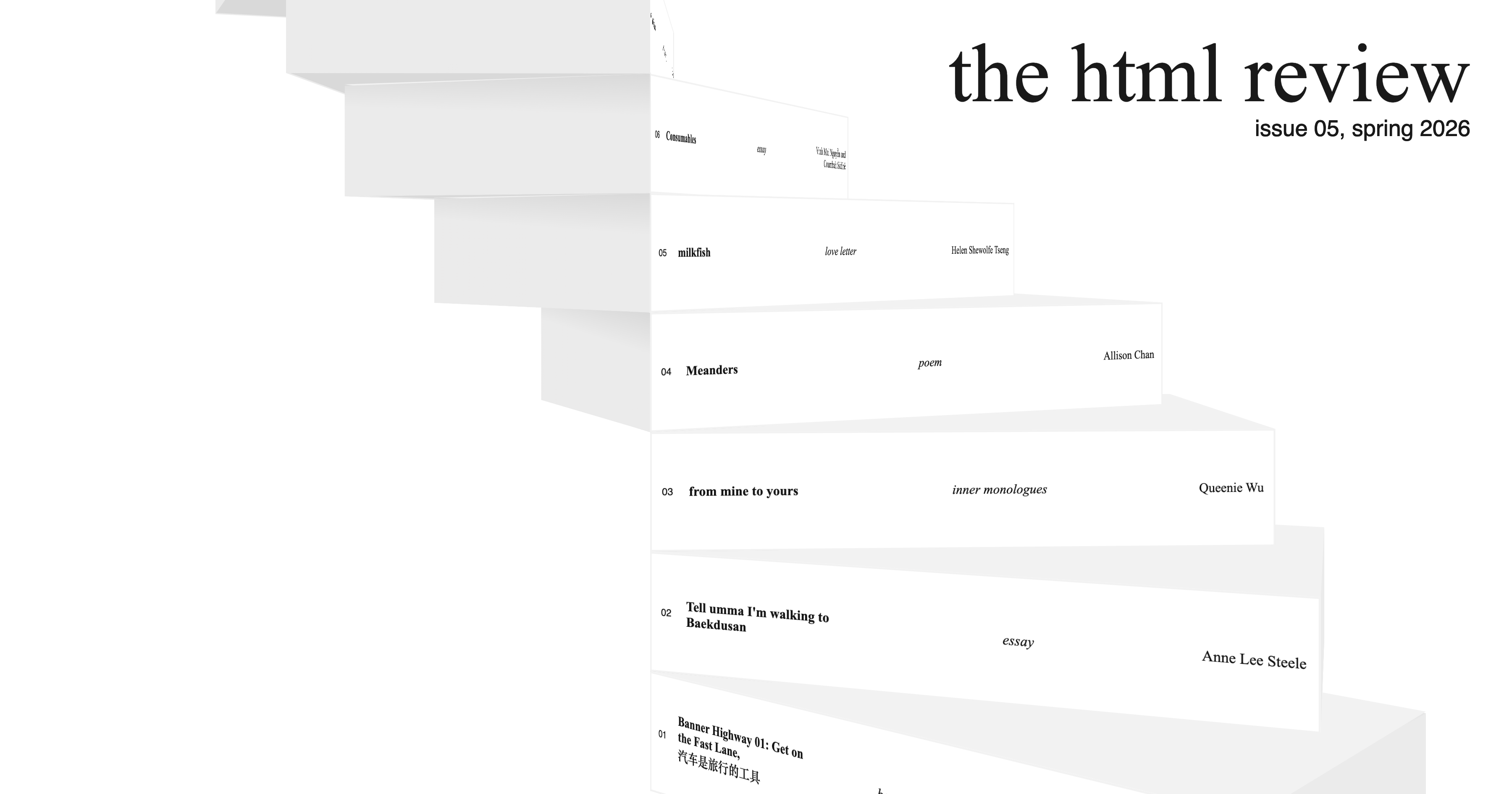
the html review 05
the html review is an annual journal of literature made to exist on the web
the html review — about
the html review is an annual journal of literature made to exist on the web
Embedding The Web
We need to talk more The web is much more than browsers. What works great in browser development is missing in related spaces like embedding. Can we get together to collectively describe security and compatibility properties of user agents that are not browsers? Can we develop things that don’t ...

Home - Scroll Press
Scroll Press: A modern HTML-native preprint server for academic research. Upload and share research manuscripts in web-native formats.