

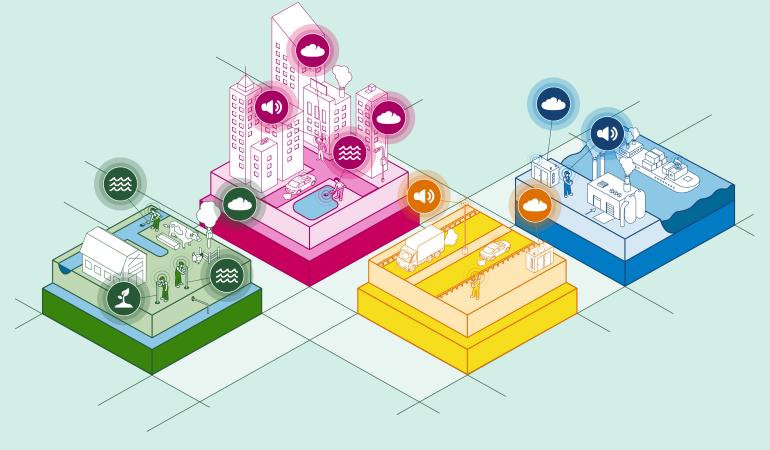
Citizen science (CS) is a participatory mode of knowledge production, enabling non-scientific actors to contribute to and sometimes contest scientific agendas and interpretations, making it a way to bridge science and society. This paper examines how that potential unfolds by analysing the individual perspectives of citizen scientists through the lens of Psychological Distance to Science (PSYDISC). Drawing on three case studies of contested environmental CS, we identify which contextual aspects of CS shape citizen scientists' experiences of social, spatial, temporal, or hypothetical distance to relevant science, and how these experiences may relate to trust. Our findings underscore the role of science communication as both a channel for dissemination, and as a constitutive element of participatory research; crucial for reducing psychological distance and enabling socially robust knowledge production, especially in contested, policy-relevant science settings.
Practical recommendations from a multi-perspective needs and challenges assessment of citizen science games
Citizen science games are an increasingly popular form of citizen science, in which volunteer participants engage in scientific research while playing a game. Their success depends on a diverse set of stakeholders working together–scientists, volunteers, and game developers. Yet the potential needs of these stakeholder groups and their possible tensions are poorly understood. To identify these needs and possible tensions, we conducted a qualitative data analysis of two years of ethnographic research and 57 interviews with stakeholders from 10 citizen science games, following a combination of grounded theory and reflexive thematic analysis. We identify individual stakeholder needs as well as important barriers to citizen science game success. These include the ambiguous allocation of developer roles, limited resources and funding dependencies, the need for a citizen science game community, and science–game tensions. We derive recommendations for addressing these barriers.
Citizen science in environmental and ecological sciences
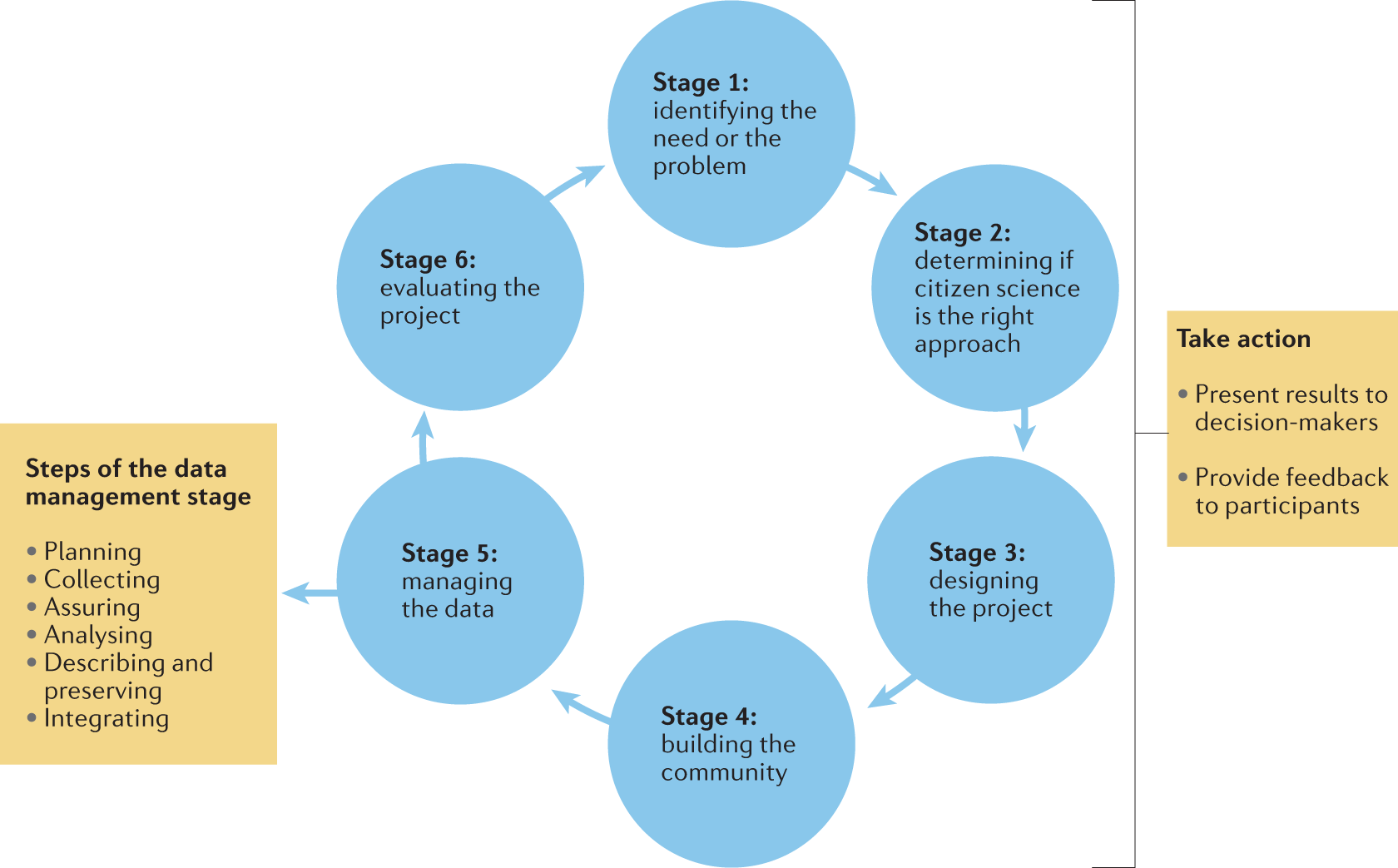
Citizen science is an increasingly acknowledged approach applied in many scientific domains, and particularly within the environmental and ecological sciences, in which non-professional participants contribute to data collection to advance scientific research. We present contributory citizen science as a valuable method to scientists and practitioners within the environmental and ecological sciences, focusing on the full life cycle of citizen science practice, from design to implementation, evaluation and data management. We highlight key issues in citizen science and how to address them, such as participant engagement and retention, data quality assurance and bias correction, as well as ethical considerations regarding data sharing. We also provide a range of examples to illustrate the diversity of applications, from biodiversity research and land cover assessment to forest health monitoring and marine pollution. The aspects of reproducibility and data sharing are considered, placing citizen science within an encompassing open science perspective. Finally, we discuss its limitations and challenges and present an outlook for the application of citizen science in multiple science domains.
Civic, Citizen and Grassroots Science: Towards a Transformative Scientific Research Model | Request PDF
Request PDF | On Jan 1, 2013, Jessica McCallum Breen and others published Civic, Citizen and Grassroots Science: Towards a Transformative Scientific Research Model | Find, read and cite all the research you need on ResearchGate

An epistemology for democratic citizen science
Abstract. More than ever, humanity relies on robust scientific knowledge of the world and our place within it. Unfortunately, our contemporary view of scie
Peer Production in Citizen Science: A Community-Centered Approach on the Example of Personal Science
Citizen science encompasses a wide range of practices where online collaboration for knowledge production plays a significant role. However, the study of forms of online collaboration other than crowdsourcing in citizen science has remained largely unexplored. This thesis aims to fill this gap by investigating peer production as a form of collaboration in online citizen science communities of practice. First, peer production theory was operationalized as a working model and used to analyze collaboration in citizen science case studies. This was followed by a comprehensive participatory design process for a specific use case involving the personal science community of practice. This process resulted in the creation of the “Personal Science Wiki”, an online space for consolidating community knowledge through peer production. Subsequently, a usability and card sorting study identified and resolved issues with the wiki implementation, and provided insights into mental models and content requirements regarding self-research knowledge. The lessons learned from the participatory design process were generalized as process recommendations for designing peer production solutions and knowledge management systems with communities of practice.
Why Do We Call It Participatory Science? | Smithsonian Environmental Research Center
A Vision of Metascience
How does the culture of science change and improve? Many people have identified shortcomings in core social processes of science, such as peer review, how grants are awarded, how people are selected to become scientists, and so on. Yet despite often compelling criticisms, strong barriers inhibit widespread change in such social processes. The result is near stasis, and apathy about the prospects for improvement. People sometimes start new research institutions intended to do things differently; unfortunately such institutions are often changed more by the existing ecosystem than they change it. In this essay we sketch a vision of how the social processes of science may be rapidly improved. In this vision, metascience plays a key role: it deepens our understanding of which social processes best support discovery; that understanding can then help drive change. We introduce the notion of a metascience entrepreneur, a person seeking to achieve a scalable improvement in the social processes of science. We argue that: (1) metascience is an imaginative design practice, exploring an enormous design space for social processes; (2) that exploration aims to find new social processes which unlock latent potential for discovery; (3) decentralized change must be possible, so outsiders with superior ideas can't be blocked by established power centers; (4) ideally, change would align with what is best for science and for humanity, not merely what is fashionable, politically popular, or media-friendly; (5) the net result would be a far more structurally diverse set of environments for doing science; and (6) this would enable crucial types of work difficult or impossible within existing environments. For this vision to succeed metascience must develop and intertwine three elements: an imaginative design practice, an entrepreneurial discipline, and a research field. Overall, it is a vision in which metascience is an engine of improvement for the social processes and ultimately the culture of science.
Breaking the silence
Research on science communication has largely focused on teaching scientists how to describe their studies in ways that interest the public while deepening their understanding of scientific exploration. However, there is another, often overlooked side to science communication—how scientists respond when questions arise about the integrity of their research. Often, the tendency has been to stay silent and wait for any controversy to pass or be resolved in professional forums. But in an age of growing, intense attacks on science, silence can be detrimental to both public trust and the careers of scientists who are under scrutiny. For better or worse, journalists, social media professionals, and the public may take a response of “no comment” as a concession that the critics are correct, so forthright communication about research questions is more urgent than ever.

Sciences perceived as precise and consensual are more trusted
Research focused on the United States shows that people’s trust in science varies considerably between disciplines. Existing explanations of these trust gaps stress the role of ideology: when people perceive scientists of a particular discipline to be ideologically like-minded, they tend to trust them more. Here, we report two findings: first, trust gaps between disciplines also exist in France—a representative sample of the French population (N = 1012) trusted researchers in biology and physics more than researchers studying climate science, economics, or sociology. Second, the more precise and consensual participants perceive scientific findings to be, the more they tend to trust the scientists (across and within disciplines). While these findings are correlational, they align with a non-ideological explanation of trust in science: the rational impression account. This account proposes that people can come to trust scientists by relying on basic cognitive inference processes, which tend to be generally rational.

From risk to flourishing: Seeds for responding to a complex world
Flourishing is the actualization of all beings toward their good -- not only individually but collectively, answering the question of `how do we live well with and for each other?'. In science as in society, the tendency to reduce, segregate, specialize, and settle has precluded embracing the concept of flourishing as a guiding principle. We aim to identify an approach to risk science research that promotes the flourishing of socio-ecological-technological systems (SETS). We discuss the normative role of an orientation toward flourishing for the field of risk science. We explore the possibility that (risk) science could be done in a way that is capable of pointing society toward a different future, one more resilient and more capable of flourishing. Our exploration mirrors the conversational nature of flourishing itself: examine ideologies traditionally believed to be rigidly in opposition and consider what emerges in the space(s) and conversation between them. We call this a dialectical approach. Within this paradigm grounded in conversation, pluralism, and pragmatism, we revisit three longstanding tensions in risk science: physical$|$social, determinism$|$uncertainty, contextuality$|$generality. Although these tensions are not new, revisiting them together through the lens of complexity science, and with explicit attention to the normative commitments that shape risk research, reveals underexplored possibilities for the field. Examining them in conversation with the other allows us to explore the provisional seeds for what might be termed complex risk science: interdependence, responsivity, participation, pluralism, openness, and ongoingness. Enacting the dialectical paradigm towards a risk science for a flourishing world will depend on creating collectives toward complex risk science, supporting them with skillfully governed commons, and centering care in our research.

Why Science Can't Settle Political Disputes
Attempts to scientifically “rationalize” policy, based on the belief that science is purified of politics, may be damaging democracy
Combining Social Science and Environmental Health Research for Community Engagement
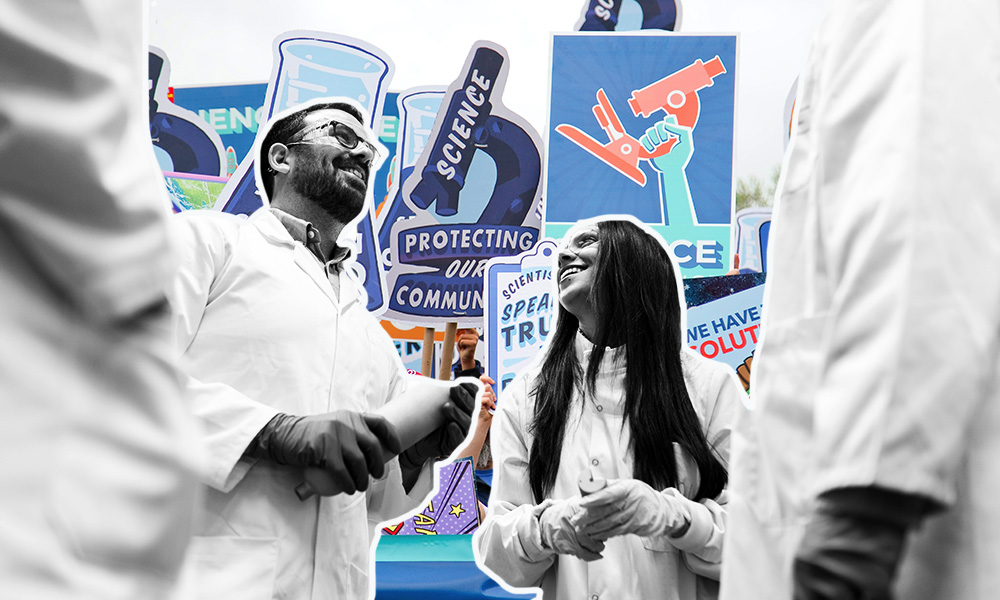
Social science-environmental health (SS-EH) research takes many structural forms and contributes to a wide variety of topical areas. In this article we discuss the general nature of SS-EH contributions and offer a new typology of SS-EH practice that situates this type of research in a larger transdisciplinary sensibility: (1) environmental health science influenced by social science; (2) social science studies of environmental health; and (3) social science-environmental health collaborations. We describe examples from our own and others’ work and we discuss the central role that research centers, training programs, and conferences play in furthering SS-EH research. We argue that the third form of SS-EH research, SS-EH collaborations, offers the greatest potential for improving public and environmental health, though such collaborations come with important challenges and demand constant reflexivity on the part of researchers.
Grand Challenges for the Convergence of Computational and Citizen Science Research Workshop Report
This report is an outcome of a Computing Community Consortium (CCC) visioning workshop on Grand Challenges for the Convergence of Computational and Citizen Science Research conducted on April 8-9, 2025, in Washington, D.C. as well as through several precursor virtual input-gathering sessions. These events brought together experts across relevant disciplines to develop a research agenda that brings to fruition the above vision on how humans and machines may team up to solve some of the world's most pressing scientific problems. Citizen science delivers measurable economic and national value. Public participation in scientific research generates millions of dollars in volunteer labor value, extends government agency capacity, and directly supports federal priorities in areas such as disaster management, public health, water, energy, workforce development, and many more. At the same time, 21st-century scientific infrastructure requirements for citizen science (from hardware and cyberinfrastructure to data and computational frameworks) mirror those for computational science more generally. The distributed, collaborative, long-term, and contextual nature of citizen science makes it a demanding real-world use case for a novel robust research infrastructure that accounts for security, privacy, resource adaptability, and transparency. In this report, we outline the key findings, future research directions, and recommendations that emerged from the April 2025 CCC Grand Challenges for the Convergence of Computational and Citizen Science Research Workshop.
New study finds that when people help collect data or contribute to research it can build public trust by making scientists feel personally familiar and approachable, and that trust then spreads to how local and tangible the research feels. jcom.sissa.it/article/pubid/JCOM_2506_2026_…

How can citizen science reduce psychological distance to science? Insights from three projects in contested environmental contexts
jcom.sissa.itCool example of participatory research from The Long Haul. Different from many citizen science projects where scientists bring the questions, in the Appalachian land study people chose the question, learned the method, did the work, and found answers to problems that mattered to their community

Ronen Tamari
Weekend reading: "Long Haul" by Myles Horton, have a feeling it's going to be a real banger. (on the Highlander Folk School for social change) highlandercenter.org/product/the-long-haul-an-auto…
Extreme Citizen Science

Inspiration and existing efforts where citizens drive the whole scientific cycle, from problem definition through to interpretation of results. This level of citizen science has been called "extreme" in this paper: link.springer.com/article/10.1140/epjst/e2012-0… I love this term! :) Esp. interested in concepts/approaches that help with the construction and maintenance of local/individual knowledge (vs. aggregates only)

Nova Scotia’s Experiment in Research That Solves Real Problems
Brandon Yates on Twitter / X
Civic, Citizen and Grassroots Science: Towards a Transformative Scientific Research Model | Request PDF
TreeKIT: Measuring, Mapping, and Collaboratively Managing Urban Forests
www.degruyterbrill.com
Individual Experience vs. The Cochrane Review
