


Those “turning points” in brain aging aren’t quite what you think
You’re an Adult. Your Brain, Not So Much. (Published 2016)
The brain reshapes itself for years after adolescence, scientists have found, raising questions about when an adult is mature in the legal sense.

Use it or lose it: How cognitive skills change with age
Cognitive skills are commonly assumed to begin deteriorating from the age of 30, which could pose a significant challenge for rapidly ageing populations. But this assumption relies largely on cross-sectional data that cannot distinguish between ageing patterns and cohort differences. Using German longitudinal data, this column finds that skills, on average, increase markedly into one’s 40s before decreasing slightly in literacy and more severely in numeracy. In addition, skills decline at older ages only for those with below-average skill usage, outlining a clear policy pathway for avoiding skill declines.

What if Age Is Nothing but a Mind-Set? (Published 2014)
Ellen Langer’s experiments have shown that mental attitudes might reverse some ravages of old age. Now she wants to test that same radical principle on cancer.

Why older people are happier and what we can learn from them | Psyche Ideas
Around the world, happiness tends to peak later in life. It has more to do with balancing priorities than elderly wisdom
The Global Decline in the Mental Health of the Young
One of the major findings in wellbeing research until recently was that happiness was U-shaped by age and unhappiness hump-shaped by age. There was a midlife crisis — a finding reported in well over 600 published papers using data on 145 countries. It was present in both developing and developed countries. And it was persistent over time. The finding of a peak in ill-being in midlife was consistent with Anne Case and Angus Deaton’s work on mortality and the so-called “deaths of despair.”1 In the US in particular and to a lesser extent in other countries, White prime-aged individuals without a college degree had high death rates from suicide, drug overdoses, and cirrhosis of the liver. Drug overdose deaths in the US, for example, peaked at midlife ages. In 2023, the Centers for Disease Control and Prevention (CDC) reported that overdose death rates per 100,000 by age rose from 13.5 for 15-to-24-year-olds to 45.6 for 25-to-34-year-olds and 60.8 for 35-to-44-year-olds, and then declined to 53.3 for 45-to-54-year-olds, 49.2 for 55-to-64-year-olds, and 14.7 for those over the age of 65.2 The morbidity data matched the mortality data.

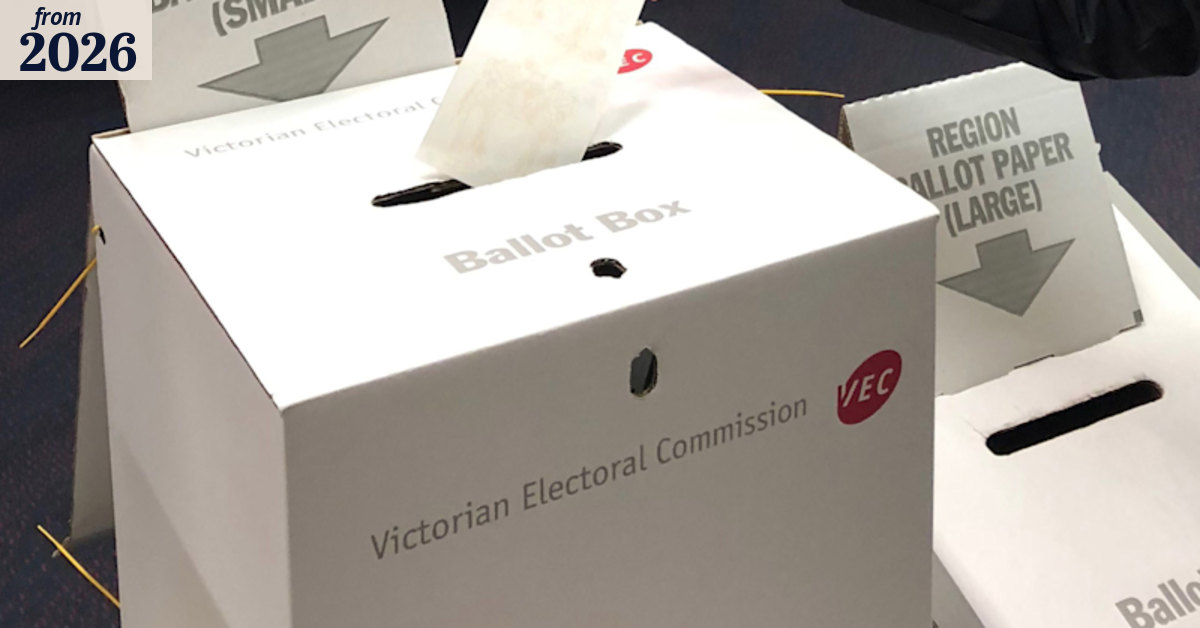
Everyone’s talking about the polls: The Age does it differently
Where voters will ultimately land on the question of Victoria’s leadership is becoming increasingly difficult to predict. Fortunately, Age readers are in good hands when it comes to assessing the political mood.
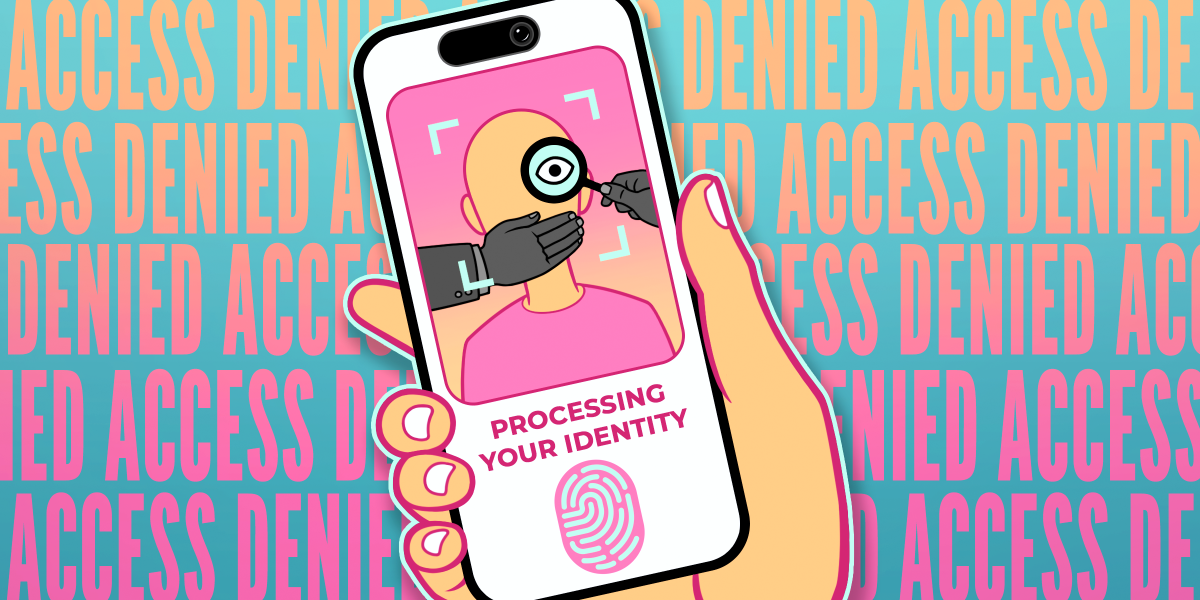
The Right Wing Origins Of Age Verification Laws Don’t Disappear Just Because They’re Going Bipartisan.
I think it’s important to understand that, despite claims to the contrary, age verification is, inherently, a right-wing effort. While it’s currently true that age verification laws are…

Adults Lose Skills to AI. Children Never Build Them.
Discussions of cognitive offloading often miss a critical distinction: What AI does to a 45-year-old's brain is categorically different from what it does to a 14-year-old's.

Open source confronts its midlife crisis | The Observation Deck
Midlife is tough: the idealism of youth has faded, as has inevitably some of its fitness and vigor. At the same time, the responsibilities of adulthood have grown: the kids that were such a fresh adventure when they were infants and toddlers are now grappling with their own transition into adulthood – and you try to remind yourself that the kids that you have sacrificed so much for probably don’t actually hate your guts, regardless of that post they just liked on the ‘gram. Making things more challenging, while you are navigating the turbulence of teenagers, your own parents are likely entering life’s twilight, needing help in new ways from their adult children. By midlife, in addition to the singular joys of life, you have also likely experienced its terrible sorrows: death, heartbreak, betrayal. Taken together, the fading of youth, the growth in responsibility and the endurance of misfortune can lead to cynicism or (worse) drastic and poorly thought-out choices. Add in a little fear of mortality and some existential dread, and you have the stuff of which midlife crises are made…
36 important life and work lessons a top tech executive learned before turning 30
The days are long but the decades are short.
Learning From Older Adults: An Intergoal Compatibility Account for Successful Happiness Pursuit
Academic Abstract People want to pursue happiness but often fail, a phenomenon known as the paradox of pursuing happiness. The mechanisms underlying this paradox remain elusive. Age differences in happiness—specifically that older adults appear more successful in pursuing happiness (the emotion paradox of aging)—provide valuable insights into effective happiness pursuit. Drawing on this literature, we propose an intergoal compatibility account to interpret both paradoxes through the lens of intergoal interactions, an intuitively critical yet underexplored factor in existing interpretations. This account asserts that greater compatibility (fewer conflicts and greater facilitation) between happiness pursuit and other important personal goals enhances the effectiveness of happiness pursuit, and such compatibility can be enhanced through contextual influences (e.g., age-graded developmental tasks) and strategic self-regulation (e.g., goal adjustments). This account generates testable predictions and practical implications for enhancing happiness pursuit across the lifespan. Public Abstract Why do people often struggle to achieve happiness? And why are older adults happier than younger adults, even though they face more losses in life? While these questions have drawn extensive attention, they remain puzzling. A crucial yet insufficiently explored factor in successful happiness pursuit is intergoal compatibility —the extent to which the pursuit of happiness aligns or conflicts with other important personal goals. For younger adults, the demands of age-related developmental tasks (e.g., educational and career aspirations) often create conflicts with the pursuit of happiness, diminishing its effectiveness. Conversely, in older adults, happiness becomes more prioritized and compatible with other important personal goals, thereby enhancing the effectiveness of pursuing happiness. A lesson we can learn from older adults is to pursue happiness in ways compatible with other important personal goals.

Dance training is superior to repetitive physical exercise in inducing brain plasticity in the elderly
Animal research indicates that a combination of physical activity and sensory enrichment has the largest and the only sustaining effect on adult neuroplasticity. Dancing has been suggested as a human homologue to this combined intervention as it poses demands on both physical and cognitive functions. For the present exploratory study, we designed an especially challenging dance program in which our elderly participants constantly had to learn novel and increasingly difficult choreographies. This six-month-long program was compared to conventional fitness training matched for intensity. An extensive pre/post-assessment was performed on the 38 participants (63–80 y), covering general cognition, attention, memory, postural and cardio-respiratory performance, neurotrophic factors and–most crucially–structural MRI using an exploratory analysis. For analysis of MRI data, a new method of voxel-based morphometry (VBM) designed specifically for pairwise longitudinal group comparisons was employed. Both interventions increased physical fitness to the same extent. Pronounced differences were seen in the effects on brain volumes: Dancing compared to conventional fitness activity led to larger volume increases in more brain areas, including the cingulate cortex, insula, corpus callosum and sensorimotor cortex. Only dancing was associated with an increase in plasma BDNF levels. Regarding cognition, both groups improved in attention and spatial memory, but no significant group differences emerged. The latter finding may indicate that cognitive benefits may develop later and after structural brain changes have taken place. The present results recommend our challenging dance program as an effective measure to counteract detrimental effects of aging on the brain.
Age Assurance Methods Explained
This blog also appears in our Age Verification Resource Hub: our one-stop shop for users seeking to understand what age-gating laws actually do, what’s at stake, how to protect yourself, and why EFF
Six Ways to Think Long-term: A Cognitive Toolkit for Good Ancestors
None of these six ways is enough alone to create a long-term revolution of the human mind — a fundamental shift in our perception of time. But together — and when practised by a critical mass of people and organisations — a new age of long-term thinking could emerge out of their synergy.

Is personality so predictably linked to chronological age that unique experiences usually play only a minor role in personality development? Comments and criticism are welcome on the intro draft of a paper proposing and testing this hypothesis. shorturl.at/QPKpw
Does engaging with the arts help to slow the aging process? According to this new paper from Fancourt et al the answer is yes! Alas, the paper is actually unsuitable for such claims. Let’s examine by discussing how you'd establish whether arts engagement actually caused future health! 1/18 🧵

Does leisure activity matter for epigenetic ageing? Analyses of arts engagement and physical activity in the UK Household Longitudinal Study
academic.oup.com
