

TL;DR I claim that modern science is synonymous with open source software. This post explains why, why it matters, and what you can (and should) do next. Why do you care about (open source) software? - Everyone I spend a lot of my time working on software. I have been asked why software matters more times than I can remember. Software is, people say, not science. It’s a time sink, something to rush past in the pursuit of what really matters: results (and papers if you’re in academia).
Doing Data Science on the Shoulders of Giants: The Value of Open Source Software for the Data Science Community
Open source software is ubiquitous throughout data science, and enables the work of nearly every data scientist in some way or another. Open source projects, however, are disproportionately maintained by a small number of individuals, some of whom are institutionally supported, but many of whom do this maintenance on a purely volunteer basis. The health of the data science ecosystem depends on the support of open source projects, on an individual and institutional level.

Chapter 1. Introduction
Free software — open source software[3] — has become the backbone of modern information technology. It runs on your phone, on your laptop and desktop computers, and in embedded microcontrollers for household appliances, automobiles, industrial machinery and countless other devices that we too often forget even have software. Open source is especially prevalent on the servers that provide online services on the Internet. Every time you send an email, visit a web site, or call up some information on your smartphone, a significant portion of the activity is handled by open source software.
Linking the world's research to the code it runs on - OpenAlex blog
Research relies on software. Software written by scientists, for science, runs through the entire modern research stack: NumPy and SciPy, R and ggplot2, Jupyter, BLAST, ImageJ, AlphaFold. Yet in the scholarly record, that software is nearly invisible. Software is not usually cited formally in publications and is usually just mentioned in the text, which means […]

How open source projects need to adapt to the AI coding era | We Love Open Source • All Things Open
A new Carnegie Mellon study shows AI coding tools boost velocity by 281% — then leave codebases harder to work with. Here's what open source communities need to do before the sugar rush wears off.

Open source is a restaurant
[[Chad Whitacre]] makes a great analogy around when/how software gets paid for, vs food. Open Source is a restaurant. At a restaurant, you eat your meal fir...

History of free and open-source software
The history of free and open-source software begins at the advent of computer software in the early half of the 20th century. In the 1950s and 1960s, computer operating software and compilers were delivered as a part of hardware purchases without separate fees. At the time, source code—the human-readable form of software—was generally distributed with the software, providing the ability to fix bugs or add new functions. Universities were early adopters of computing technology. Many of the modifications developed by universities were openly shared, in keeping with the academic principles of sharing knowledge, and organizations sprung up to facilitate sharing.

This morning, I had the distinct honour of giving the opening keynote at #RSECon26: "Where does the rigour go? Research software and the future of trustworthy science" The core argument: AI is… | Arfon Smith
This morning, I had the distinct honour of giving the opening keynote at #RSECon26: "Where does the rigour go? Research software and the future of trustworthy science" The core argument: AI is making it dramatically cheaper to produce plausible scientific outputs, without necessarily making them cheaper to check. The scarce resources are shifting towards attention, judgment, and verification. This is no doubt a disruptive time for research software engineers and research more generally. For Research Software Engineers specifically I think that creates some important new opportunities around: encoding domain judgment, building verification infrastructure, connecting agents to reality, and helping ensure that the emerging verification layer for science remains open. Thanks to everyone at RSECon26 for the thoughtful discussion, and especially to the many people whose work and ideas I that heavily influenced this talk. Link to slides in first comment

Roadmap: Open Source
After years of investing in open source software, we’re releasing our thinking on what positions these companies as emerging technology giants.
Working in Public: The Making and Maintenance of Open S…
An inside look at modern open source software developer…

Open Source Software and Corporate Influence — Andrew Lilley Brinker
Open source software projects are frequently enmeshed with the interests of corporations. We should update mental models of who works on open source accordingly, and build or modify power structures to be more resilient to corporate capture.
Open Source is Broken
The Open Source movement, as championed by the OSI, prizes absolute openness above all other concerns...
Introduction to Open Science
This course introduces the principles and practices of open science, with an emphasis on reproducible research workflows, transparent reporting, and collaborative scholarship. Students will critically examine reproducibility, explore tools that support openness (such as Git, GitHub, and Quarto), and apply these tools in hands-on assignments and a final open project. Students will also explore how open science practices vary across disciplines, including education, humanities, social sciences, industry and government, and STEM contexts. This course emphasizes applying open science principles to real-world data problems in alignment with the principles of producing reproducible research.
Software Bonkers
I’m software bonkers: I can’t stop thinking about software. And I can’t stop building software.
Open Responses: What you need to know
We’re on a journey to advance and democratize artificial intelligence through open source and open science.

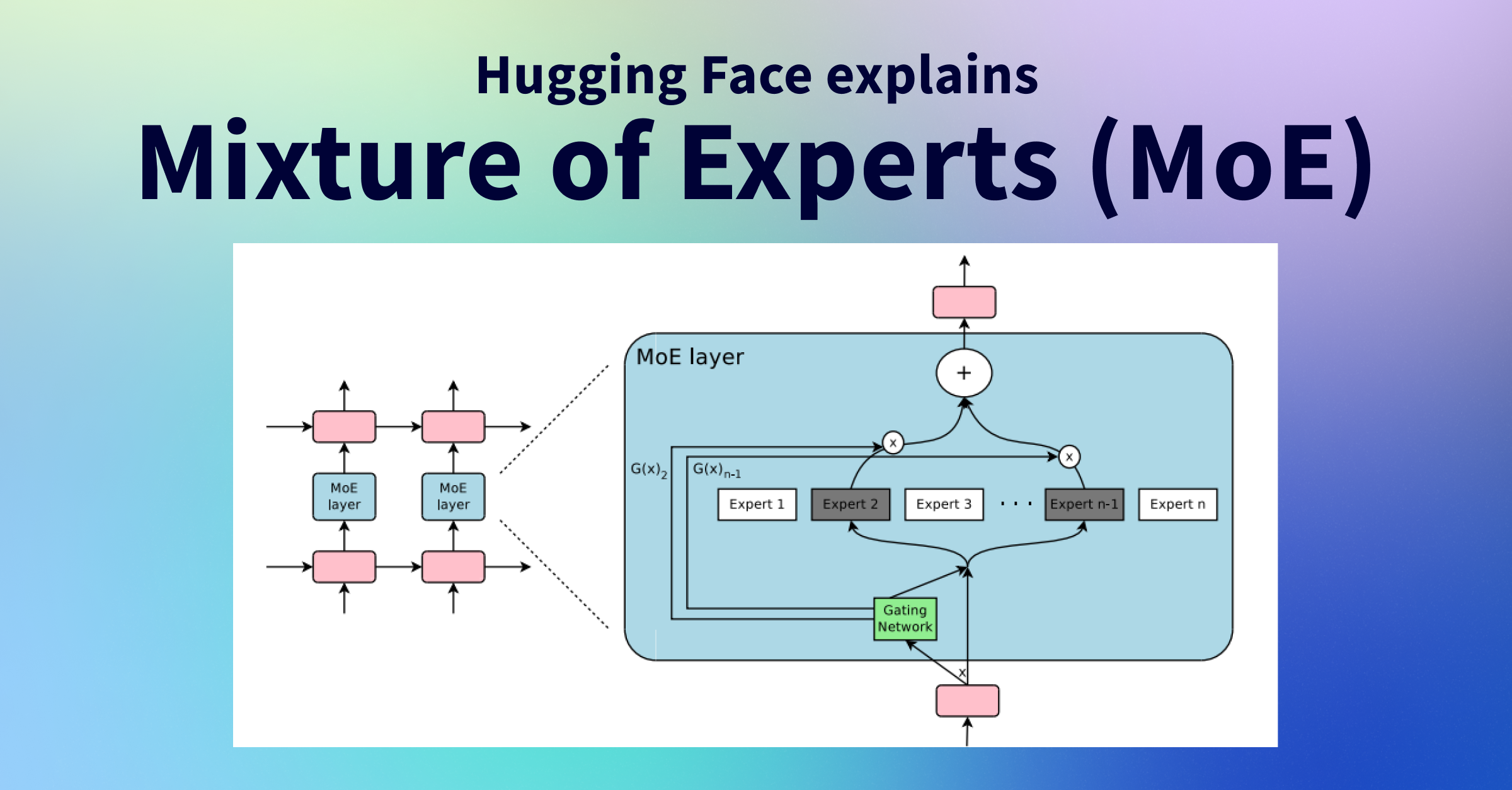
Mixture of Experts Explained
We’re on a journey to advance and democratize artificial intelligence through open source and open science.
I can see a whole lot of people agreeing with this. Kinda the same with open source in general, but few open source projects are social protocols seeking widespread adoption. It's a particular flavor of narrative disconnection from reality we have to bridge out of to get out of our own way.

⠁⠀⠀⠀⠠
Every @proto developer sounds like this to me:
