In search of the mysterious fruits of basic science
Science has been in a “replication crisis” for a decade. Have we learned anything?
Bad papers are still published. But some other things might be getting better.

Maybe scientific progress isn’t slowing, after all
A new paper takes aim at the claim that science has become less disruptive

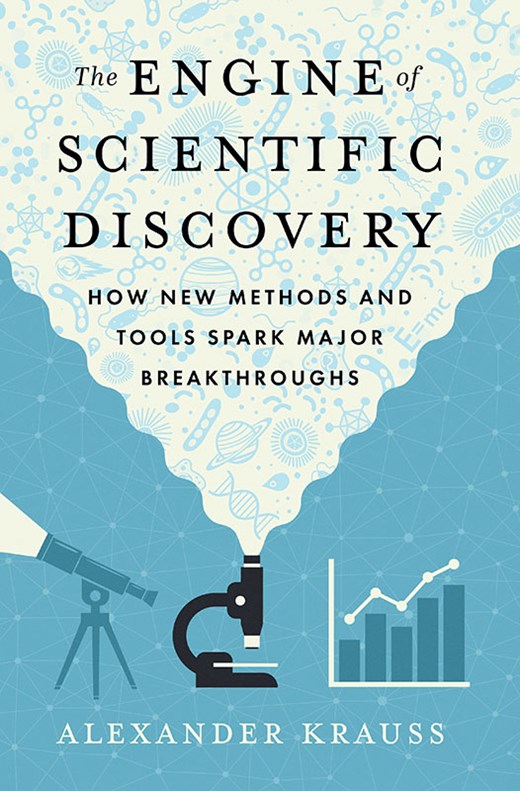
The Engine of Scientific Discovery: How New Methods and Tools Spark Major Breakthroughs
Abstract. How do we spark new scientific discoveries? Why do some breakthroughs seem even accidental? And most importantly, how can we accelerate them and
Guest post: If you’re going to critique science, be scientific about it
Loren K. Mell Editor’s note: This post responds to a Feb. 13 article in The Atlantic, “The Scientific Literature Can’t Save Us Now,” written by Retraction Watch cofounders Adam Marcus and Ivan Oran…

Markus J. Buehler on Twitter / X
After decades at MIT studying how nature builds - from spider silk to bone to nacre - I've become convinced of something: the biggest barrier to scientific progress isn't knowledge, it's connection. The insights we need already exist, scattered across millions of papers and… pic.twitter.com/EHUomaFyPj— Markus J. Buehler (@ProfBuehlerMIT) March 10, 2026

The Current Crisis: What's Happening to Science in America
Jason Shepherd on Twitter / X
I have quite a lot of thoughts on this..that won't fit in a tweet. Bottomline is that there are issues scientists in the US would love to improve - faster review, less grant writing, more stability and freedom to do risky science. The folks celebrating this doc are mostly../1 https://t.co/xlPAH9XYNC— Jason Shepherd (@JasonSynaptic) July 23, 2026
Where Should Science Go Next
Where Should Science Go Next? Prashant Garg, April 2026 Every researcher has to choose what to work on next. Science has formal procedures for judging answers, but no comparable procedure for comparing questions. Einstein said in 1918 at Max Planck's sixtieth birthday: "There is no logical path t...

Zechen Zhang on Twitter / X
1/ For nearly 350 years, science has communicated itself through one object: the paper. A linear narrative, frozen as a PDF, written for a human reader. We've come to treat that format as the medium of science itself.It doesn't have to be. It's a historical artifact. 🧵 pic.twitter.com/P5UUhceLkC— Zechen Zhang (@ZechenZhang5) April 30, 2026
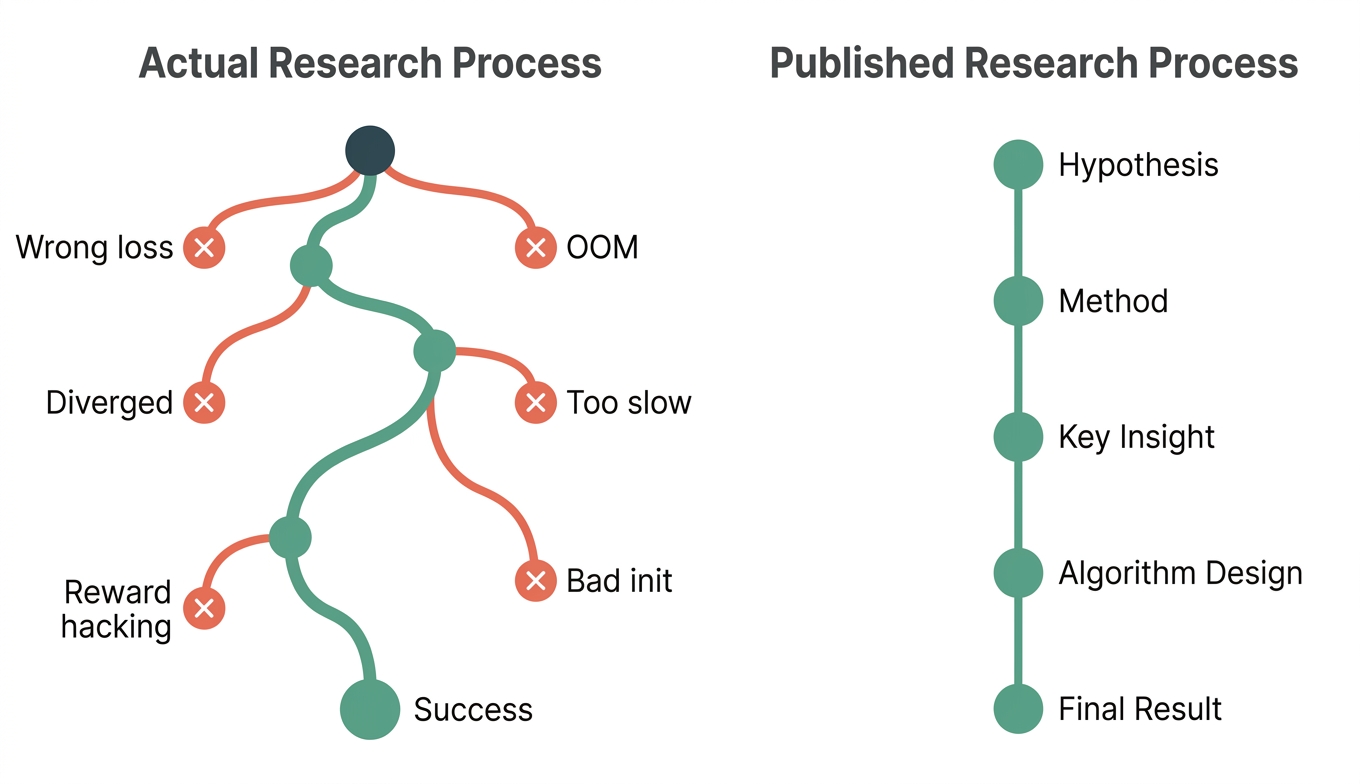
The one science reform we can all agree on, but we're too cowardly to do
OR: the long overdue forest fire
What happened to Science Goodreads and how do we rebuild it? A 65 million dollar question (at least) - Cosmik Labs
The story of the rise and fall of Mendeley
What happened to Science Goodreads and how do we rebuild it? A 65 million dollar question (at least) - CAIROS Blog
The story of the rise and fall of Mendeley
Without a theory of intelligence
The history of science — and of progress — is a series of benefits that are direct results of new tools.

The Scientific Contribution Graph: Automated Literature-based Technological Roadmapping at Scale
Sir Isaac Newton famously wrote, “If I have seen further, it is by standing on the shoulders of giants”. Scientific contributions are rarely developed in isolation, but build upon prior contributions, such as problem framings, experimental methods, and empirical findings. Understanding these prerequisite relationships is important for studying scientific progress, and for automated scientific discovery systems that must reason about which existing capabilities can be used to develop new ones (e.g. Lu et al., 2024; Jansen et al., 2025b; Baek et al., 2025).
Rebuilding the Architecture of Science
Science built the modern world. It’s time to rebuild the world of science.