


Sustaining the struggle will require spaces for reimagining our tradition.
Jewish Materialism
A paradigm-shifting account of the modern Jewish experience, from one of the most creative young historians of his generationTo understand the organizing fra...

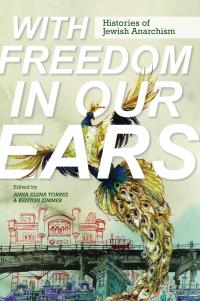
With Freedom in Our Ears
Contributors bring to light the presence and persistence of Jewish anarchism throughout histories of radical labor, women's studies, political theory, multilingual literature, and ethnic studies.
Newsletter
Breaking news, analysis, art, and culture from a progressive Jewish perspective. Sign up for our newsletter!

Beloved
At Beloved, we inspire, support, and nourish spiritual leaders who are creating new Jewish spaces of sacred belonging.

Member Organizations — Jewish Diaspora Movement
Jewish Liberation Fund
Jewish Liberation Fund is grounded in the belief that the American Jewish community has enough resources to bring forth the liberatory world of which we dream.

The Sanitizing of Conservative Judaism
Conservative Judaism’s origins lie in a donor plan to neutralize and refine the radical Jewish immigrant masses.

'It's Hard to Know if We'll Endure': Israel's Leading Philosopher on …
archived 8 Aug 2026 00:21:44 UTC
Projects – discover our non-empty spaces
Fostering spaces for growth is an important part of our trajectory. We seek to harness the combined power of practice, critical inquiry and creativity to address some of the issues of our times - health, environmental awareness, social equality and multilingual, trans-cultural collaborations.
The American Jewish Philanthropic Complex
The first comprehensive history of American Jewish philanthropy and its influence on democracy and capitalism

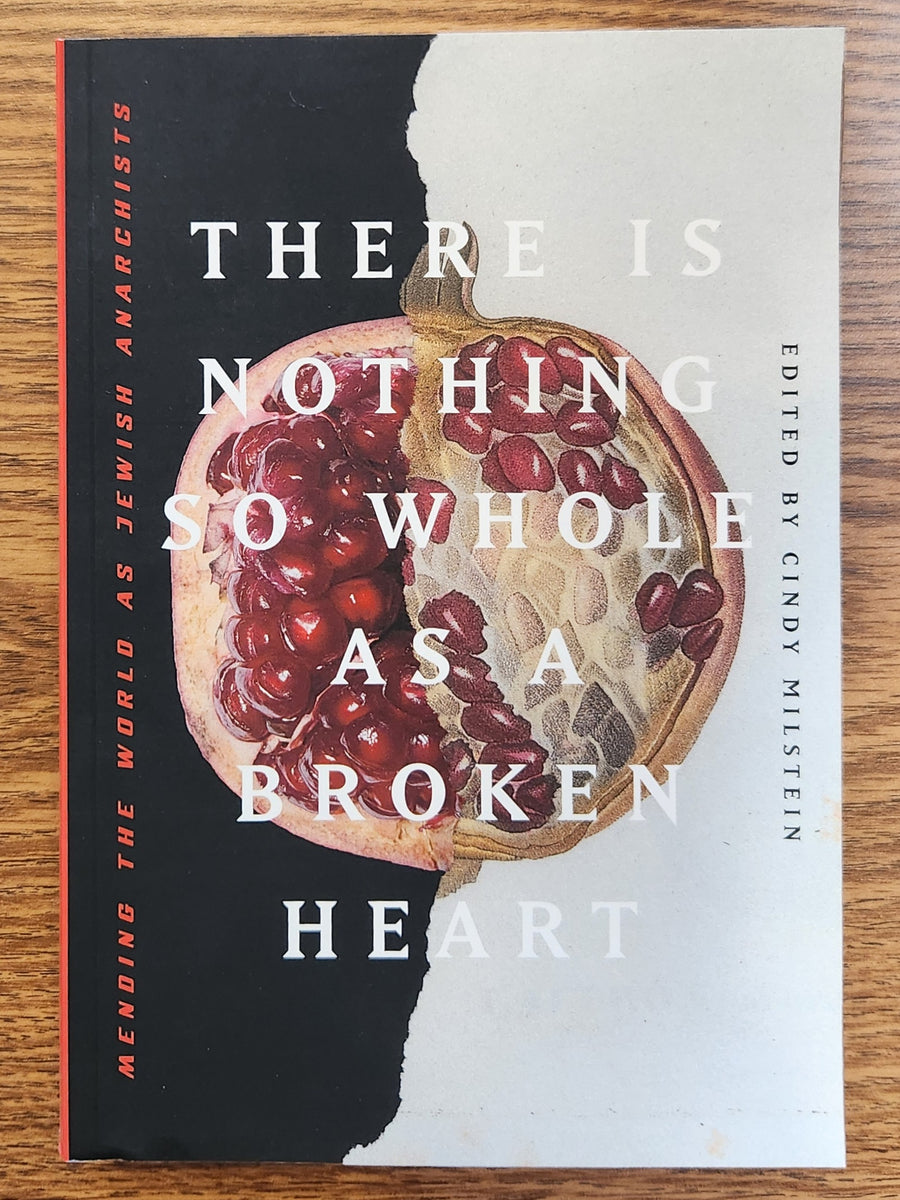
There Is Nothing So Whole as a Broken Heart
By Cindy Milstein Published by AK Press, 2021 392 pages, paperback The contemporary renewal of Jewish anarchism draws on a history of enslavement, displacement, white supremacy, and genocide as well as ancestral resistance, strength, imagination, and humor—wisdom that is sorely needed today. Through stories at once poetic and poignant, There Is Nothing So Whole as a Broken Heart offers a powerful elixir for all who rebel against systemic violence and injustice. The contemporary renewal of Jewish anarchism draws on a history of suffering, ranging from enslavement and displacement to white nationalism and genocide. Yet it also pulls from ancestral resistance, strength, imagination, and humor—all qualities, and wisdom, sorely needed today. These essays, many written from feminist and queer perspectives, journey into past and contemporary trauma in ways that are humanizing and healing. They build bridges from bittersweet grief to rebellion and joy. And via concrete illustrations of how Jewish anarchists lovingly transform their own ritual, cultural, and political practices, they clearly illuminate the path toward mending ourselves and the world. Praise for There Is Nothing So Whole as a Broken Heart... "There Is Nothing So Whole as a Broken Heart is a breathtaking kaddish to everyone living the revolutionary vision that Jewish radicals dreamed was possible. It drives to the heart of a tradition that we must rediscover, a story that is simultaneously particular and universal: we can survive if we do it together." —Shane Burley, author of Why We Fight: Essays on Fascism, Resistance, and Surviving the Apocalypse "In this moment of resurgent fascism and authoritarianism, the foundational relationship between antisemitism and anti-Blackness is more stark and apparent than ever. The vibrancy of this collection articulates not only a foundation for solidarity in shared struggles against white supremacy but also the vast imaginaries and world-making potential in the diversity of Jewish cultural expression and radical—specifically anarchist—thought. As a Black anarchist, I could not be more grateful for the generosity, vulnerabilities, and fierce, unwavering love for humanity shared within these pages." —Zoé Samudzi, coauthor of As Black as Resistance: Finding the Conditions for Liberation “The texts collected here are striking in their literary richness and emotional openness, awakening both pain and solace, insights and further questions . . . A highly rewarding reading experience that will appeal well beyond the Jewishanarchist intersection.” —Uri Gordon, co-editor of The Routledge Handbook of Radical Politics "There Is Nothing So Whole as a Broken Heart offers an ardent new archive of Jewish anarchism. These voices expand a defiant tradition: they speak of the disruptiveness of care, the labor of grief, and the pleasures of survival. As fascism and antisemitism rise, these poets, rabbis, and organizers urgently reach for another world through this one." —AE Torres, author of Horizons Blossom, Borders Vanish: Anarchism and Yiddish Literature "This book asks how modern generations of Jewish anarchists are wrestling with rising fascism, white supremacy, and antisemitism, and lifts up the specific cultural tools we bring to the work of mending (or maybe reimagining) the ever-shattering world. Today the book is a mirror; tomorrow, a new window into the archive of Jewish anarchists throughout history." —Ezra Berkley Nepon, author of Justice, Justice Shall You Pursue: A History of New Jewish Agenda "As leftist Jewish thought and organizing today witnesses a resurgence, this collection provides an important document of its anarchist current." —Treyf Podcast “A poem and a love note, a prayer song and a protest, an attempt to mend a burning world with the best of Jewish, anarchist, and Jewish anarchist traditions.” —Dan Berger, author of Captive Nation: Black Prison Organizing in the Civil Rights Era "There is Nothing So Whole as a Broken Heart is a powerful celebration of ritual—both Jewish and anarchist."—Gabriel Moshenska for Jewish Socialist
Prefigurement
Today’s cruel treatment of Muslims and immigrants was originally crafted as an attack on Jews.

Reimagining Ourselves at the End of Our World: Kinship, Interconnection, and Spirituality in the Metacrisis - The Great Simplification
Over the past decade, the world has become increasingly chaotic and uncertain – and so, too, has our cultural vision for the future. While the events we face now may feel unprecedented, they are rooted in much deeper patterns, which humanity has been playing out for millennia. If we take the time to understand past trends, we can also employ practices and philosophies that might counteract them – such as focusing on kinship, intimacy, and resilience – to help pave the way for a better future. How might we nurture the foundations of a different kind of society, even while the end of our current civilization plays out around us?

Epstein and the Capitalist Conspiracy
Naomi Klein discusses what to do with a narrative that mirrors the worst anti-Jewish theories and the importance of holding our depraved elites…

Tokyo's Diversity Olympics Dogged by Controversy
Since Tokyo 2020 can't really brag about tackling environmental issues, sustainability, cost cutting, or transparency, by default diversity and inclusiveness have become the branding agenda. This could be a positive legacy, but can the Olympics serve as a catalyst for Japan to reinvent itself? Probably not, due to the patriarchal elite's ethnonationalism and aversion to diversity and inclusion.

Tokyo's Diversity Olympics Dogged by Controversy
Since Tokyo 2020 can't really brag about tackling environmental issues, sustainability, cost cutting, or transparency, by default diversity and inclusiveness have become the branding agenda. This could be a positive legacy, but can the Olympics serve as a catalyst for Japan to reinvent itself? Probably not, due to the patriarchal elite's ethnonationalism and aversion to diversity and inclusion.