


TL;DR * From executives to individual contributors, we all make one career bet at a time. * This is poor “portfolio theory” (to use a phrase from investing), meaning that this is not a balanced “po…
Small Bets — Expert-Led Classes for Entrepreneurs
Get lifetime access to 53 expert-led classes. One payment, yours forever.

Beyond the Status Quo: A Critical Assessment of Lifecycle Investment Advice
<div> <div> <div> We challenge two tenets of lifecycle investing: (i) diversify across stocks and bonds and (ii) <span>reduce equity allocations with

Hedge Funds: Even Millennium and Citadel's Losing Traders Are Hot Recruits
With talent in short supply, top firms are looking at rival loss-making portfolio managers as a rare hiring opportunity.

A Star Investor's Tale of Risk, Ruin & Reinvention w/ Victor Haghani (RWH071)
Hire managers of one
When you’re hiring, seek out people who are managers of one. What’s that mean? A manager of one is someone who comes up with their own goals and executes them. They don’t need heavy direction. They don’t need daily check-ins. They do what a manager would do — set the tone…


Palantir’s billionaire CEO says only two kinds of people will succeed in the AI era: trade workers — ‘or you’re neurodivergent’ | Fortune
Billionaire Alex Karp tells Gen Z to skip elite college degrees, as one-fifth of Fortune 500 companies recruit more neurodivergent talent by 2027.

From Grants to Portfolios: Index Logic for Science
How science can learn from capital markets to coordinate diversity, measure progress, and turn discovery into a public portfolio.

How to Pick a Career (That Actually Fits You) — Wait But Why
Our career path is how we spend our time, how we support our lifestyles, how we make our impact, and even sometimes how we define our identity. Let’s make sure we’re on the right track.

Intentions have a surprising amount of detail
Auteur managerialism, the myth of one-shotting, and the chindogufication of engineering

How contemporary academic structures constrain scientific creativity and hold back early-career researchers
We argue that contemporary scientific systems progressively constrain high-risk and conceptually innovative research while being increasingly structured around short funding cycles, productivity-based evaluation criteria and risk-averse frameworks that favour predictable and non-transformative research outputs. Drawing on recent empirical literature, we show how such systems can place disproportionate pressure on early-career researchers by incentivizing safe, tractable and easily evaluated outputs. Structural academic mechanisms such as peer review and funding, escalating publication costs and institutional inequalities interact with precarious employment and hierarchical dependencies. In this environment, we contend that strategic conformity becomes a rational career path. This risks suppressing creativity and critical thinking precisely at the stage when scientific independence could otherwise emerge. Consequently, the probability of substantive contributions by early-career researchers is declining, while talent may increasingly abandon academia or cluster within a limited number of well-resourced institutions and national systems. By adopting a systems-level perspective, we argue that scientific creativity is not merely an individual trait but an emerging property of a supportive academic landscape and that maintaining or restoring it may require substantial structural reforms. These include promoting stable research pathways, decentralized decision-making and evaluation frameworks that better recognize collaboration, originality, persistence and nonlinear career trajectories. Without systemic change, we risk stifling the potential of early-career researchers to go beyond the confines of existing methods and approaches and deliver transformative advances. This would limit their capacity to meaningfully change our understanding of the world or benefit society, with impacts that fall short of their potential.

‘Find Your Passion’ Is Awful Advice
A major new study questions the common wisdom about how we should choose our careers.

David Graeber: "Spotlight on the financial sector did make apparent just how bizarrely skewed our economy is in terms of who gets rewarded"
David Graeber explains why the more your job helps others, the less you get paid

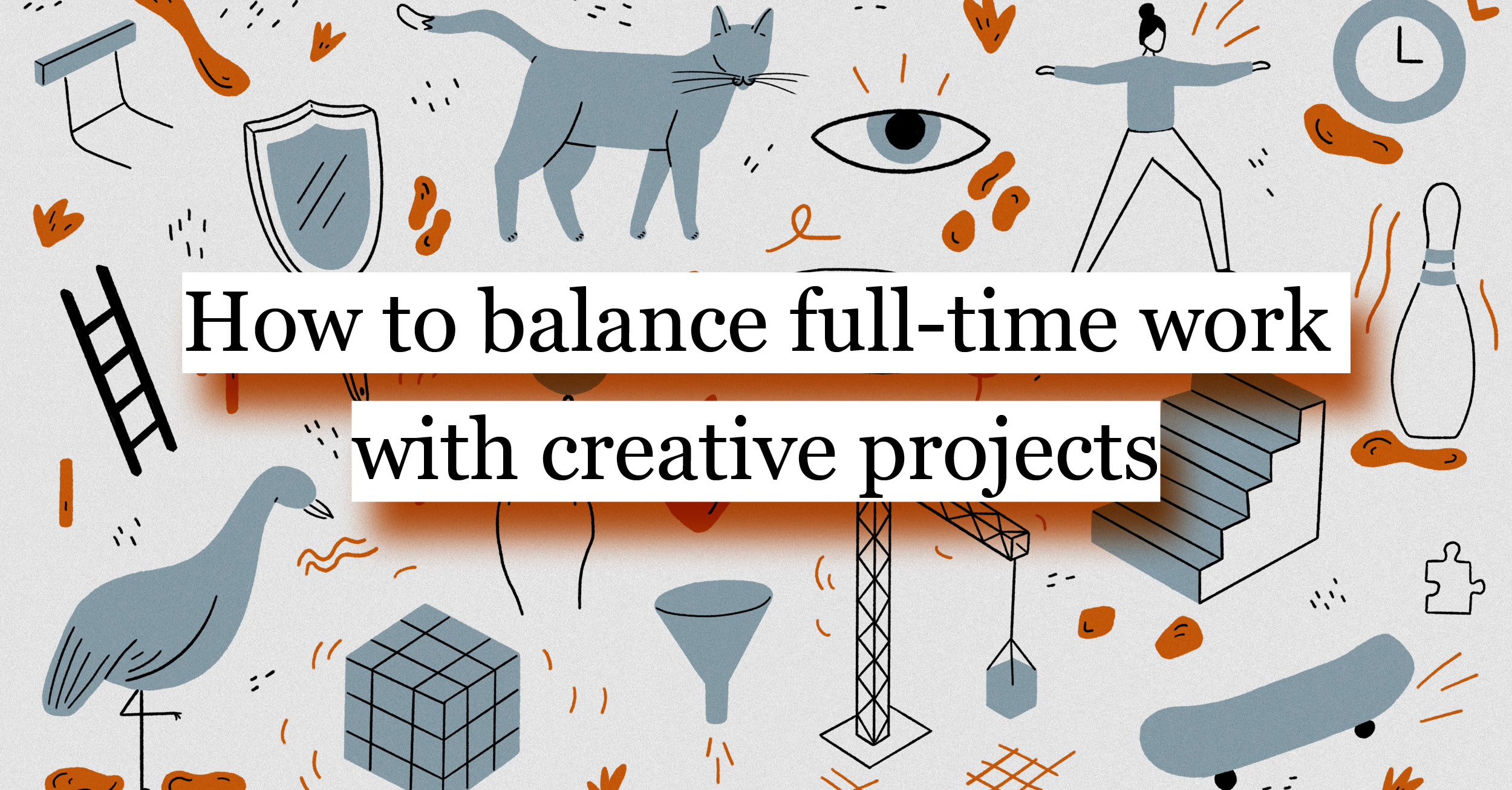
How to balance full-time work with creative projects – The Creative Independent
A guide to finding the right day job, protecting your time, and building creative habits by Jeffrey Silverstein. Illustrated by Sunny Eckerle.
Shifting the Level of Selection in Science
Criteria for recognizing and rewarding scientists primarily focus on individual contributions. This creates a conflict between what is best for scientists’ careers and what is best for science. In this article, we show how the theory of multilevel selection provides conceptual tools for modifying incentives to better align individual and collective interests. A core principle is the need to account for indirect effects by shifting the level at which selection operates from individuals to the groups in which individuals are embedded. This principle is used in several fields to improve collective outcomes, including animal husbandry, team sports, and professional organizations. Shifting the level of selection has the potential to ameliorate several problems in contemporary science, including accounting for scientists’ diverse contributions to knowledge generation, reducing individual-level competition, and promoting specialization and team science. We discuss the difficulties associated with shifting the level of selection and outline directions for future development in this domain.

While billionaires are cosplaying as astronauts Mozilla Fellows are bold enough to build alternative futures. Watch our for Rudy, Iara and Rose and you make your way through UNGA this week 👀 the future is still ours to build. bit.ly/4d0r6m7
