

Zero's partial sync approach gives us more control, better performance, and fewer headaches when building apps with lots of data. Here's why, and how I've been using it.
Adam Wiggins (Ink & Switch) - Local-First Software: Pragmatism vs Idealism
Adam Wiggins (Ink & Switch) - Local-First Software: Pragmatism vs Idealism
Local-First Software: Taking Back Control of Our Data | a mini-doc
LocalFirst: You Keep Using That Word
If you’ve been following the local-first scene over the past few years, you already know a good definition for the term “local-first” is hard to pin down. Part of the reason is that most people write software for money … and true local-first software is harder to capitalize. “Local-first” is a direct attack on vendor lock-in of all forms: data, formats, protocols, apps, services, and even environments. But the fact your employer can’t exploit this technology with a new revenue model (yet) is a minor problem.
Local-first software: you own your data, in spite of the cloud
Local-first software: you own your data, in spite of the cloud Kleppmann et al., Onward! ’19 Watch out! If you start reading this paper you could be lost for hours following all the interesti…
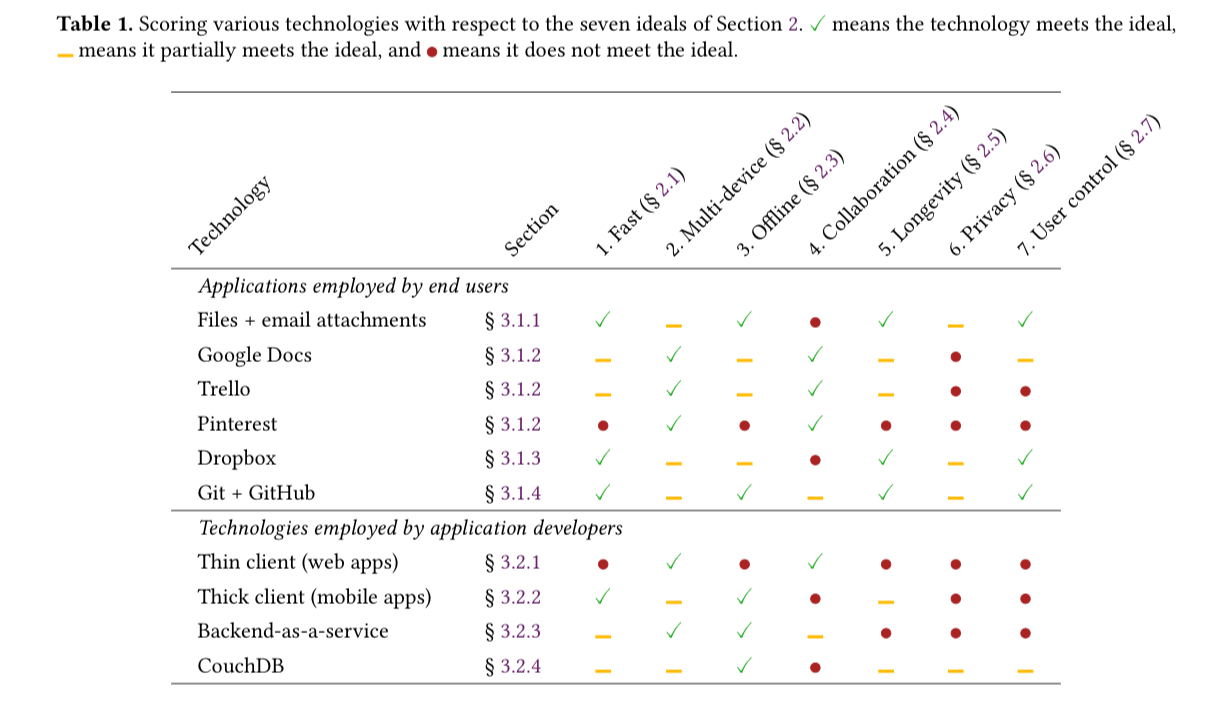
What is Local-first Software?
A look at local-first software, the idea that you can have the collaboration of cloud apps while still fully owning your data.

LiveStore: SQLite-based data layer for local-first apps
Introducing: LiveStore - the client-centric, local-first data layer for high performance applications.

Local-first software: You own your data, in spite of the cloud
A new generation of collaborative software that allows users to retain ownership of their data.

Local-first software: You own your data, in spite of the cloud
A new generation of collaborative software that allows users to retain ownership of their data.
Local-first software: You own your data, in spite of the cloud
A new generation of collaborative software that allows users to retain ownership of their data.
Local-first software: You own your data, in spite of the cloud
A new generation of collaborative software that allows users to retain ownership of their data.
In fact, one of the leading local-first libraries, Zero, doesn't even fully support offline: zero.rocicorp.dev/docs/offline They only support offline reads, the same as Count Cachula! So I ask, if fast instant reads is the goal, isn't standard HTTP caching mechanisms the better way to go?

Offline
zero.rocicorp.dev

