And the end of civilisation
The End of Reading Is Here
Optimists once believed that universal literacy was inevitable. Now it seems that the age of reading might be a short anomaly in human history.
The End of Reading Never Began
What “The End of Reading Is Here” gets wrong about literacy, intellectual authority, and American “decline”
“The End of Reading Is Here” - The Ringer
There’s no doubt that reading is in decline. But what is that decline doing to the way we think? Derek talks with The Atlantic’s Rose Horowitch about why Americans are reading fewer books than ever and struggling more with complex texts and what that means for education, work, politics, and culture.
Inside Medium: an attempt to bring civility to the internet
Long-form writing site Medium has become a megaphone for the powerful and powerless alike - the BBC meets its creator.

Reading Wars
Read online or download for free Reading Wars explores heated, even murderous, political struggles over who gets to read and what they get to read. Those conflicts, once again in the news, stretch back centuries. In this book, Don Herzog examines the history and politics of anxieties about readers and reading, spanning both the United States and Britain, from the 1500s right up to contemporary battles over banning library books and freedom of speech. In these pages, Herzog deftly interweaves episodes from Reformation England, when first Catholics and then Protestants cracked down on unsupervised Bible-reading, with the deadly campaigns in pre-Civil War America to keep black people – both free and enslaved – illiterate. Drawing on a wealth of primary sources, he reconstructs arguments insisting that ordinary men and women could not be trusted to read what they liked – indeed, that some of them ought not read at all. And he charts struggles to promote literacy. Herzog argues that at stake in these battles is whether some people – those banned from reading – are perceived as not fully human, or lesser persons than others. The radical campaign to let more or less everyone read more or less everything is ultimately, therefore, a campaign for equality. Click here to read praise for Reading Wars "In characteristically engaging and straight-forward language Don Herzog explores the debates past and present, largely in Britain and America, about whether or not to suppress reading. By taking seriously the arguments for suppressing or restricting books and their readers, Herzog suggests that those arguments turn on the claim that for some people reading is dangerous. This assumption, Herzog compellingly argues, ignores the fact that literacy is largely a social activity. In Reading Wars, Herzog develops a powerful liberal argument for literacy and reading. An argument, Herzog shows, that has incompletely triumphed." — Steve Pincus, Thomas Donnelly Professor of History, University of Chicago "Knowledge is power - which is why efforts to acquire knowledge through reading have been outlawed, suppressed through violence, and remain targets today. Don Herzog's Reading Wars tells the astonishing history behind the wars on reading in a readable, clever style, underscoring the stakes of many of the current fights over censorship and book bans." — Leah Litman, cohost of the podcast Strict Scrutiny and New York Times bestselling author of Lawless "A rich yet accessible introduction to the many ways in which society has attempted to restrict reading materials throughout British and United States history. Equal parts illuminating and horrifying, it lays the groundwork for the 21st century’s own shameful dabbles with censorship through its careful consideration of the key concerns and prejudices that structure each generation’s literacy battles." — Alison Hicks, Associate Professor in Library and Information Studies, UCL "Political theory, historical sense, worrisome texts, unheralded documents, and great storytelling join forces in Herzog’s virtuoso investigation of the brutal fighting over who gets to learn to read (and what) in early and late modern America and Britain. The bloodshed may have lessened, but we are still fighting, and Herzog shows the deeper stakes involved in reading’s relation to equality and personhood." — Mary G Dietz, John Evans Professor Emerita of Political Theory, Northwestern University , Reading Wars explores heated, even murderous, political struggles over who gets to read and what they get to read. Don Herzog examines the history and politics of anxieties about readers and reading, spanning the United States and Britain, from the 1500s right up to contemporary battles over banning library books and freedom of speech.

This is Not the End of Reading. It's the End of Modernism.
Why academics and journalists are confusing Modernism with reading itself.
Academia: What Was "Digital Literacy"?
Short Shelf Lives Make For Bad Curricular Planning

Historical pragmatism and the internet
This article argues that the literature describing the internet revolution in the 1990s was characterized by the rhetoric of the technological sublime. This rhetoric suffered from three fatal flaws: (1) it was not sufficiently grounded in the historical development of technology; (2) it viewed the internet in isolation, failing to consider the wider technological context; and (3) it failed to examine the internet in view of the social, economic, religious and political circumstances of its users. Several examples from history are cited, demonstrating that changes in various systems for the production, dissemination and preservation of cultural information both border and deborder the world. The article suggests that if internet researchers take a pragmatic, historically grounded approach, they will discover that the introduction of internet technology can be seen to have similar consequences. While the technology overcomes many boundaries (of space and time, politics and economics), other social borders may be created at the same time. It is easier to see old boundaries coming down than to see new ones being erected. Rather than being swept by utopian or dystopian enthusiasms, the article insists that the really interesting discoveries are to be made in locating the subtle social shifts taking place, relatively unnoticed, as a consequence of technological change.

Opinion | My Students Can’t Read
The generational collapse in literacy is measurable, persistent, and likely to get worse.
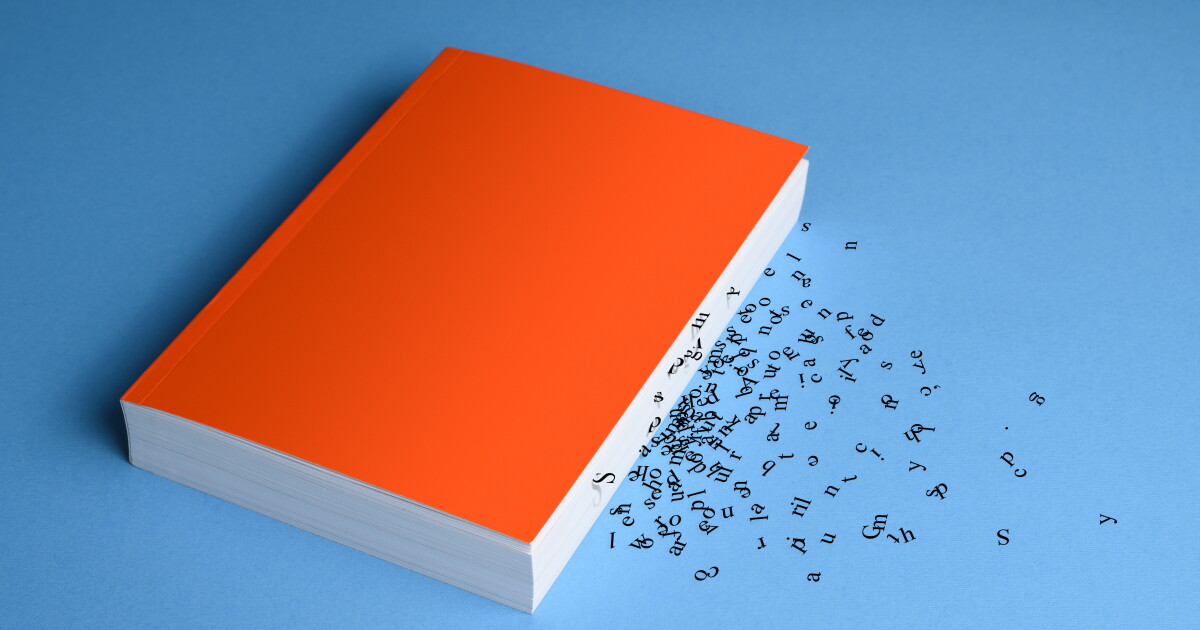
What’s Happening to Reading?
For many people, A.I. may be bringing the age of traditional text to an end.

The social contract of writing | jola.dev
About the value of genuine writing in a world being drowned in slop.
Towards Critical Artificial Intelligence Literacies
Critical Artificial Intelligence Literacies (CAILs) is the collection of ways of thinking about and relating to so-called artificial intelligence (AI) that rejects dominant frames presented by the technology industry, by naive computationalism, and by dehumanising ideologies. Instead, CAILs centre human cognition and uphold the integrity of academic research and education. We present a selection of CAILs across research and education, which we analyse into the following non-orthogonal dimensions: conceptual clarity, critical thinking, decoloniality, respecting expertise, and slow science. Finally, we note how we see the present with and without a wider adoption of CAILs — a fundamental aspect is the assertion that AI cannot be allowed to drive change, even positive change, in education or research. Instead cultivation of and adherence to shared values and goals must guide us. Ultimately, CAILs minimally ask us to contemplate how we as academics can stop AI companies from wielding so much power.
Reading in the Age of Constant Distraction by Mairead Small Staid
February 8, 2019 – Twenty-five years ago, Sven Birkerts published “The Gutenberg Elegies: The Fate of Reading in an Electronic Age.” Have his fears and projections come to pass?