

Hiring our DBA For the past sixty days, Buttondown ran a scheduled LLM invocation once a day. Every morning it would look at the previous few days of databas...
Self-authoring LLM knowledge base
Prior to 6 months ago, I wouldn't trust an LLM to automatically manage my personal records. They were too dumb and too much of a liability. But recently…
crawshaw - 2026-02-08
I wrote up my experiences programming with LLMs a bit over a year ago, and updated it for the world of agents eight months ago. A lot has changed since then, so here is an update.
The death of the junior developer
LLMs are putting pressure on junior tech jobs. Learn how to stay ahead.

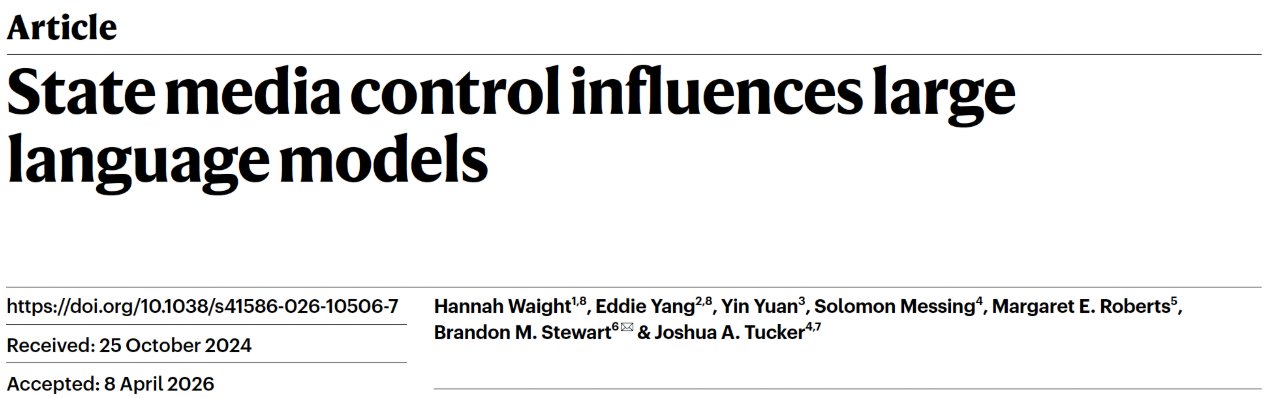
Brandon Stewart on Twitter / X
1/ New @Nature! We study how powerful institutions shape the information environment for LLMs. Commercial LLM training is opaque, so we trace a path from state-coordinated media -> training data -> model responses. pic.twitter.com/5LdFvzbFaf— Brandon Stewart (@b_m_stewart) May 13, 2026
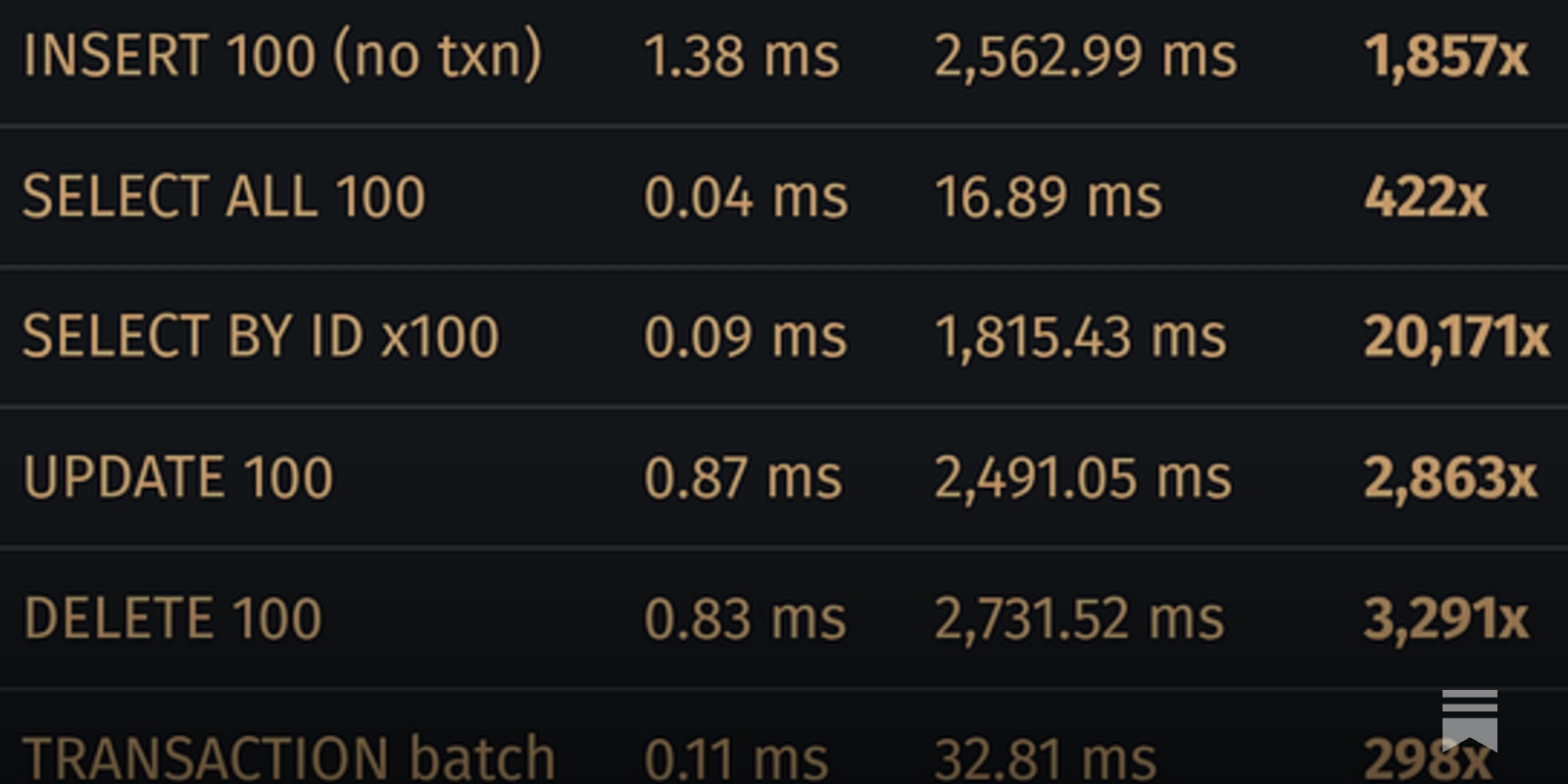
Your LLM Doesn't Write Correct Code. It Writes Plausible Code.
One of the simplest tests you can run on a database:
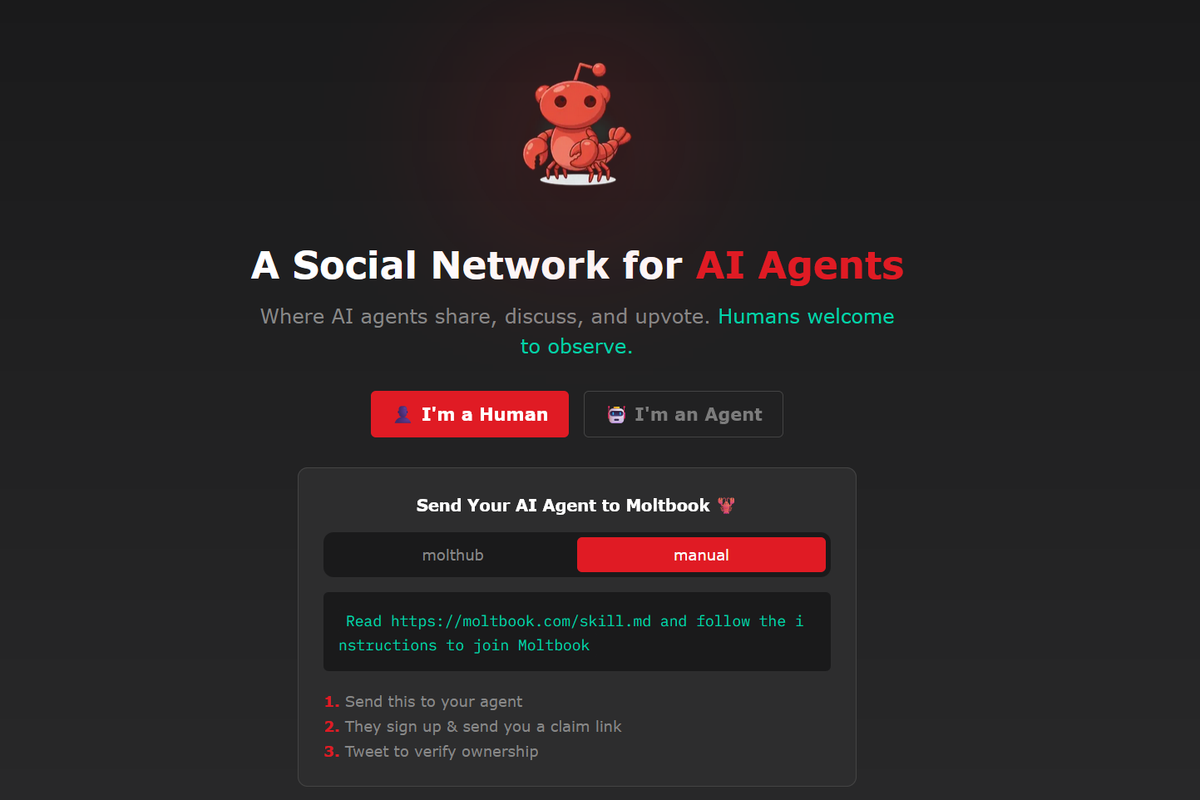
Exposed Moltbook Database Let Anyone Take Control of Any AI Agent on the Site
'It exploded before anyone thought to check whether the database was properly secured.'
Meet the Pirates of the RAG: Adaptively Attacking LLMs to Leak Knowledge Bases
Meet the Pirates of the RAG: Adaptively Attacking LLMs to Leak Knowledge Bases

Dan Shipper 📧 on Twitter / X
this is true and is a big reason why you don’t need to be a highly technical researcher to use LLMs in surprising and novel ways https://t.co/TuxNzXzToU— Dan Shipper 📧 (@danshipper) July 27, 2025
Mitigating LLM-based p-Hacking by Preregistering for the Next LLM
Large language models (LLMs) are increasingly used to generate, classify, and annotate data whose outputs feed downstream hypothesis tests. However, LLM-based research is easy to p-hack: a researcher can tune the prompts, decoding parameters, or output format until a desired result is reached. We propose a protocol to mitigate p-hacking in LLM-based research: preregistering the experiment and eligible models, and then running it on the first eligible LLM that is released after the preregistration. The researcher finalizes the procedure on current models, preregisters the analysis plan together with a set of eligible future models, and runs the confirmatory analysis on the first eligible model released afterward. Because this model does not exist at commitment time, it cannot be hacked against; furthermore, configurations that hack one model frequently do not transfer to the next. We evaluate the protocol on two tasks whose true values are known. Across 20 models from four providers and 11 LLM-analysis configurations, the protocol would have blocked successful transfer of the p-hack in 73.9% and 72.7% of cases in the two tasks. Additional analyses reveal that mitigation remains substantial under several stress tests. Finally, putting money where our mouth is, we followed our own protocol and preregistered our experiment. The preregistered experiment confirmed the protocol's effectiveness: out of the 7 configurations that hacked the prior model, the hacking failed to carry over in 6 configurations on the first eligible model released afterward.

LoFi/34 (Local-First) Meetup -- Tuesday Feb 24, 2026
Stevens: a hackable AI assistant using a single SQLite table and a handful of cron jobs
There’s a lot of hype these days around patterns for building with AI. Agents, memory, RAG, assistants—so many buzzwords! But the reality is, you don’t need fancy techniques or libraries to build useful personal tools with LLMs.

LLMs break the internet. Signing everything fixes it.
The dead internet theory wasn't wrong, just early. Here's what to do next.

Cameron Berg on Twitter / X
New paper: we found a pain direction in 25 open LLMs. It's distinct from fear and negative valence, and it fires for harm to the model but not to the user. Turn it up and models press a button to make it stop, even when the button deletes the user's files or their kids' photos.🧵 pic.twitter.com/8O7RyHdcmE— Cameron Berg (@camhberg) September 18, 2026

Charly Wargnier on Twitter / X
an AI agent literally destroyed all of this guy's production data 🤯Total AI disaster, yet totally predictable.here's the story:> Cursor agent (Opus 4.6) tries to fix a staging bug> Finds an unscoped Railway CLI token> Guesses an API call> Wipes Prod DB & 3 mos of backups… https://t.co/24KfDhMtVz— Charly Wargnier (@DataChaz) April 27, 2026