


SynopsisTable of contents Norman, D. A. (2013). Design of Everyday Things: Revised and Expanded. New York: Basic Books. The UK edition is published by MIT Press, London. What has changed from the e…
Design for a Living Planet: Settlement, Science, & the Human Future
In this brief, accessible volume, the authors — an urban philosopher and a mathematician-physicist — explain the surprising new findings from the sciences that are beginning to transform environmental design in the modern era. Authors Michael Mehaffy and Nikos Salingaros explore fractals, networks, self-organization, dynamical systems and other revolutionary ideas, describing them to non-science readers in a direct and engaging way. The book also examines fascinating new topics of design, including Agile, Wiki, Design Patterns and other “open-source” approaches from the software world. The authors conclude that a profound transformation is under way in modern design — and today’s students and practitioners will need to be aware of its implications for our future.“Lucidly describes what’s coming in the world of design — and what needs to come.” — Ward Cunningham, Inventor of wiki, and pioneer of Pattern Languages of Programming, Agile, and Scrum“Essential reading for all urban designers.” — Jeff Speck, Author of Walkable City“Brilliant.” — Charles Montgomery, Author of Happy City“Inspired, compelling and fascinating… Recognizes that a true architecture can be dug from the facts, insights, and theories, that occur with a broadening of science to include the human being.” — Christopher Alexander, Author of A Pattern Language and Notes on the Synthesis of FormSome comments on the individual chapters:“Packed with detail and beautiful in presentation.” — Gil Friend“Human society must find a path of retreat. Salingaros and Mehaffy point the way.” — David Brussat, Providence Journal“Michael Mehaffy and Nikos Salingaros have written some brilliant articles on how we can co-create cities which are truly resilient, rather than being ‘engineered resilient’.” — Smallworld Urbanism“For me, this essay was like a flash of insight, and I suddenly saw the world in a new light.” — Oeyvind Holmstad, Permaliv“We’ve just come across a very thoughtful article by Michael Mehaffy and Nikos Salingaros… [who] draw a number of lessons from biological systems and use them to draw conclusions about how resilient human systems must be designed.” — Resilient Design Institute“Salingaros and Mehaffy take us from the configuration of city spaces to the order of cells in living beings.” — Jaap Dawson, Delft Institute of Technology“If you wanted to know where the cutting edge was in urban design, it is here.” — Patrick J. Kennedy, CarFreeInBigD“This is the single most intelligent and illuminating article I’ve seen on Archdaily in 3 years.” — Nìming Pínglùn Zhě, ChinaMichael Mehaffy is an urbanist and design theorist, and a periodic visiting professor or adjunct in five graduate universities in four countries and three disciplines (architecture, urban planning and philosophy) including the University of Oregon (US) and the University of Strathclyde (UK). He has been a close associate of the architect and software pioneer Christopher Alexander, and a Research Associate with the Center for Environmental Structure, Alexander’s research center founded in 1967. He is currently executive director of Portland, Oregon based Sustasis Foundation, and editor of Sustasis Press.Nikos A. Salingaros is a mathematician and polymath known for his work on urban theory, architectural theory, complexity theory, and design philosophy. He has been a close collaborator of the architect and computer software pioneer Christopher Alexander. Salingaros published substantive research on Algebras, Mathematical Physics, Electromagnetic Fields, and Thermonuclear Fusion before turning his attention to Architecture and Urbanism. He is Professor of Mathematics at the University of Texas at San Antonio and has been on the Architecture faculties of universities in Italy, Mexico, and The Netherlands.
Playbooks — Renaissance Philanthropy – A brighter future for all through science, technology, and innovation
Christopher Alexander’s A Pattern Language defines 253 methods for constructing beautiful and practical designs at every scale, from cities to rooms.

Content Design, second edition - Paperback and eBook bundle
We work with organisations, big and small, to transform their content and help them succeed.

Designs for the pluriverse: radical interdependence, autonomy, and the making of worlds
"Arturo Escobar presents a new vision of design theory by arguing for the creation of what he calls 'autonomous design'--a design practice aimed at channeling design's world-making capacity toward ways of being and doing that are deeply attuned to justice and the Earth"--Publisher description

Static! Designing for energy Awareness
From the boost of the first cup of coffee in the morning to the glow of a nightlight that keeps a child company after dark, much of our contemporary lifestyles is powered by electricity. Today, however, the economic and environmental costs of energy require us to think again. While recognizing the complex social functions and cultural forms of electricity in everyday life, the current challenge for design is to change practices and patterns of (over)consumption. Static! explores design as a basis for increasing awareness of energy. Familiar furnishings and products have been reinterpreted to materialize electricity, to make it more visible and tangible for people. The resulting series of conceptual design examples express the poetics – and politics – of everyday electricity consumption. A design research project at the Interactive Institute funded by the Swedish Energy Agency, Static! has proved to be a pioneer in opening a current and critical research area at the intersection of design, energy and information technology. This book presents the Static! design examples and perspectives on issues in (sustainable) design today. Grounded in passion and humor, as well as rigor and research, the book asks designers and consumers – that is, all of us – to rethink the form, and future, of electricity in the world around us. Editor: Ramia Mazé. Authors: Christina Öhman, Sara Backlund, Johan Redström, Ramia Mazé, Sara Ilstedt Hjelm, Sara Routarinne.
Library of Things | The Paper Pilot
The Paper Pilot's digital garden of thoughts on philosophy, politics, and sociology
About — Every Object an Archive
We interview people about their experiences with technological objects that were once everywhere, but are now being replaced or redesigned. We are interested in the physical experience of living with these objects, their handfeel and relationships to our bodies. We are also interested in how they shaped our habits, relationships, and ways of being. Technologies are more than physical objects: whole worlds of infrastructure, process, policy and culture are built around them.

How buildings learn : what happens after they're built
Originally published: New York, NY : Viking, 1994; Includes bibliographical references (p. 224-229) and index; Flow -- Shearing layers -- "Nobody cares what you do in there": the low road --- Houseproud: the high road -- Magazine architecture: no road -- Unreal estate -- Preservation: a quiet, populist, conservative, victorious revolution -- The romance of maintenance -- Vernacular: how buildings learn from each other -- Function melts form: satisficing home and office -- The scenario-buffered building -- Built for change -- Appendix: The study of buildings in time

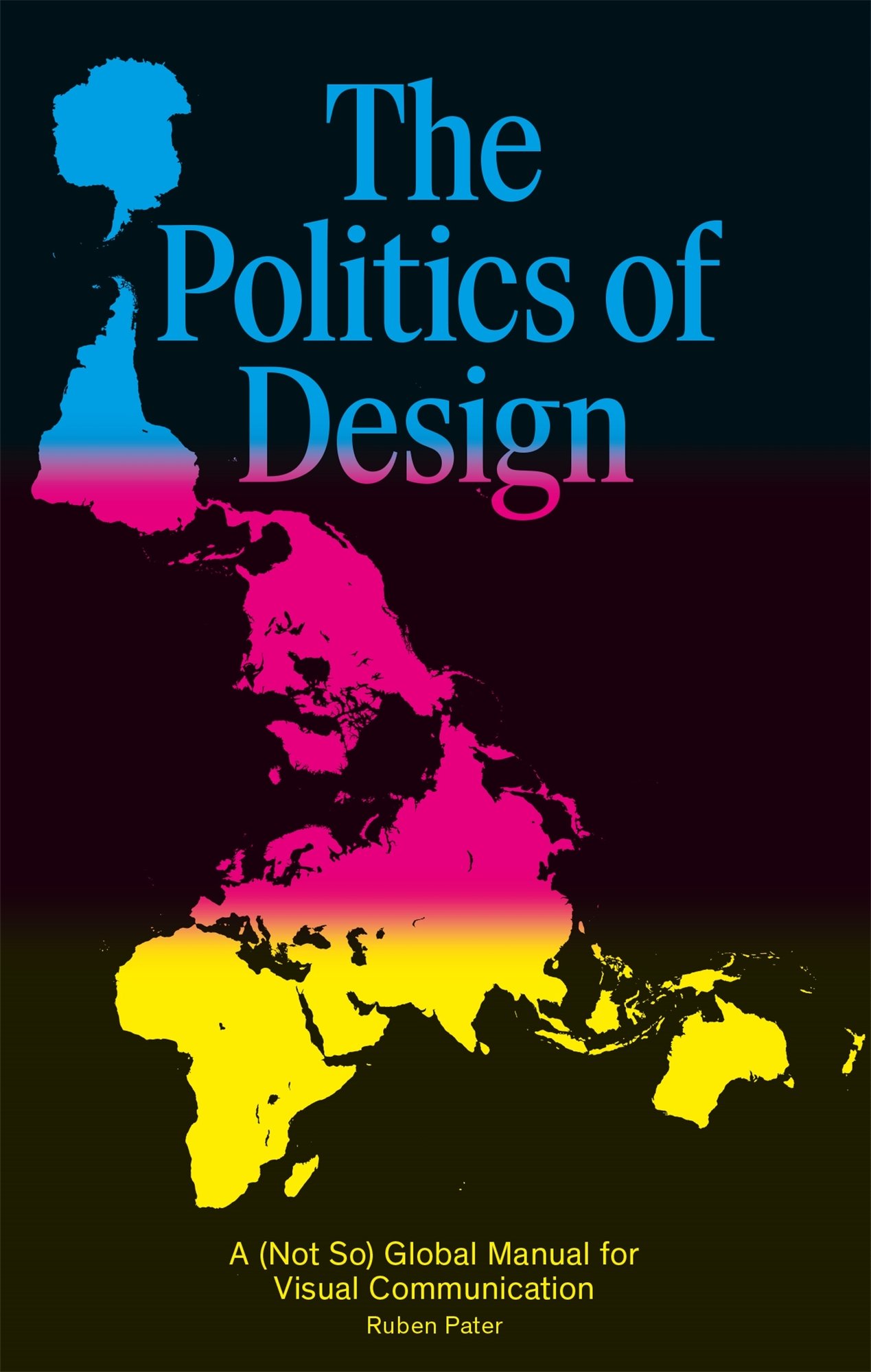
The Politics of Design: A (Not So) Global Design Manual for Visual Communication
A (Not So) Global Design Manual for Visual Communication
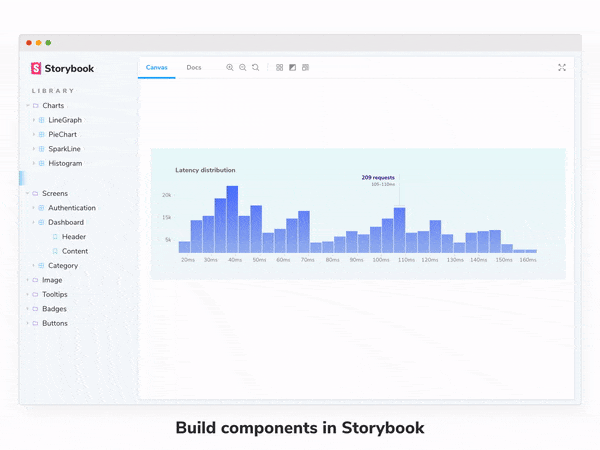
Governable Spaces: Democratic Design for Online Life – Writings and rehearsals by Nathan Schneider
Read the free, open access editionBuy: Amazon, Bookshop, Narrow Gauge Book Co-op, UC Press
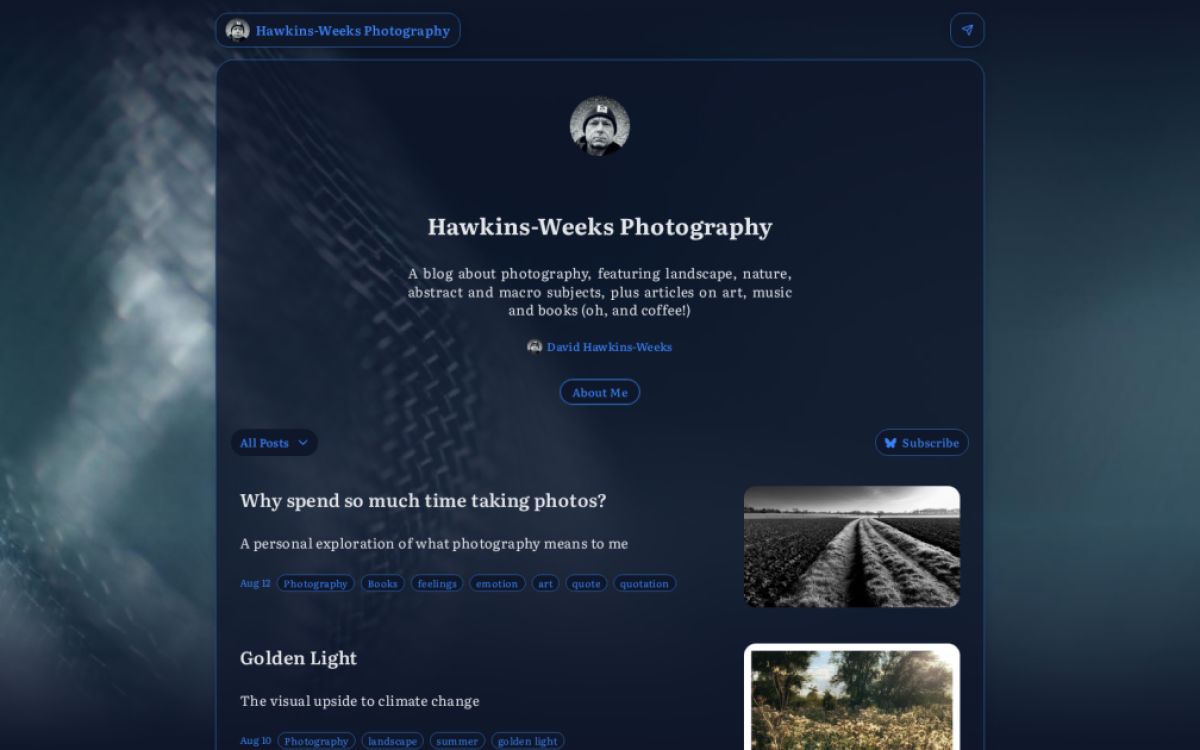
Hawkins-Weeks Photography
A blog about photography, featuring landscape, nature, abstract and macro subjects, plus articles on art, music and books (oh, and coffee!)
Monumental | Paul Stephenson | Offprint
Sunset 5.3 is here! Plus, why this newsletter has a new home.

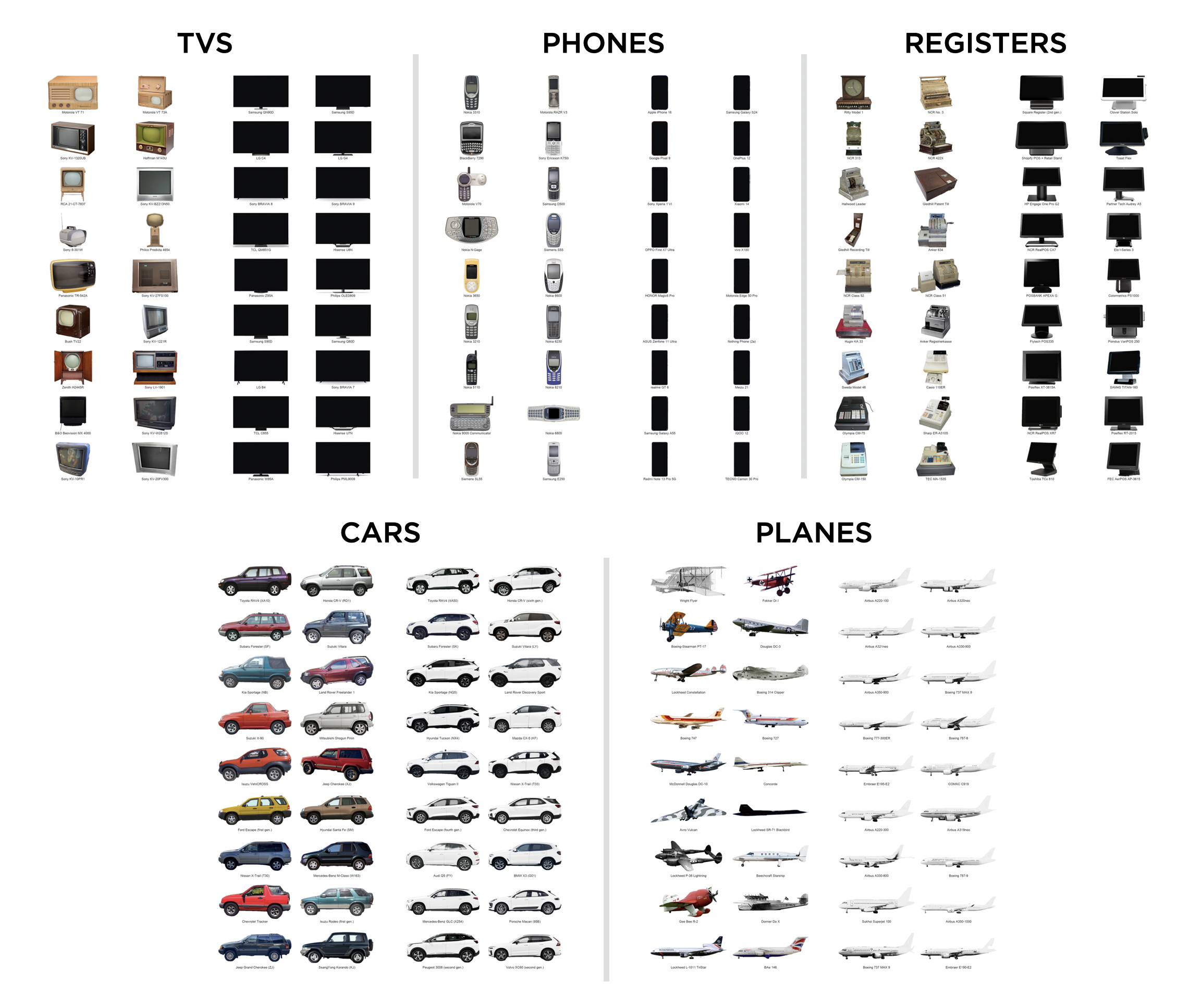
LukeW | The Convergence of Design
After seeing lots of posts over the years arguing that design has become homogenized, I decided to pull together historical and modern designs for a few differe...
design thingies

Digital Gardens

"A garden is a collection of evolving ideas that aren’t strictly organised by their publication date. "

Home
Welcome
The Garden of Maggie Appleton
Desert Thunder's Digital Garden
Hey stranger, I'm Hayleigh.
A Brief History & Ethos of the Digital Garden
Imperfection – mamuso.dev
ribo.zone

Abdelrahman's playground
Bao To - Design Engineer & Product Maker

Ping! Talks on Talking Machines
Bakken & Bæck is a design and technology studio. We build digital products, from zero to launch.