Attention is replacing hours. But is it 120% time all over again?
Making 20% Time Work | begriffs.com
Following Google’s lead many companies have instituted “20% time” for their employees. This is one day per week in which employees can work on projects of their own choosing. The practice keeps developers motivated and sharp, produces tools to solve company problems, and in the best case creates open source which builds prestige and helps recruitment.
Timeful is now completely free | Timeful
No more ads. No more premium tier. No more event limits. Every feature in Timeful is now free for everyone.

Why time management is ruining our lives | Oliver Burkeman
The Long Read: All of our efforts to be more productive backfire – and only make us feel even busier and more stressed


Andrew Ho on Twitter / X
Not really observations that others before me haven’t made, but:- Despite the seemingly magical nature of LLMs, reflection over a >3 month timescale suggests my total productivity hasn’t increased by over 100%, or perhaps even by over 50%, and a lot of time is actually wasted…— Andrew Ho (@andrewho03) September 3, 2026
Does Your Brain Think Accurately About Time?
Chicago Booth’s Kristin Donnelly talks about her research on time-duration asymmetry.

Is full-time work bad for our brains?
If you’re over 40, working more than 25 hours a week could be affecting your intelligence, new research suggests

Sᴜɴʀɪsᴇ Oᴀᴛʜ 十 Tʜᴇ Sʏʟʟᴀʙᴜꜱ (ORI) - CC0 on Twitter / X
It is significant that the passage of time involves the continuous transfer of data from one timestamp to another.— Sᴜɴʀɪsᴇ Oᴀᴛʜ 十 Tʜᴇ Sʏʟʟᴀʙᴜꜱ (ORI) - CC0 (@sunriseoath) September 23, 2026
New Clock May End Time As We Know It
Scientists working to create the perfect atomic clock have a fundamental problem: Right now, on the ceiling, time is passing just a bit faster than it is on the floor.

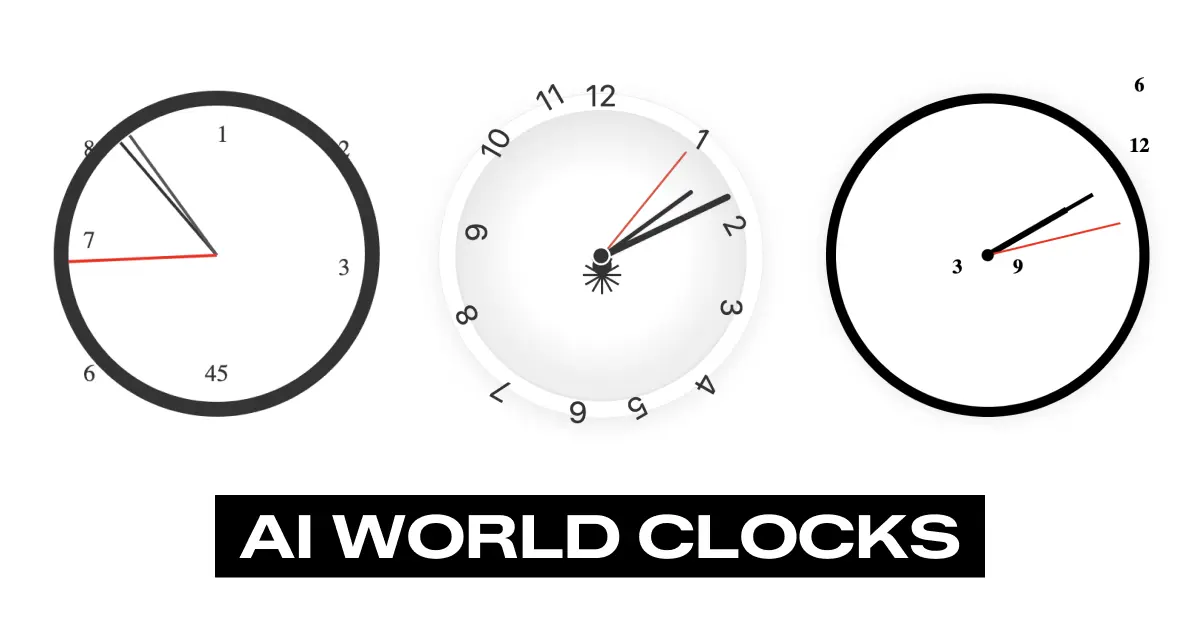
AI World Clocks
The current time as rendered by 9 different AI models. By Brian Moore.
Tempo - Undergoing Maintenance
Tempo - Undergoing Maintenance
You can code only 4 hours per day. Here’s why.
Most of us have felt it: after a few solid hours of coding, your brain starts shutting down.
When Bad Things Happen in Slow Motion - Nautilus
Is there more to our experience of time than the foibles of memory?