


Several insightful pioneering agronomists have recommended the use of a refractometer and Brix readings as a useful management tool to evaluate overall crop qua
The Beauty of Brix – Ten Things You Need To Know
Imagine a hardy, inexpensive, user-friendly tool that will predict your crop's pest pressure, yield potential, quality, shelf-life, calcium status and weed problems. It will even detect boron deficiency, foliar spray suitability and the likelihood of frost damage. It seems a big ask for a single device, but
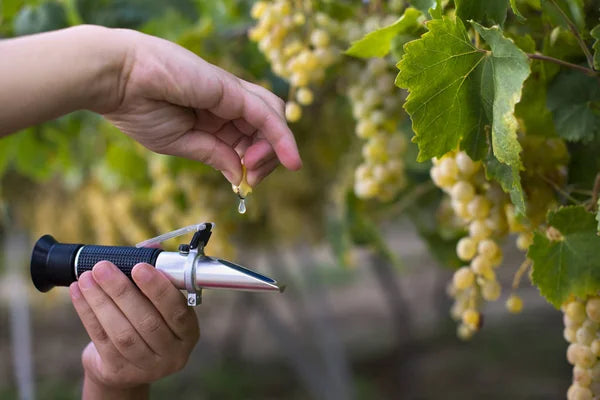
How to Use a Refractometer
REFRACTOMETER: THE ESSENTIAL TOOL The refractometer measures degrees Brix- a measure of the dissolved solids and the sugars produced during photosynthesis. OPERATING INSTRUCTIONS: 1. Open the daylight plate, wipe the refraction prism carefully with soft flannelette. Be careful not to scratch the surface. 2. Choosing th
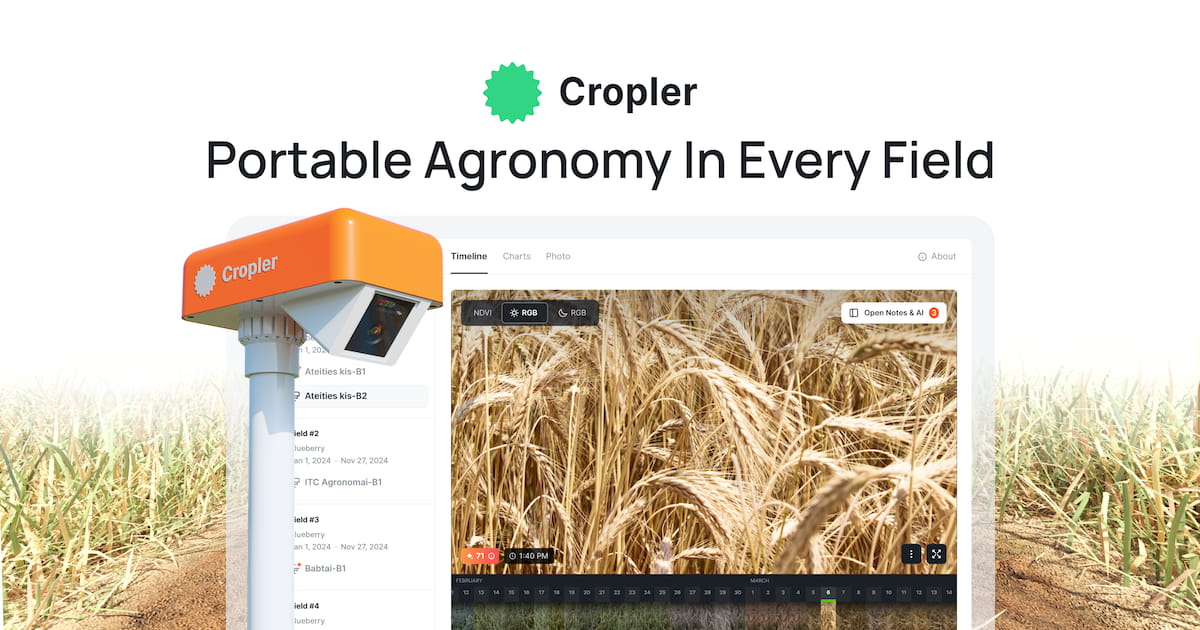
Cropler Web Platform – Agricultural Data Analysis
Monitor your fields online with the Cropler platform for real-time photos and analytics.
Annual Reports | CAA
For archived content, please refer to the National Diet Library's Web Archiving Project (WARP).
Agriculture research summaries
Read short summaries of agricultural studies tailored to B.C. farmers and producers.
https://www.thegardensaltspring.com/The Garden Salt Spring Island | cold-hardy citrus & avocado production in Canada | growing healthy soils & nutrient dense food | anaerobic digestion & Johnson-Su
The Garden is an innovative farm in Canada's Pacific Southwest. It focuses on developing resource-efficient systems for greenhouse and orchard production. It applies regenerative practices for on-farm nutrient cycling. The farm operates a small-scale anaerobic digester, has extensive rainwater catchment, and assesses progress with on-farm analysis of soil and plants using Soil Food Web microscopy, brix, and off-farm leaf sap analysis. Visit our blog, YouTube channel and workshop opportunities.
Best Crops for a Survival Garden? (urban gardening forum at permies)
I recently read an article that suggested the following 12 crops for a survival garden:. Have you ever considered an "SHTF" crop list?
Collections: Bread, How Did They Make It? Addendum: Rice!
Thanks to our helpful volunteer narrator, this entire post series is now also available in audio format! As an addendum on to our four-part look at the general structures of the farming of cereal g…

Some recent developments in controlled-environment agriculture: on plant physiology, sustainability, and autonomous control
In this review, we highlight some recent developments in controlled-environment agriculture (CEA), discuss its sustainability and provide a future outlook, mainly based on recently published work f...

HOME
We are committed to growing year-round, ecologically sound, nutrient dense food for our local community.
Enough with 'local' and 'organic'. We'll begin to eat well when we farm well | James Rebanks
We need to know how and where our food is grown and thereby take more responsibility for the planet
CIBO Technologies
CIBO’s advanced technology seamlessly integrates funding access, agronomic expertise and frictionless measurement to unlock the full potential of regenerative agriculture. Launch and grow high impact programs faster, with lower costs and greater confidence.

Agriculture needs changes to help save climate and farmers, says national agriculture group | CBC News
A report released Wednesday by the National Farmers Union concludes that some elements of old-fashioned mixed farming combined with the latest technology can reduce greenhouse gas emissions and keep more farm families on the land.

Home | BC Association for Regenerative Agriculture
A social-ecological framework for analyzing and designing integrated crop–livestock systems from farm to territory levels
Integrated crop–livestock systems are often considered a promising way to address agricultural sustainability issues. Many authors claim that complementarities and synergies between crops and livestock can improve nutrient cycling and delivery of ecosystem services (ES) in agricultural systems. They have analyzed effects of interactions at the farm level and affirmed the potential advantage of developing crop–livestock interactions at the territory level. However, potential benefits of developing synergies beyond the farm level have not been clearly identified. Thus, we developed a conceptual framework that can be used to analyze, design and perform integrated assessment of crop–livestock systems at the territory level. To address crop–livestock interaction issues, we define it as a social-ecological system called the territorial crop–livestock system (TCLS). The ecological system is represented as three interacting components, crops, grasslands and animals, allowing description of various land uses and their potential effects on nutrient cycling and ES. The social system, represented as farmers interacting with natural-resource managers and agro-food chain actors, determines land use and the nature and intensity of ES delivered. We highlight the importance of coordination and learning among actors to support implementation of complex adaptive systems such as TCLSs. We illustrate the expressive power of our conceptual framework through development of a generic typology of crop–livestock systems. Then we show how our conceptual framework can be used as an intermediary object with stakeholders in participatory design approaches. We illustrate this process by representing four archetypal TCLSs. We provide an example of the design approach implemented in Southwestern France to address severe recurrent water shortages, which includes analysis of land use in the current crop–livestock system and the associated key metabolic and ES issues, identification of options for change and multi-criteria analysis of these options. We conclude that this framework shows great potential to support development of sustainable farming systems at the territory level.
Future foods for risk-resilient diets
Future foods, such as microalgae, mycoprotein and mealworm, have been suggested as nutritious and sustainable dietary options. Here we consider one of the most profound, yet neglected, benefits of future foods farming systems—their potential to provide essential nutrition in the face of systemic disturbances—and discuss major barriers to realizing this prospect.
