


Tennis in the era of automated decision-making
Westside Table Tennis Center
This page should contain all the information you need to come to play with us. Please read it thoroughly.
Inside Baseball: The Automated Ball-Strike System as an Object Lesson in Technological Rule Enforcement
Clearly-defined rules are often assumed to be straightforward to automate and evaluate. We challenge this assumption through an in-depth study of Major League Baseball's (MLB) seven-year experimentation with the Automated Ball-Strike System (ABS). ABS is envisioned to call balls and strikes accurately: a seemingly straightforward use of technology to objectively determine the distance between a pitch and the strike zone. Although the strike zone is an area clearly defined in the rulebook, it took MLB seven years to figure out how to automate calling balls and strikes with ABS, showing how even seemingly straightforward rules require a complex translation process to operationalize via technological systems. In this paper, we trace the design decisions that led to the current implementation of ABS. Our case study reveals that "distance" exists even between a clear rule and its technological implementation. Using analytic frameworks from Science and Technology Studies (STS), we show that such distance exists because (1) historically, the "ground truth" of the strike zone is contested: the rule in practice has always reflected a hybrid between the rulebook definition and umpires' enforcement decisions; and (2) the use of ABS is embedded in an existing eco-system, where the implementation of a technological enforcement system needs to balance multiple stakeholder values. This perspective challenges conventional evaluation paradigms that center on the distance between a formalized rule and its technological implementation, and instead calls for evaluating how such systems are experienced in practice. Addressing this question requires in-depth social science approaches, contributing to ongoing conversations in FAccT about the implementation and evaluation of sociotechnical systems.

Artificial Intelligence in Australian Sport | ASC
Artificial Intelligence (AI) is changing the way sport is played, coached, managed, and experienced in Australia and internationally. From performance analysis and injury prediction to officiating support and talent identification, AI brings powerful tools with many opportunities, but also new risks.
Sᴜɴʀɪsᴇ Oᴀᴛʜ 十 Tʜᴇ Sʏʟʟᴀʙᴜꜱ (ORI) - CC0 on Twitter / X
I like using poker as an example. Even as a game-theory-optimal strategy will beat any non-optimal strategy over enough hands, the pot it lost on the first hand is not itself actually recovered. That wound still is there.— Sᴜɴʀɪsᴇ Oᴀᴛʜ 十 Tʜᴇ Sʏʟʟᴀʙᴜꜱ (ORI) - CC0 (@sunriseoath) August 6, 2026
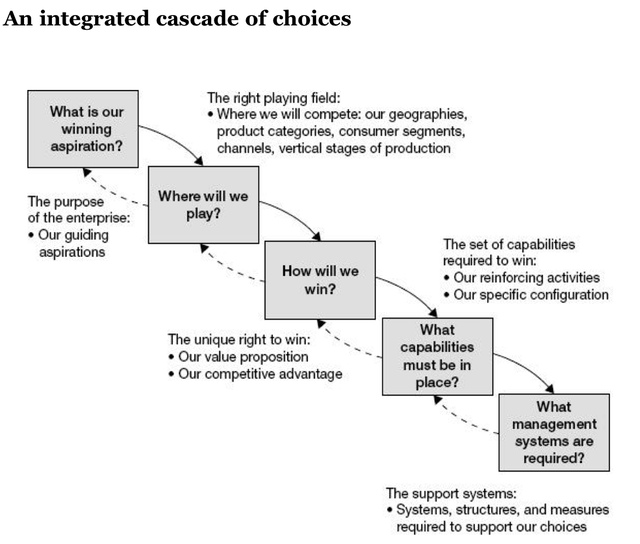
Playing to Win: How Strategy Really Works
How Strategy Really Works. This approach grew out of the strategy practice at Monitor Company and subsequently became the standard process at P&G.
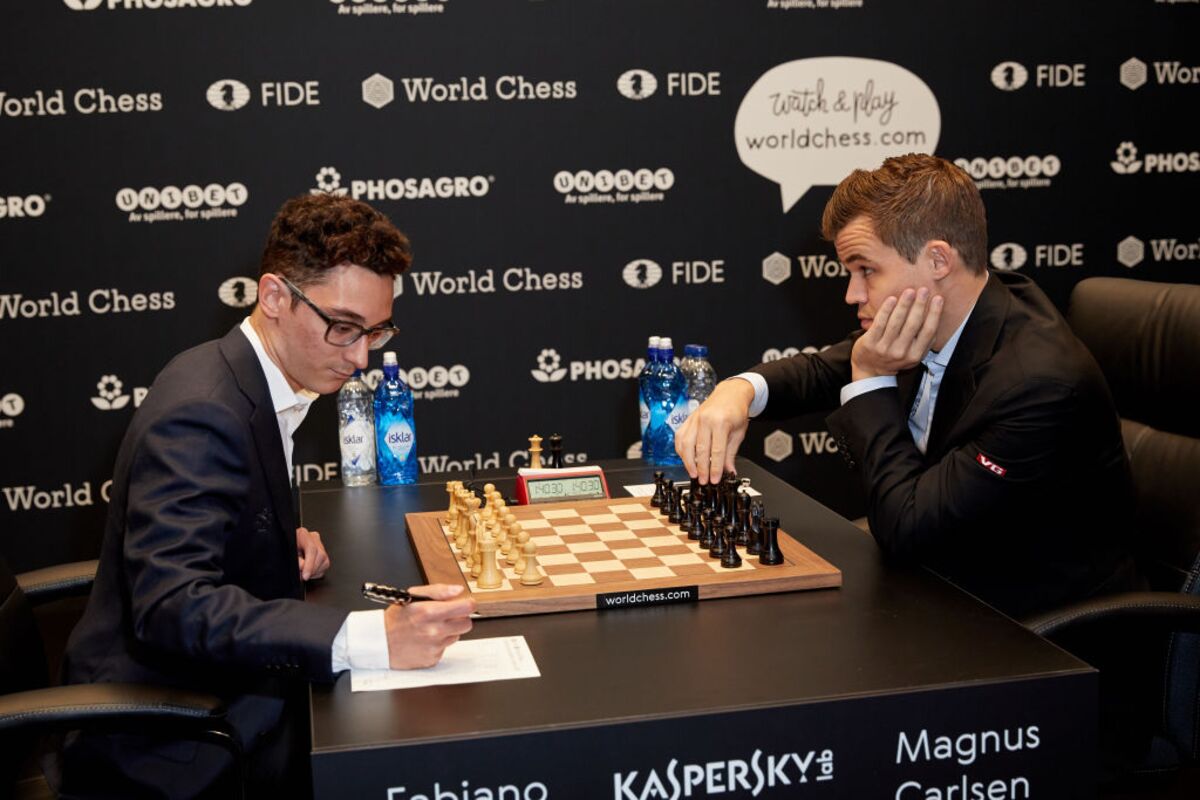
World Chess Championship 2018 Is Made for the Internet
How and why a 1,500-year-old game has conquered the internet.
Valve’s quest to take e-sports mainstream
The ‘Dota 2’ version of the World Cup is bringing pro gaming to the fore

Los Angeles Table Tennis Lessons for Kids | Grace Lin TTC
We are the #1 kids table tennis club in Los Angeles. We offer individual lessons, group lessons, equipment, and tournaments. Call us today!
Checkers Is Solved
The game of checkers has roughly 500 billion billion possible positions (5 × 10²⁰). The task of solving the game, determining the final result in a game with no mistakes made by either player, is daunting. Since 1989, almost continuously, dozens of ...

Pluralistic: Firing the refs doesn’t end the game (12 Mar 2025) – Pluralistic: Daily links from Cory Doctorow
Let me tell you how I became a proud science denier, and how it saved my life.
Introducing DAVIES: A framework for Identifying Talent Across the Globe — American Soccer Analysis
In the world of sports, the search for an all-encompassing player evaluation metric is never-ending. Baseball was the first to develop its metric with Wins Above Replacement. Basketball followed suit with Player Efficiency Rating, and Hockey WAR has come into the fold within the past year. The US So

Predicting outcomes for games of skill by redefining what it means to win
The Elo rating system is a highly successful ranking algorithm for games of skill where, by construction, one team wins and the other loses. A primary limitation of the original Elo algorithm is its inability to predict information beyond a match's win-loss probability. Specifically, the victor is awarded the same point bounty if he beats a team by 1 point or 10 points; only the rating difference between the team and its opponent affects the match bounty. In this work, we explain that Elo ratings and predictions can be naturally extended to include margin-of-victory information by simply redefining "what it means to win." We create ratings for each value of the margin-of-victory and use these ratings to predict the full distribution of point spread outcomes for matches which have not yet been played.
Little Tokyo Table Tennis • Little Tokyo Table Tennis
LTTT / Little Tokyo Table Tennis is a community ping pong club held weekly at Terasaki Budokan. Operating for and out of the Little Tokyo. Everyone is welcome.

Day 1 - Marina Rubicon Lanzarote 52 SUPER SERIES Sailing Week
