
We change policy, culture, and behavior through collective action — so every child grows up with more play, independence, and real-world connection, and less time online.
The Kids Are (Mostly) Alright: New Pew Study Deflates The Social Media Panic
A couple weeks back, Jonathan Haidt published another entry in his ongoing campaign to convince the world that social media is inherently ruining kids’ lives. This one was a victory lap title…

Growing up in the online world: a national consultation
We are consulting on further measures to prepare children for the future in an age of rapid technological change. This includes potential age restrictions on social media and other services such as gaming sites and AI chatbots, restrictions on addictive design features and risky functionalities, and better support for parents and families.

Despair and anxiety among UK youth
For years, the age profile of mental ill health was hump-shaped, peaking when people were in their late 40s or early 50s. But in recent years the mental health of the young has deteriorated to such an extent that, today, anxiety and despair peak when UK citizens are in their mid-20s. In most international surveys, adolescents in England, Scotland, and Wales are among the least happy in the world. This column focuses on one of the many likely contributory factors to young people’s mental health – the rise in social media, underpinned by the smartphone.

Open source confronts its midlife crisis | The Observation Deck
Midlife is tough: the idealism of youth has faded, as has inevitably some of its fitness and vigor. At the same time, the responsibilities of adulthood have grown: the kids that were such a fresh adventure when they were infants and toddlers are now grappling with their own transition into adulthood – and you try to remind yourself that the kids that you have sacrificed so much for probably don’t actually hate your guts, regardless of that post they just liked on the ‘gram. Making things more challenging, while you are navigating the turbulence of teenagers, your own parents are likely entering life’s twilight, needing help in new ways from their adult children. By midlife, in addition to the singular joys of life, you have also likely experienced its terrible sorrows: death, heartbreak, betrayal. Taken together, the fading of youth, the growth in responsibility and the endurance of misfortune can lead to cynicism or (worse) drastic and poorly thought-out choices. Add in a little fear of mortality and some existential dread, and you have the stuff of which midlife crises are made…

Why Protecting Kids from Social Media May Make Things Worse — Douglas Rushkoff
I’m supposed to give a talk next week about kids and social media and the need for more media literacy education, more regulation of platforms, and more substantive discussion about how to keep our kids from media-induced self-harm. The whole event is well-meaning, but is characterized by a sense of worry and protection. And for some reason, after years of making those sorts of arguments in my articles and documentaries, I have a strong impulse to pivot the other way.
You Can Form a Part of Yourself Online: The Influence of New Media on Identity Development and Coming Out for LGBTQ Youth
Internet-based new media are increasingly utilized by lesbian, gay, bisexual, transgender, and queer (LGBTQ) youth, yet little is known about the ways in which it influences their identity developm...
You Can Form a Part of Yourself Online: The Influence of New Media on Identity Development and Coming Out for LGBTQ Youth
Internet-based new media are increasingly utilized by lesbian, gay, bisexual, transgender, and queer (LGBTQ) youth, yet little is known about the ways in which it influences their identity developm...
Erlend Sogge Heggen (@erlend.sh)
1. solitude: single-player game loop 2. bottomlessness: infinite scroll 3. speed: instant delivery/gratification 4. teasing: generally satisfactory, never perfect; “maybe the next one is exactly what I want” ↘️ quoting NPR (@npr.org): Taken together, these four features can create a trancelike state that can keep us stuck on social media apps or video games for hours. Children are particularly vulnerable. n.pr/4mH6i6s
Child Liberation | The Paper Pilot
The Paper Pilot's digital garden of thoughts on philosophy, politics, and sociology
How the Meta Settlement Silences Youth Activism
Since its integration into our digital world, social media has played a pivotal role in youth organizing and social mobilization. Yet, people’s access to these platforms is increasingly coming under
Gen Z Is Pioneering a New Understanding of Truth
The first generation to truly grow up online, Generation Z and their cohort live in a social media ecosystem that blends facts and feelings. It’s significantly shifting how they understand what’s true.

Why should children program - a review of Seymor Paperts Mindstorms
This is an essay about what it means to teach a kid to program, using Seymor Paperts groundbreaking book Mindstorms as a reference.
The hidden ‘rules of the game’ that dictate how we navigate the world | Psyche Videos
How free are we really, if human behaviour embodies the complex, intertwined webs of society and history?

Children today are suffering a severe deficit of play | Aeon Essays
Children today are cossetted and pressured in equal measure. Without the freedom to play they will never grow up
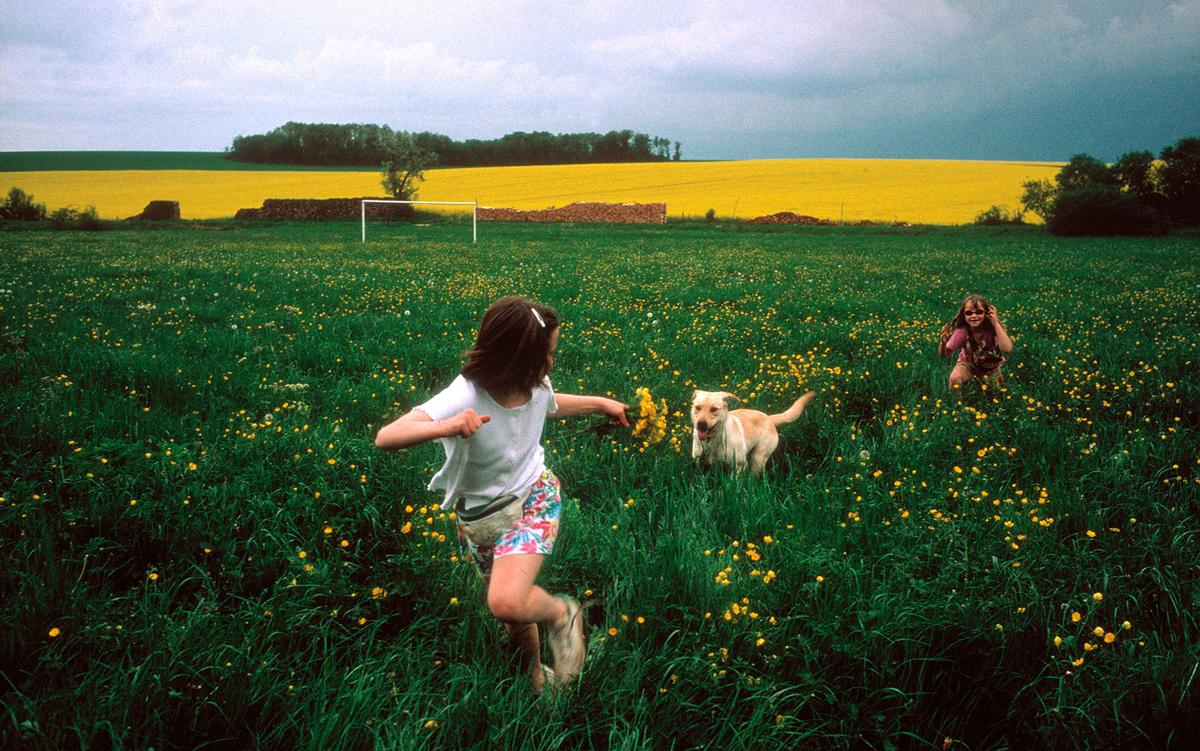
The great rewiring: is social media really behind an epidemic of teenage mental illness?
The evidence is equivocal on whether screen time is to blame for rising levels of teen depression and anxiety — and rising hysteria could distract us from tackling the real causes.