Welcome to StateBook.
Improving social media for democratic discourse
Social media have expanded opportunities for communication and political participation, but today's dominant platforms are optimized primarily for engagement and advertising revenue, contributing...

Shifts in U.S. Social Media Use, 2020–2024: Decline, Fragmentation, and Enduring Polarization
The social media ecosystem appears to be in flux. Twitter’s rebranding to X has come to symbolize a broader reorganization of online publics – political reshuffling, user attrition, and uncertainty over the role of legacy platforms. Simultaneously, the shift from text-based, networked feeds toward algorithmically curated, short-form video has accelerated, with TikTok setting the pace for the wider ecosystem [18, 14, 16]. At the same time, everyday communication increasingly migrates from large, open networks to semi-private spaces such as group chats and messaging apps. Commentators describe a digital public sphere in transition: smaller, more fragmented, less dominated by traditional social networking sites, and rise of more broadcast-oriented forms of media – with some even suggesting that we are seeing the beginning of the end of the social media era.
Social Media Is Now Parasocial Media
When practitioners used the term “social media” to describe the internet tools that emerged in the mid-aughts, they were giving a name to the kinds of platforms and protocols that allowed people to socialize with friends and communities of interest by using digital technologies. Twenty years later, users of social media are far more likely to scroll than post – and the content that they consume is often strategically produced and algorithmically curated. In this essay, I argue that the very essence of social media has changed. To more effectively interrogate what we are witnessing, we need to stop presuming that these tools are “social media” and begin recognizing that they are now “parasocial media.” Doing so raises new questions about digitally mediated sociality, not to mention the politics and governance of these platforms.

Note for the file New social media platform diversification of our presence redacted document 5.pdf
This is an HTML version of an attachment to the Freedom of Information request 'Decision to join W social network'.
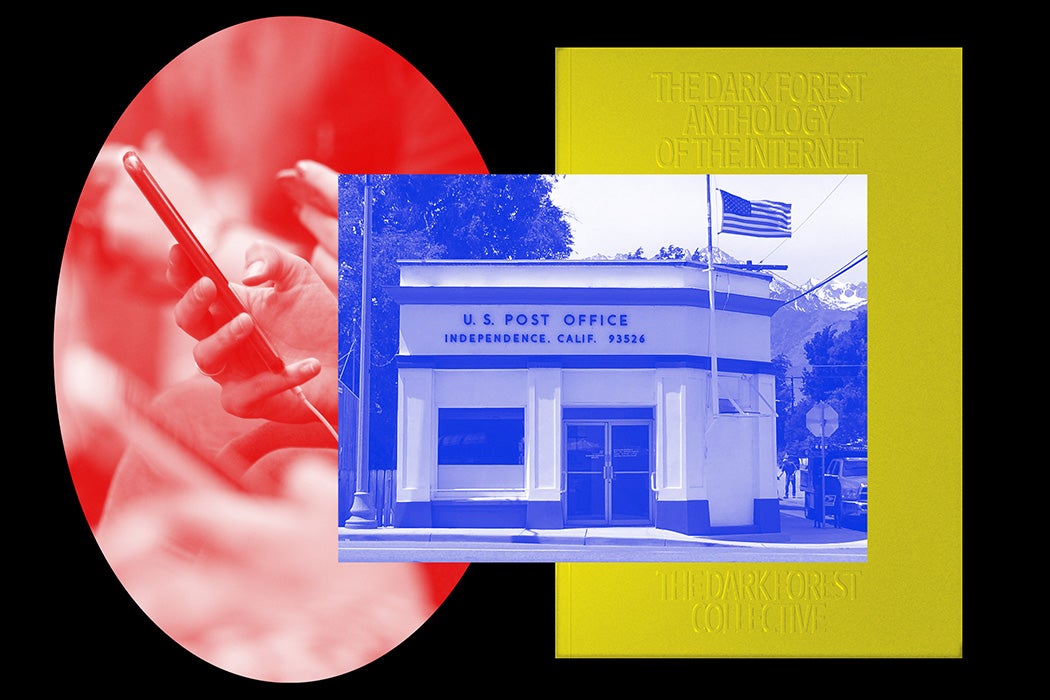
The Case for a Public Social Media Platform - JSTOR Daily
Artist and writer Joshua Citarella explores why corporate platforms corrode democracy—and what a postal-service-style digital commons could do differently.
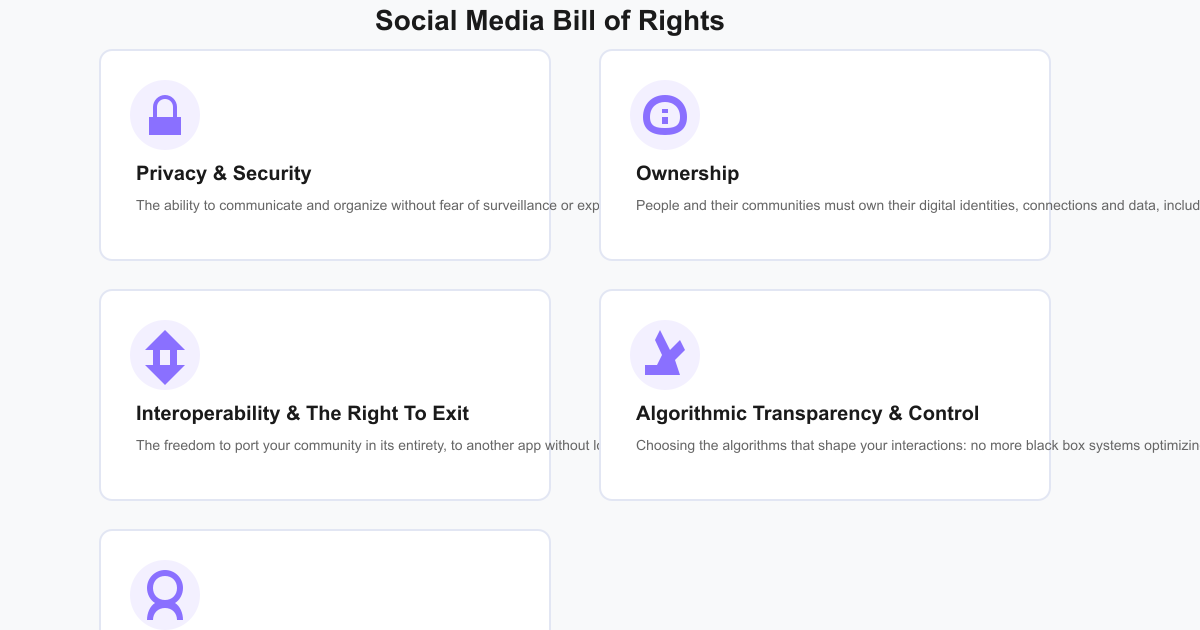
Declaration of Social Media Rights
Five fundamental rights we need for a free, open, and humane social media ecosystem
Shifts in U.S. Social Media Use, 2020-2024: Decline,...
Using nationally representative data from the 2020 and 2024 American National Election Studies (ANES), this paper traces how the U.S. social media landscape has shifted across platforms,...
A Plan for Social Media - Rethinking Federation
<p>This is part of a series of posts about the current state of Social Media. I talked about <a href="/a-plan-for-social-media-intro">Mozilla’s failed str

Reclaiming Social Spaces: Are Open Source Platforms a Path for More Human Connection?
What if social media platforms were built to serve their communities, not billionaires? Join us with the founders of Blacksky as we explore the potential of open source social media.
Bridging Social Movements and the New Social Web (working draft) - Variable Context with @CaptainCalliope.blue
On connecting movements, media, and new protocol ecosystems to rebuild the civic, cultural, and technical foundations of a freer, more self-determining society.
W-Social: What does sovereignty mean for social media? – Open Future
The European Commission’s move to W-Social frames it as a European alternative to X, but its closed-source code and reliance on Bluesky’s infrastructure show that sovereign social media requires open infrastructure—not European ownership alone.
The State Department’s X Directive and the End of Platform Independence
A cable endorsing a social media platform by name as a tool of U.S. diplomacy and military psychological operations would have been unthinkable—until recently.
Framing to Grow the Open Social Web and Serve Democratic Freedoms – Position Paper / Richard Reisman
Framing to Grow the Open Social Web and Serve Democratic Freedoms – Position Paper Richard Reisman (Discussion Draft 2/13/26) For FediForum Un-Workshop March 2, 2026 Growing the usage and functionality of the social web to meet the needs of humanity requires a broadened framing of the task and ...

It’s Not 2006 Anymore; The Useful, Vernacular Institution; What Is Free Our Feeds, Anyway?
This issue explores emerging alternatives to centralized social media platforms and the institutional forms that might support them. The newsletter connects reflections from the ATMosphere Conference…