

The article\(^{1}\) defends the thesis that intelligent behavior might require not internal complexity but complex interaction. This is demonstrated by the various forms of stigmergy that can be observed both in social insects and in humans. The exposition is structured as follows: (§0) explains how the term “intelligence” is interpreted in the following text; (§1) clarifies the relation between intelligence and complexity; (§2) shows that intelligent behavior does not require internal complexity; (§3) introduces the concept of stigmergy; (§4) presents the mechanisms that give rise to this phenomenon; (§5) distinguishes several types of stigmergic interaction; (§6) briefly discusses the evolutionary mechanisms that could have produced them; (§7) sketches the possible ways in which the concept of stigmergy is used outside biology; (§8) examines collaborative stigmergy in humans; (§9) points to its epistemic projections; (§10) outlines some conclusions concerning the role of artificial intelligence systems and their place in human society.
Stigmergy
Stigmergy is a mechanism of indirect coordination, through the environment, between agents or actions. The principle is that the trace left in the environment by an individual action stimulates the performance of a succeeding action by the same or different agent. Agents that respond to traces in the environment receive positive fitness benefits, reinforcing the likelihood of these behaviors' becoming fixed within a population over time.
What Is Intelligence? Lessons from AI About Evolution, Computing, and Minds | Blaise Agüera y Arcas
Complexity Explorables
A collection of interactive explorable explanations of complex systems in biology, physics, mathematics, social sciences, epidemiology, ecology and other fields....
Becoming Hybrid Selves: Interacting with Artificial Minds and Bodies
Humans have long tried to make artificial versions of our minds and bodies and other life forms. Recent technological advances are poised to open the Pandora box and explore whether these artificial agents will become more human or alive. In this paper we argue that this question needs to be addressed in tandem with the equally valid counterpart: to what extent do interactions with artificial others make humans less human and more artificial? Living systems such as human organisms are fundamentally open systems, continuously shaped and constituted by exchanges and interactions with the physical and social world. Thus, we suggest that we ourselves may become hybrid through our interactions with our artificial creations. Being surrounded by artificial agents from the cradle and across the lifespan may transform us, humans, into hybrid creatures. It is not only the passive and rapid absorption of the increasingly complex cognitive content that matters, nor the mere sophistication of the conversational exchanges with AI agents or embodied interactions with robots. Rather, the very nature of interaction itself matters too. It’s not what we learn, but how we learn and with whom we learn and what happens in between us and our creations.
Social Insects : Ecology and Behavioural Biology
1 online resource; Here is a guide to the ecology of social insects. It is intended for general ecologists and entomologists as well as for undergraduates and those about to start research on social insects; even the experienced investigator may find the comparison between different groups of social insects illuminating. Most technical terms are translated into common language as far as can be done without loss of accuracy but scientific names are unavoidable. Readers will become familiar with the name even though they cannot visualize the animal and could reflect that only a very few of the total species have been studied so far! References too are essential and with these it should be possible to travel more deeply into the vast research literature, still increasing monthly. When I have cited an author in another author's paper, this implies that I have not read the original and the second author must take responsi bility for accuracy! Many hands and heads have helped to make this book. I thank all my colleagues past and present for their enduring though critical support, and I thank with special pleasure: E.]. M. Evesham who fashioned the diagrams;]. Free, D.J. Stradling and]. P.E.C. Darlington who supplied photographs; D.Y. Brian and R.A. Weller who were meticulous on the linguistic side; and G. Frith and R.M. Jones who collated the references. List of plates 1. Fungus combs of Acromyrmex octospinosus and Macrotermes michaelseni. 13 2. Mouthparts of larval Myrmica; 1 Introduction -- 2 Food -- 2.1 Termites as decomposers -- 2.2 Wasps and ants as predators -- 2.3 Sugars as fuel save prey -- 2.4 Seed eaters -- 2.5 Leaf eaters -- 2.6 Pollen eaters -- 3 Foraging by individuals -- 3.1 Foraging strategy -- 3.2 Worker variability -- 4 Foraging in groups -- 4.1 Communication about food -- 4.2 Group slave-raiding -- 4.3 Tunnels and tracks -- 4.4 Nomadic foraging -- 5 Cavity nests and soil mounds -- 5.1 Cavities and burrows -- 5.2 Soil mounds -- 6 Nests of fibre, silk and wax -- 6.1 Mounds of vegetation and tree nests -- 6.2 Combs of cells -- 7 Microclimate -- 7.1 Environmental regulation -- 7.2 Metabolic regulation -- 8 Defence -- 8.1 Painful and paralysing injections -- 8.2 Toxic smears and repellants -- 9 Food processing -- 9.1 Mastication, extraction and regurgitation -- 9.2 Yolk food supplements -- 9.3 Head food glands -- 10 Early population growth -- 10.1 Food distribution -- 10.2 Colony foundation -- 10.3 The growth spurt -- 11 Maturation -- 11.1 Simple models of reproduction -- 11.2 Social control over caste -- 11.3 Males in social Hymenoptera -- 11.4 Maturation in general -- 12 Reproduction -- 12.1 Caste morphogenesis -- 12.2 Copulation and dispersal -- 12.3 Production -- 12.4 Summary -- 13 Evolution of insect societies -- 13.1 Theories of individual selection -- 13.2 Models of these theories -- 13.3 Group selection -- 13.4 Conclusions -- 14 Colonies -- 14.1 The colony barrier -- 14.2 Queen number and species ecology -- 14.3 Queen interaction and queen relatedness -- 15 Comparative ecology of congeneric species -- 15.1 Ant and termite races -- 15.2 Desert ants and termites -- 15.3 Ants and termites in grassland -- 15.4 Forest ants and termites -- 15.5 Wasps and bumblebees -- 15.6 Advanced bees -- 16 Communities -- 16.1 Temperate zone communities in grass and woodland -- 16.2 Desert communities -- 16.3 Tropical rain forest -- 16.4 Conclusions -- 17 Two themes -- 17.1 Plant mutualism -- 17.2 Social organization -- References -- Author index

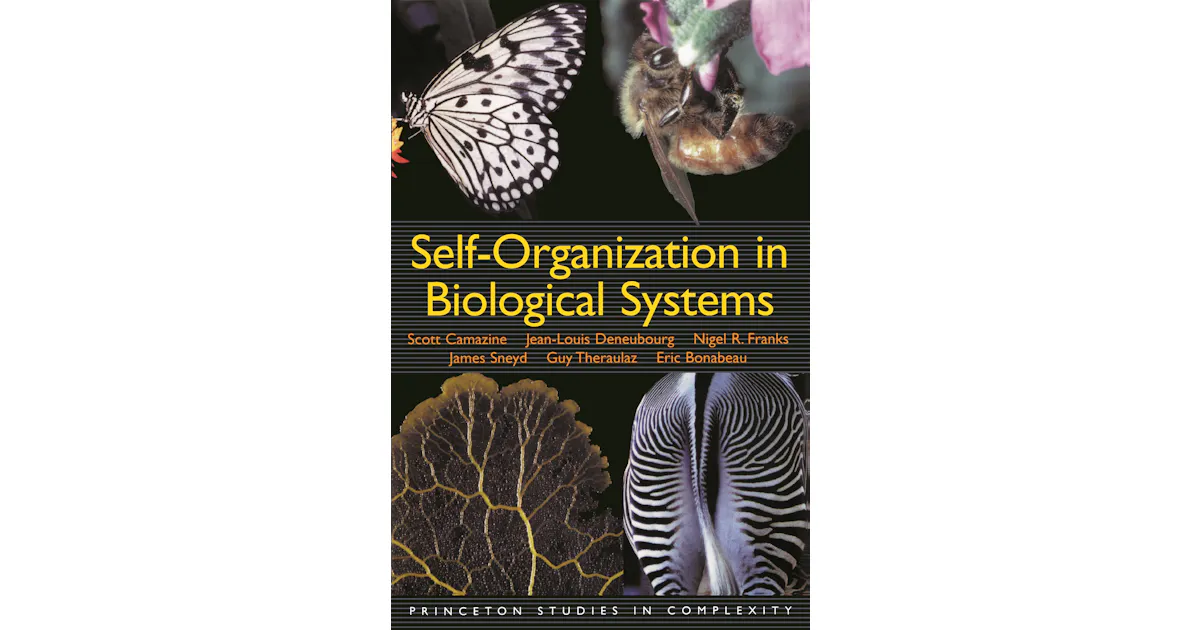
Self-Organization in Biological Systems
The synchronized flashing of fireflies at night. The spiraling patterns of an aggregating slime mold. The anastomosing network of army-ant trails. The coordinated movements of a school of fish. Researchers are finding in such patterns—phenomena that have fascinated naturalists for centuries—a fertile new approach to understanding biological systems: the study of self-organization. This book, a primer on self-organization in biological systems for students and other enthusiasts, introduces readers to the basic concepts and tools for studying self-organization and then examines numerous examples of self-organization in the natural world. Self-organization refers to diverse pattern formation processes in the physical and biological world, from sand grains assembling into rippled dunes to cells combining to create highly structured tissues to individual insects working to create sophisticated societies. What these diverse systems hold in common is the proximate means by which they acquire order and structure. In self-organizing systems, pattern at the global level emerges solely from interactions among lower-level components. Remarkably, even very complex structures result from the iteration of surprisingly simple behaviors performed by individuals relying on only local information. This striking conclusion suggests important lines of inquiry: To what degree is environmental rather than individual complexity responsible for group complexity? To what extent have widely differing organisms adopted similar, convergent strategies of pattern formation? How, specifically, has natural selection determined the rules governing interactions within biological systems? Broad in scope, thorough yet accessible, this book is a self-contained introduction to self-organization and complexity in biology—a field of study at the forefront of life sciences research.
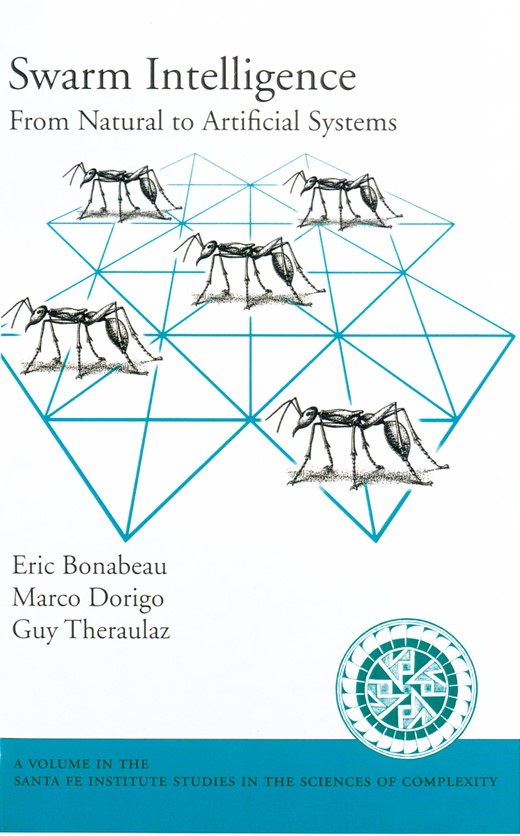
Swarm Intelligence: From Natural to Artificial Systems
Abstract. Social insects--ants, bees, termites, and wasps--can be viewed as powerful problem-solving systems with sophisticated collective intelligence. Co
Functional Information: Towards Synthesis of Biosemiotics and Cybernetics
Biosemiotics and cybernetics are closely related, yet they are separated by the boundary between life and non-life: biosemiotics is focused on living organisms, whereas cybernetics is applied mostly to non-living artificial devices. However, both classes of systems are agents that perform functions necessary for reaching their goals. I propose to shift the focus of biosemiotics from living organisms to agents in general, which all belong to a pragmasphere or functional universe. Agents should be considered in the context of their hierarchy and origin because their semiosis can be inherited or induced by higher-level agents. To preserve and disseminate their functions, agents use functional information - a set of signs that encode and control their functions. It includes stable memory signs, transient messengers, and natural signs. The origin and evolution of functional information is discussed in terms of transitions between vegetative, animal, and social levels of semiosis, defined by Kull. Vegetative semiosis differs substantially from higher levels of semiosis, because signs are recognized and interpreted via direct code-based matching and are not associated with ideal representations of objects. Thus, I consider a separate classification of signs at the vegetative level that includes proto-icons, proto-indexes, and proto-symbols. Animal and social semiosis are based on classification, and modeling of objects, which represent the knowledge of agents about their body (Innenwelt) and environment (Umwelt).

Learning Outside the Brain: Integrating Cognitive Science and Systems Biology
Learning is commonplace in organisms such as ourselves and even in organisms as far distant as the bee and the octopus. Such learning is implemented by brains, or neuronal networks, and has been extensively studied within ethology, psychology, cognitive science, and neuroscience. Whether learning also takes place in nonneuronal settings has remained a matter of sustained controversy, too often dominated by ideological views. In this survey, I will explain how learning can be rigorously interpreted as a form of information processing and then explore the evidence for whether learning also takes place in organismal contexts outside the brain, such as physiology, development, and individual cells. I will try to explain why it is important to build bridges in this way between cognitive science and systems biology, why concepts and methods from various branches of engineering may be helpful in this task, and what the eventual impact may be on how we think about the organism.
Co-Creation: Systems Thinking Beyond the Machine
Complexity thinking is all the rage — in the arts and sciences. Yet, there are two different strands of thinking about complexity, which are often confounded. The first comes from cybernetics, focussing on control in complex situations. The second is ecological, aiming at sustainable participation in a reality beyond control. Their difference rests on a fundamental distinction: is complexity rooted in feedback regulation or collective co-creation? While feedback remains mechanistic, co-creation generates new spaces of possibilities. We need it to understand life and its evolution. And it empowers us to rewrite our future, to escape our mechanistic cage without abandoning scientific rigor. In this paper, we illustrate how we implement these powerful yet abstract principles through our artistic and philosophical practice.
Scientists combine evolution, physics, and robotics to decode insect flight
Some insects' wings flap without brain input. Robots help us understand how.

Technological Approach to Mind Everywhere: An Experimentally-Grounded Framework for Understanding Diverse Bodies and Minds
Synthetic biology and bioengineering provide the opportunity to create novel embodied cognitive systems (otherwise known as minds) in a very wide variety of chimeric architectures combining evolved and designed material and software. These advances are disrupting familiar concepts in the philosophy of mind, and require new ways of thinking about and comparing truly diverse intelligences, whose composition and origin are not like any of the available natural model species. In this Perspective, I introduce TAME-Technological Approach to Mind Everywhere-a framework for understanding and manipulating cognition in unconventional substrates. TAME formalizes a non-binary (continuous), empirically-based approach to strongly embodied agency. TAME provides a natural way to think about animal sentience as an instance of collective intelligence of cell groups, arising from dynamics that manifest in similar ways in numerous other substrates. When applied to regenerating/developmental systems, TAME suggests a perspective on morphogenesis as an example of basal cognition. The deep symmetry between problem-solving in anatomical, physiological, transcriptional, and 3D (traditional behavioral) spaces drives specific hypotheses by which cognitive capacities can increase during evolution. An important medium exploited by evolution for joining active subunits into greater agents is developmental bioelectricity, implemented by pre-neural use of ion channels and gap junctions to scale up cell-level feedback loops into anatomical homeostasis. This architecture of multi-scale competency of biological systems has important implications for plasticity of bodies and minds, greatly potentiating evolvability. Considering classical and recent data from the perspectives of computational science, evolutionary biology, and basal cognition, reveals a rich research program with many implications for cognitive science, evolutionary biology, regenerative medicine, and artificial intelligence.

Social Physics in the Age of Generative AI: How, Exactly, Is Society Complex?
The aspiration for a social physics — a science that would reveal universal laws of social life analogous to those governing the natural world—has haunted the social sciences since Comte. Each new wave of quantitative and computational methods breathes fresh life into this vision. The current moment is no exception: advances in artificial intelligence and large language models have reinvigorated attempts to model society through the methods of social physics. This essay argues that these ambitions rest on a confusion about the nature of social complexity. Drawing a distinction between systems complexity and anthropological complexity, we identify the limitations of analyzing society as a complex system akin to natural systems. One crucial obstacle for social physics is the analysis of meaning and interpretation. Generative artificial intelligence (GenAI) offers important opportunities to model language and reflexivity, inviting and perhaps compelling social physics to confront meaning and interpretation as constitutive features of the social world. At the same time, GenAI leaves untouched and may even aggravate social physics’ failure to grasp power, institutions, and inequality.
Cybernetics
A science which seems to have dissolved into the others. A lot of good science was done under this banner; it just doesn't seem to hold together. Cybernetics helped give rise to some new fields, like cognitive science; it disseminated about a dozen ideas and bits of applied math which have proved useful (in, e.g., neurobiology); but what else? As a study of abstract machines in general, it becomes identical with dynamics, or computation theory, or some amalgam of both; algebra, even. As a more limited science of "communication and control" it suffers from the fact that communication and control in animals is, when you get down to blood and guts, rather different from communication and control in machines, and neither resembles the mechanisms of C & C in society. This is not to say that there are no similarities; of course there are; but they're at the very general level of things like "feedback" and "you must have an information channel," and pretty much exhausted by ideas which are now common currency in many particular fields. And even then, animals have control without feedback. It may be that we haven't exhausted the potential of a science of communication and control, but I think at this point the burden of proof would be on the optimists.