


Public engagement through �traditional� and social media is an increasingly important way for scholars to communicate research w
Jay Van Bavel, PhD on Twitter / X
I think it’s extremely unhealthy for any academic field to make it taboo to critique publications from senior or junior scholars or to critique certain popular methods. This makes the field worse or makes us look bad to people outside our field (including the public). It erodes…— Jay Van Bavel, PhD (@jayvanbavel) October 13, 2024
Data Feminism for AI
Attacks on women and trans people are not happening in a vacuum. Communications scholars W. Lance Bennett and Marianne Kneuer recently argued that we are witnessing the intensification of "illiberal public spheres" around the world (Bennett and Kneuer, 2023). These are characterized by a set of anti-democratic communications tactics that include the denigration and exclusion of minoritized people, targeted attacks on the press and political institutions, and transgression of norms of civil discourse. Such tactics are enabled and amplified by the social media platforms owned by Big Tech, whose business model elevates attention above all other metrics, such that they profit richly off extremism, threats, spectacle, and lies. The success of this corporate partnership with right-wing extremism is evident in the proliferation of book bans (Magnusson, 2024), the demonization of DEI and critical race theory (Crenshaw, 2022), and mob tactics to doxx, intimidate, misrepresent, and otherwise silence people that study misinformation, speak out against racial and gender violence, or rule against insurrectionists (Edmonds, 2024). At the same time, we have seen the continued work of feminists, including Latin American, Indigenous, and abolitionist feminists in the US and globally, doing the work of imagining alternate worlds (Cullors, 2021; Davis, 2022; Ricaurte, 2019; Simpson, 2017). This paper represents our own first attempt to imagine a more equitable, sustainable, feminist world for AI research.
Mailing-List 2.0: Discourse
You got a few people working on something and you seek for an efficient way to communicate (ideas, news, messages, etc.) online. This guide gives you an overview about what you could expect in the past and what you should ask for nowadays. Mails According to Wikipedia, the first mail was sent in 1971. The access to a network we call Internet today was quite limited in these early days. Users have been mostly universities, and I guess, not everyone, but mostly the STEM disciplines Science, Technology, Engineering, and Mathematics. So it comes at no surprise that mails are perceived as inconvenient and antiquated.
Shreya Shankar on Twitter / X
This problem has gotten significantly worse. As Twitter and other social media have become primary channels for sharing research, academics are now expected to make the same ideas legible and appealing to both the general public (to go "viral") and senior scholars (to get the… https://t.co/zPF3tKzbVa— Shreya Shankar (@sh_reya) July 25, 2026
I am a 15-year-old girl. Let me show you the vile misogyny that confronts me on social media every day | Anonymous
Objectification, hate, rape threats: the politicians debating online abuse mean well, but to truly understand, they need to see what I see
Scholarly Communication Is a Research Problem. This Means You.
Scholarly Communication Is a Research Problem.

Banning anonymous social media accounts will do more harm than good | James Ball
Labour’s Angela Rayner wants to end online abuse, but she fails to understand the lives of those outside the political and media bubbles, says former Guardian special projects editor James Ball
Guide to Responsible, Strategic Reporting on Hate and Extremism
Recommendations for researchers, journalists and others on how to avoid unintentionally bolstering extremists and causing additional harm.

Digital Social Norm Enforcement: Online Firestorms in Social Media
Actors of public interest today have to fear the adverse impact that stems from social media platforms. Any controversial behavior may promptly trigger temporal, but potentially devastating storms of emotional and aggressive outrage, so called online firestorms. Popular targets of online firestorms are companies, politicians, celebrities, media, academics and many more. This article introduces social norm theory to understand online aggression in a social-political online setting, challenging the popular assumption that online anonymity is one of the principle factors that promotes aggression. We underpin this social norm view by analyzing a major social media platform concerned with public affairs over a period of three years entailing 532,197 comments on 1,612 online petitions. Results show that in the context of online firestorms, non-anonymous individuals are more aggressive compared to anonymous individuals. This effect is reinforced if selective incentives are present and if aggressors are intrinsically motivated.
Digital Social Norm Enforcement: Online Firestorms in Social Media
Actors of public interest today have to fear the adverse impact that stems from social media platforms. Any controversial behavior may promptly trigger temporal, but potentially devastating storms of emotional and aggressive outrage, so called online firestorms. Popular targets of online firestorms are companies, politicians, celebrities, media, academics and many more. This article introduces social norm theory to understand online aggression in a social-political online setting, challenging the popular assumption that online anonymity is one of the principle factors that promotes aggression. We underpin this social norm view by analyzing a major social media platform concerned with public affairs over a period of three years entailing 532,197 comments on 1,612 online petitions. Results show that in the context of online firestorms, non-anonymous individuals are more aggressive compared to anonymous individuals. This effect is reinforced if selective incentives are present and if aggressors are intrinsically motivated.
Custodians of the Internet
A revealing and gripping investigation into how social media platforms police what we post online—and the large societal impact of these decisions Most use...
Scientists no Longer Find Twitter Professionally Useful, and have Switched to Bluesky
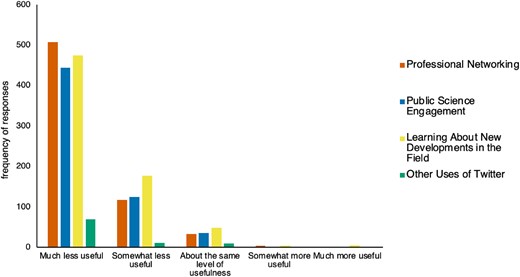
Synopsis Social media has become widely used by the scientific community for a variety of professional uses, including networking and public outreach. For the past decade, Twitter has been a primary home of scientists on social media. In recent years, new leadership at Twitter has made substantive changes that have resulted in increases in the prevalence of pseudoscience, conspiracy theory, and harassment on the platform, causing many scientists to seek alternatives. Bluesky has been suggested as a good alternative to Twitter, but the phenomenon of academics switching social media platforms has not previously been studied. Here we report on the results of a survey distributed to scientists on Twitter and Bluesky (n = 813). Results overwhelmingly confirm that changes to Twitter have made the social media platform no longer professionally useful or pleasant, and that many scientists have abandoned it in favor of Bluesky. Results show that for every reported professional benefit that scientists once gained from Twitter, scientists can now gain that benefit more effectively on Bluesky than on Twitter.
Social Media and Anti-Social Pluralism - Aaron Ross Powell
Communities are different online and off, and pluralism that thrives in the real world can turn toxic in the digital world.
One of the issues that has come up again and again in my reporting on misinformation and social media is the massive influence social media companies have on research in the field. Last night a preprint dropped that tries to get at this with some numbers. My piece in @science.org (and 🧪🧵 coming):

Nearly a third of social media research has undisclosed ties to industry, preprint claims
www.science.orgBut anyway, papers since you asked: - DOI:10.1371 Digital Social Norm Enforcement: Online Firestorms in Social Media - Deliberation and Identity Rules: The Effect of Anonymity, Pseudonyms and Real-Name Requirements on the Cognitive Complexity of Online News Comments doi.org/10.1177/0032321719891385
Online anonymity/pseudonymity

“There's plenty of research in this topic area that shows hate speech doesn't decline when real-name policies are in effect, in fact usually the inverse, and the diversity of people contributing to conversations decreases” — bsky.app/profile/did:plc:5w4eqcxzw5jv5…
Research - Disqus
What’s in a name? A forward view of anonymity online

Anonymity and Online Commenting: The Broken Windows Effect and the End of Drive-by Commenting

Anonymity, Pseudonymity, and Deliberation: Why Not Everything Should Be Connected
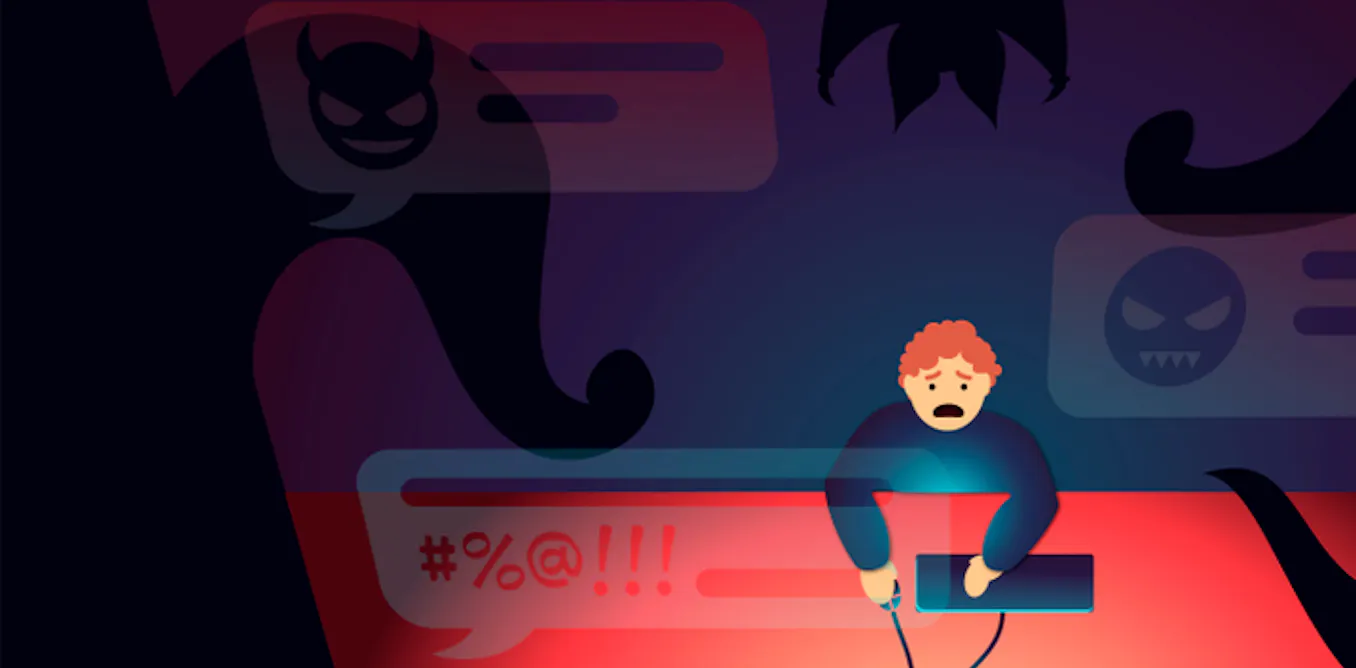
Online anonymity: study found ‘stable pseudonyms’ created a more civil environment than real user names

Real-Name Policies: The War Against Pseudonymity

