


Bridging the gap between the mental accounting and identities/roles literatures, the present research examines how the extent to which an individual's life roles (e.g., “employee,” “spouse”) are integrated (i.e., have more flexible and permeable psychological boundaries between them) moderates the fungibility of mentally accounted funds. Specifically, individuals with more integrated roles are more able to circumvent the constraints typically imposed by mental budgeting and earmarking; therefore, they are more likely to use funds that are allocated or budgeted for the purposes of one role to service the needs/wants of another role. This holds regardless of whether funds have been (1) allocated to a broader role-specific mental account for future expenditures or (2) earmarked for a specific purchase. The authors find evidence that the effect of role integration arises because those with more integrated roles believe that making purchases for one role using funds allocated or budgeted for the other role is more justifiable.
On the Mental Accounting of Restricted-Use Funds: How Gift Cards Change What People Purchase
Abstract. This article emphasizes the role of categorization in mental accounting and proposes that once a mental account is established, purchases that ar
Malleable Mental Accounting: The Effect of Flexibility on the Justification of Attractive Spending and Consumption Decisions
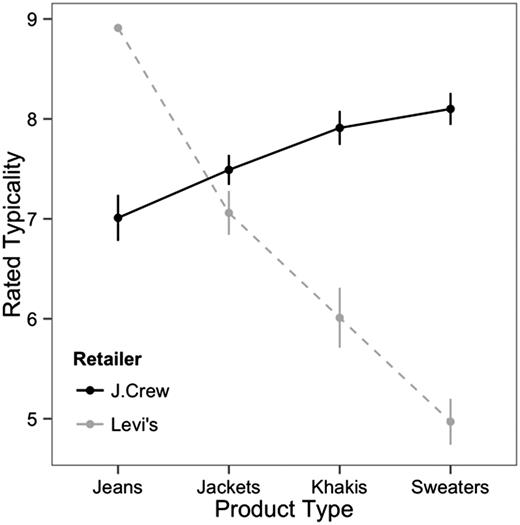
Mental accounts are often characterized as self‐control devices that consumers employ to prevent excess spending and consumption. However, under certain conditions of ambiguity, the mental accounting process is malleable; that is, consumers have flexibility in assigning expenses to different mental accounts. We demonstrate how consumers flexibly classify expenses, or construct accounts, to justify spending. An expense that can be assigned to more than one account (i.e., an ambiguous expense) is more likely to be incurred than an unambiguous expense that is constrained either by existing budgets or by previously constructed accounts. We explore the justification processes that underlie these results and their implications for mental accounts as self‐control devices.

Perspectives on mental accounting: An exploration of budgeting and investing
This article provides an overview of recent advances in the literature on mental accounting within the context of consumer financial decision‐making. We first discuss the categorization process that underlies mental accounting and the methods people use to categorize funds. We then highlight some of the notable work that examines how mental accounting influences budgeting, spending, and investment decisions. The article concludes by proposing an agenda for future research, focusing on current gaps in our knowledge and promising areas to explore.

Effects of mental accounting on purchase decision processes: A systematic review and research agenda
Abstract This paper aims to systematically analyze and synthesize the existing research published on mental accounting and purchase decision processes by conducting a systematic literature review. Specifically, the paper aims to answer the question: “What are the effects of mental accounting on purchase decision processes?” Therefore, it identified 110 papers which contribute to achieving the research objective and which were selected using the same data collection, data analysis, and quality standards. After reviewing the identified publications, the paper finds that the existing literature can be structured along four main themes impacting purchase decision‐making processes: (1) source of funds, (2) intended use of funds, (3) pricing, and (4) payments. The paper shows that for each of the four themes there are multiple mental accounting effects with an impact on for example willingness to pay, the experienced pain of paying or the ultimate purchase decision. Further, the paper identifies potential directions for future research in mental accounting, including the influence of product categories on mental accounting, flexibility in budget setting and its impact on mental accounting behavior, long‐term effects of mental budgeting on financial wealth, integration–segregation behavior in the context of pricing, the role of consumer characteristics on mental accounting behavior, and the impact of increased financial transparency through technology on mental accounting.

Managing Mental Accounts: Payment Cards and Consumption Expenditures
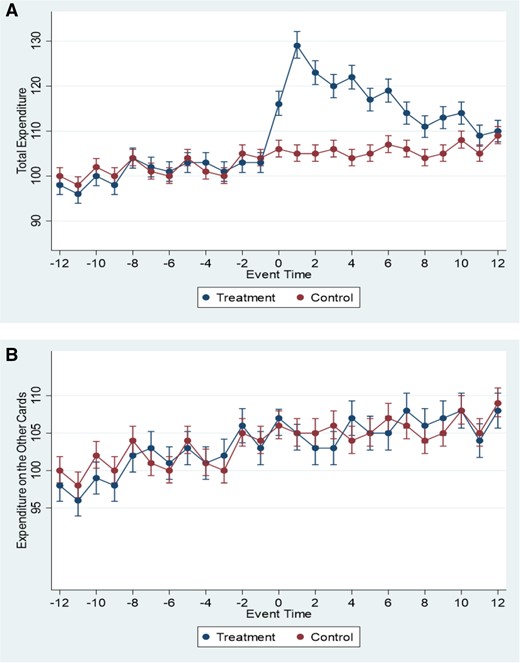
Abstract Does mental accounting matter for total consumption expenditures? We exploit a unique setting in which individuals exogenously receive a new payment card, without requesting one. Using random variation in the time of receipt, we show that individuals temporarily increase total consumption expenditure by making purchases with the new card without reducing spending on the others. We do not observe a corresponding increase in indebtedness. Total consumption expenditure rises even for the least liquidity-constrained individuals. The evidence is consistent with consumers treating methods of payment as nonfungible budget categories, as suggested by models of mental accounting and narrow bracketing.
Managing Mental Accounts: Payment Cards and Consumption Expenditures
Does mental accounting matter for total consumption expenditures? We exploit a unique setting in which individuals exogenously received a new credit card, without requesting one. Using random variation in the time of receipt we show that individuals temporarily increase total consumption expenditure by making purchases with the new card without reducing spending on the others. We do not observe a corresponding increase in indebtedness. Total consumption expenditure rises even for the least liquidity-constrained individuals. The evidence is consistent with consumers treating methods of payment as nonfungible budget categories, as suggested by models of mental accounting and narrow bracketing.

A Structural Model of Mental Accounting
We construct and estimate a formal economic model of mental accounting where utility maximizing consumers facing rationality constraints infrequently update the

Psychological ownership interventions increase interest in claiming government benefits
Significance Most government benefits programs exhibit a sizable participation gap, with eligible individuals forgoing billions of dollars in government benefits each year. Many policymakers have focused on addressing this participation gap, as receiving government benefits has been shown to reduce poverty, childhood hunger, educational gaps, and physical and mental illness. The current work presents psychological ownership framing as a behavioral science intervention, and we show that it can help address this benefits participation gap. These interventions are subtle, simple to implement, and cheaper to execute relative to logistical interventions. Moreover, the data show that psychological ownership interventions can be more efficacious than other common psychological interventions such as social norms and urgency. , Each year, eligible individuals forgo billions of dollars in financial assistance in the form of government benefits. To address this participation gap, we identify psychological ownership of government benefits as a factor that significantly influences individuals’ interest in applying for government benefits. Psychological ownership refers to how much an individual feels that a target is their own. We propose that the more individuals feel that government benefits are their own, the less likely they are to perceive applying for them as an aversive ask for help, and thus, the more likely they are to pursue them. Three large-scale field experiments among low-income individuals demonstrate that higher psychological ownership framing of government benefits significantly increases participants’ pursuit of benefits and outperforms other common psychological interventions. An additional experiment shows that this effect occurs because greater psychological ownership reduces people’s general aversion to asking for assistance. Relative to control messages, these psychological ownership interventions increased interest in claiming government benefits by 20% to 128%. These results suggest that psychological ownership framing is an effective tool in the portfolio of potential behavioral science interventions and a simple way to stimulate interest in claiming benefits.

Psychological Ownership in Financial Decisions
Policy makers have long intuitively realized the benefit of encouraging strong psychological ownership toward social programs. For example, Franklin D. Roosevelt in the 1930s purposely designed the Social Security program to include a high feeling of ownership by workers, to generate a sense of responsibility and protection from future legislation. Recent research suggests that this sense of ownership continues to be an important part of the SSA program and is a significant predictor of when retirees claim their benefits. Strong feelings of ownership also exist for other programs (e.g., Medicare) and financial services (e.g., investments), and there are significant implications of that psychological ownership on consumers’ decisions and behavior around these programs. Policy makers and marketers may wish to consider the role of interventions that affect consumers’ psychological ownership, along with feelings of trust and fairness, for such products.

Knowing When to Spend: Unintended Financial Consequences of Earmarking to Encourage Savings
Maintaining savings is an important financial goal. Yet there are times when savings should be spent, such as when people face unavoidable costs, and spending their savings allows them to avoid high interest rate debt. Existing behavioral research has focused on consumer decisions between savings and discretionary spending and has proposed interventions to promote savings in these contexts. However, when spending is not discretionary, such interventions could risk exacerbating a pattern found in economic research in which people borrow high interest rate debt while maintaining savings that earn low levels of interest. To examine how mental accounting interacts with considerations of personal responsibility and guilt to contribute to this pattern, this article explores whether people spend their savings when they need money most: during emergencies. Six studies reveal that people's tendency to preserve savings by borrowing from a high interest rate credit option varies as a function of the savings’ intended use. Paradoxically, people are most likely to turn to high interest rate credit with the belief that doing so is the responsible option.
Financial Literacy, Financial Education, and Downstream Financial Behaviors
Policy makers have embraced financial education as a necessary antidote to the increasing complexity of consumers' financial decisions over the last generation. We conduct a meta-analysis of the relationship of financial literacy and of financial education to financial behaviors in 168 papers covering 201 prior studies. We find that interventions to improve financial literacy explain only 0.1% of the variance in financial behaviors studied, with weaker effects in low-income samples. Like other education, financial education decays over time; even large interventions with many hours of instruction have negligible effects on behavior 20 months or more from the time of intervention. Correlational studies that measure financial literacy find stronger associations with financial behaviors. We conduct three empirical studies, and we find that the partial effects of financial literacy diminish dramatically when one controls for psychological traits that have been omitted in prior research or when one uses an instrument for financial literacy to control for omitted variables. Financial education as studied to date has serious limitations that have been masked by the apparently larger effects in correlational studies. We envisage a reduced role for financial education that is not elaborated or acted upon soon afterward. We suggest a real but narrower role for “just-in-time” financial education tied to specific behaviors it intends to help. We conclude with a discussion of the characteristics of behaviors that might affect the policy maker's mix of financial education, choice architecture, and regulation as tools to help consumer financial behavior. This paper was accepted by Uri Gneezy, behavioral economics.

Payment method and perceptions of ownership
How consumers pay influences how they feel about a transaction. In particular, paying by card has been argued to have an effect on the perception of cost, making it less salient and painful. We propose and show that payment method also influences how consumers feel about the acquired good. Specifically, we focus on effects of the payment method on psychological ownership, i.e., the perception of an object as “mine.” We propose that cash payment results in stronger psychological ownership because it influences the extent of perceived investment in an object. We provide evidence for the proposed effect from field and laboratory settings. Results of a longitudinal exit survey and an experiment show that cash payers report higher levels of immediate psychological ownership than card payers. However, this effect seems to depend on the meanings associated with a payment method. Asian students (who associate credit card payment with investment and debt) do not exhibit this effect. Moreover, the initial boost in psychological ownership seems to be comparably short-lived. While those paying in cash experience no further increase in psychological ownership over time, those paying by card do.

The Effects of Prior Spending on Future Spending Decisions: The Role of Acquisition Liabilities and Payments
Research in mental accounting shows that prior spending influences a consumer's decision to make a new spending decision (Heath and Soll 1996, Soman 2001). In particular, greater spending in a particular category reduces the likelihood of further spending in that category. In the present research, we decompose “spending” into two distinct episodes—the acquisition liability episode during which a purchase is made accompanied by a commitment to pay (e.g., using a credit card) and the payment episode during which the consumer's wealth actually gets depleted (e.g., paying the credit card bill). Using a controlled laboratory experiment and real world data from a group of consumers, we replicate earlier findings that prior spending influences a pending spending decision, but also show that the location of both the acquisition liability episode and the payment episode play a role. Our results contribute to an understanding of the dynamic mental accounting of acquisition liability and actual outflows.
Mental Budgeting and Consumer Decisions
Abstract. Consumers often set budgets for categories of expenses (e.g., entertainment) and track expenses against their budget. Because budgets cannot perf
Payment Depreciation: the Behavioral Effects of Temporally Separating Payments From Consumption
Abstract. Research suggests that individuals mentally track the costs and benefits of a consumer transaction for the purpose of reconciling those costs and
5: Behavioural biases in personal finance
Behavioural economics merges psychology and economics to explore systematic deviations in financial decision-making from traditional economic models. This chapter examines key biases such as mental accounting, present bias, planning fallacy, and misunderstanding of risk, which influence spending, saving, investing, and insuring decisions. Demonstrating the interplay of cognitive biases and heuristics highlights why individuals make suboptimal choices despite financial literacy and resource capacity. Strategies like goal-setting, commitment devices, and education interventions are evaluated, focusing on their limitations and potential for addressing these biases. The chapter concludes by emphasising the need for systemic changes, such as policy-level interventions and financial regulation, to complement behavioural interventions and address structural barriers to better financial decisions. Future research directions are suggested, including tailoring interventions, exploring technology's role, and integrating systemic solutions to support sustainable financial well-being.