Once an exclusively white enterprise, the last forty-five years have witnessed the emergence of a disproportionately Latinx immigration law enforcement workforce. This article addresses the question of why Latinxs elect to work for agencies that have systematically targeted the ethnic communities to which they belong. Where existing scholarship has often implied Latinxs may self-select into immigration law enforcement due to a lack of identification with the immigrant-experience, a dissociation with ethnic identity, and generally restrictionist immigration attitudes, this article finds little empirical evidence to support such an assumption. Analysis of interviews with sixty-one Latinx Immigration and Customs Enforcement (ICE) agents across Arizona, California, and Texas reveals, instead, Latinxs elect to work in immigration law enforcement in service of economic self-interest and survival, with “money,” “a good job,” and “benefits” cited as the primary motivation(s) behind applying for and accepting a job in immigration. This pattern holds irrespective of individual agents’ levels of identification with the immigrant-experience and particular attitudes toward immigration, and suggests a diversity in the demographics of immigration law enforcement agencies that extends beyond mere race and ethnicity, to include a diversity of perspective and potential for empathy.
Latinxs in <i>La Migra</i> : Why They Join and Why It Matters
Once an exclusively white enterprise, the last forty-five years have witnessed the emergence of a disproportionately Latinx immigration law enforcement workforce. This article addresses the question of why Latinxs elect to work for agencies that have systematically targeted the ethnic communities to which they belong. Where existing scholarship has often implied Latinxs may self-select into immigration law enforcement due to a lack of identification with the immigrant-experience, a dissociation with ethnic identity, and generally restrictionist immigration attitudes, this article finds little empirical evidence to support such an assumption. Analysis of interviews with sixty-one Latinx Immigration and Customs Enforcement (ICE) agents across Arizona, California, and Texas reveals, instead, Latinxs elect to work in immigration law enforcement in service of economic self-interest and survival, with “money,” “a good job,” and “benefits” cited as the primary motivation(s) behind applying for and accepting a job in immigration. This pattern holds irrespective of individual agents’ levels of identification with the immigrant-experience and particular attitudes toward immigration, and suggests a diversity in the demographics of immigration law enforcement agencies that extends beyond mere race and ethnicity, to include a diversity of perspective and potential for empathy.
New Study Explores Why US Latinos Join ICE and Border Patrol - Latino Rebels
A new study found that most of the agents joined because they wanted a stable job, and didn’t see many other ways of getting one.

Why do Latinos work for ICE?
Half of border agents are Latino, and they are part of a long history of Hispanic support for – and enforcement of – harsh immigration policies
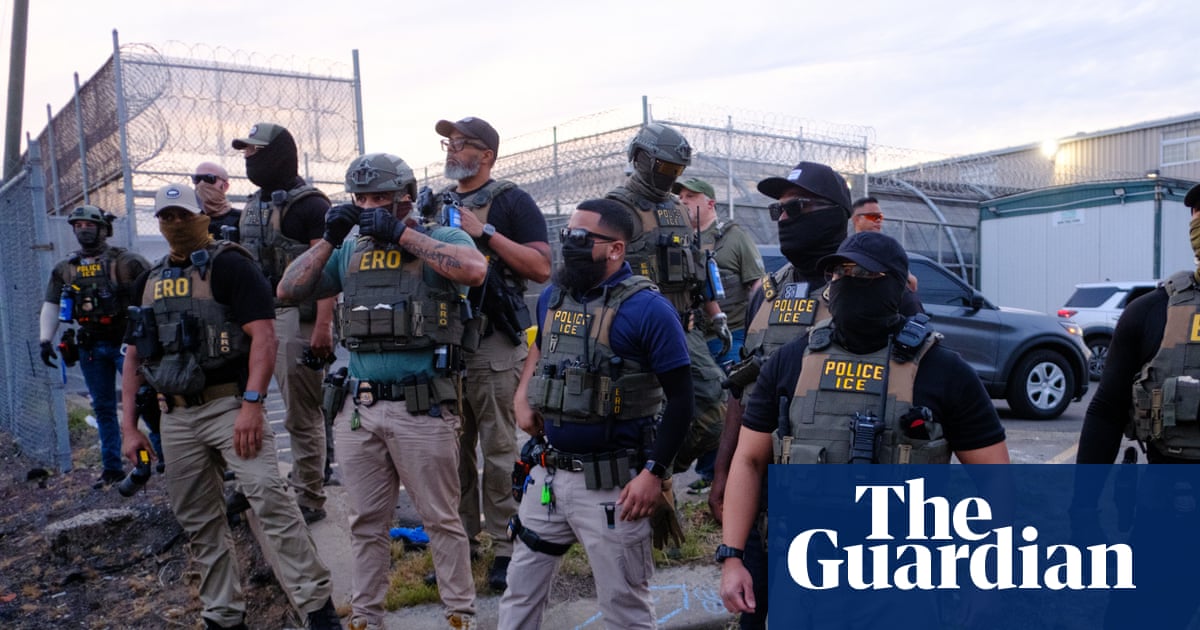
Why do Latinos join ICE? | Code Switch
I asked Latinos why they joined immigration law enforcement. Now I'm urging them to leave.
Latinos make up half of American Border Patrol agents. But it's not self-hatred driving them to work for agencies deporting their communities.

Why do Latinos join ICE? : Code Switch
Latinos make up at least 50% of all Customs and Border Patrol agents and 20% of Immigration and Customs Enforcement agents — which has a lot of critics asking, why? We talk to Geraldo Cadava, professor of Latino Studies at Northwestern and contributor to the Atlantic, to break down some of the reasons Latinos join ICE, and he tells us, there are many people who believe in the mission of immigration enforcement.

When Pedro Arrests Juan: Why Latinos Join Border Patrol and ICE ~ L.A. TACO
Many Latino families inherited the same lesson generation after generation: When society views you as foreign, proving your Americanness can become its own form of survival.

Why Latinos Join ICE
One reason: They’re aiming to protect, not betray, their communities.

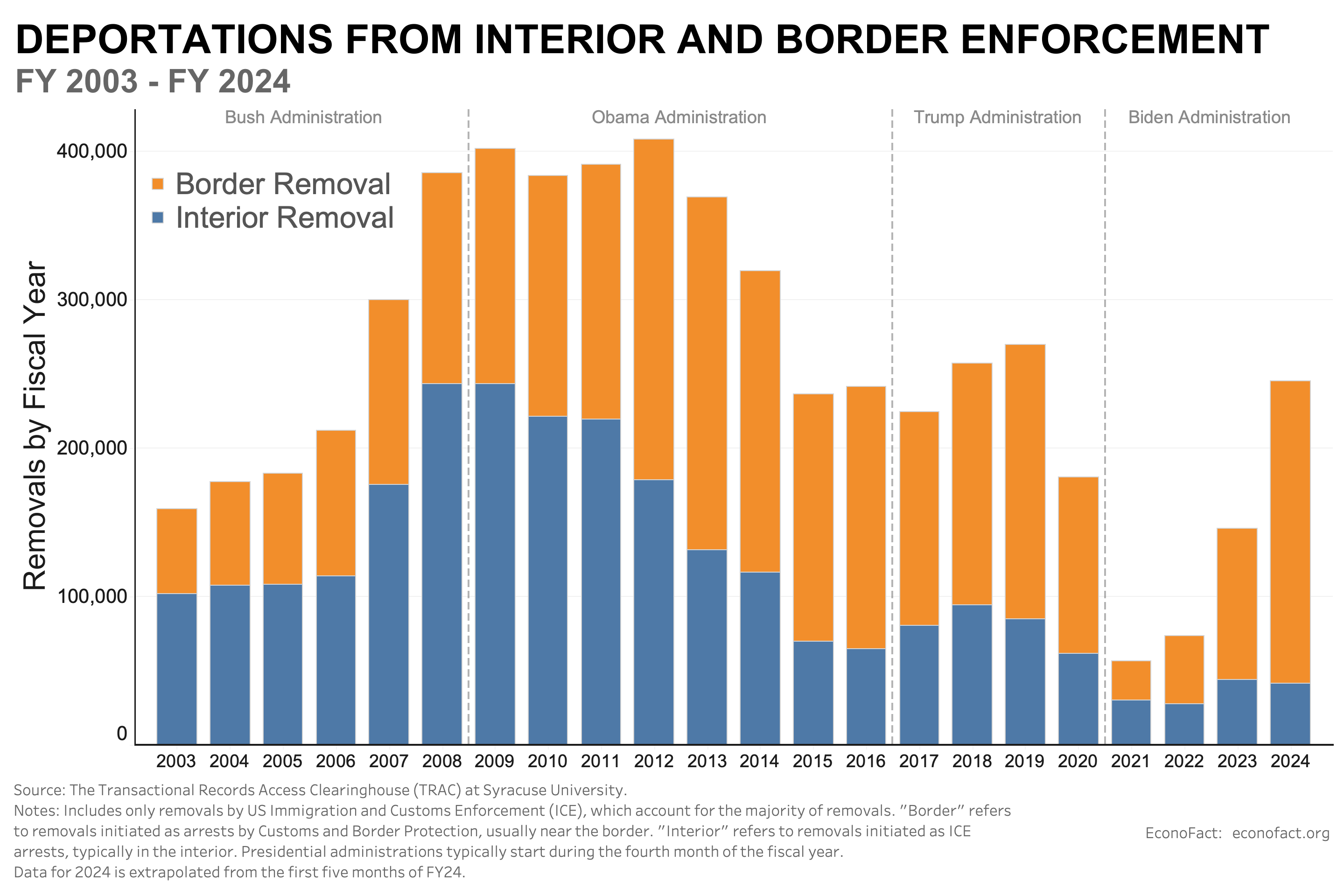
Immigrant Deportations: Trends and Impacts | Econofact
Research on previous episodes of increased immigration enforcement sheds light on the impact deportations can have on labor markets, crime, and civic life.
Unauthorized Immigration Effects on Local Labor Markets
The large increase and subsequent decline of unauthorized immigrant workers in recent years have raised questions about the impact of these changes on local labor markets across the United States. New analysis linking immigration data with employment data for specific areas suggests that the rapid rise in unauthorized immigrant worker flows increased local employment roughly one-for-one. Extending the analysis to the industry level further suggests that the slowdown of net immigration had a large negative impact on local employment, particularly for construction and manufacturing.

Immigration agents used racial slurs during LA sweeps, court records show
Records released as part of a lawsuit challenging racial profiling show that immigration agents used slurs to refer to Latino targets.

Opinion | A terrifyingly common ICE tactic targets lawful green card applicants
Arresting legal immigrants at their immigration appointments has become part of a new and terrifyingly common strategy for immigration enforcement.

Yet Again, The Data Shows Migrants Are More Law-Abiding Than US Citizens
This has always been the truth. And it has always been ignored by people like Donald Trump, who combine “if it bleeds, it leads” media narratives with the always-exploitable fear of …

More Evidence that Immigrants - Including Illegal Ones - Have Much Lower Crime Rates than Natives
A new Cato Institute study further refutes claims that illegal migration is somehow causing a crime wave.

Hunkering Down: Immigration Enforcement’s Economic Cost | Great Cities Institute | University of Illinois Chicago
Hunkering Down: The Hidden Economic Cost of Federal Immigration Enforcement in Cook County, IL examines how heightened federal immigration enforcement beginning in January 2025 affected travel and commercial activity across Cook County. The report finds that residents of neighborhoods with relatively high shares of Latin America–born residents substantially reduced trips to retail stores and restaurants in other parts of Cook County after enforcement intensified. These “cross-community” trips had been a routine part of the county’s economy before January 2025, connecting immigrant communities with businesses and commercial corridors throughout the region.
“Warehousing Human Beings”
Former immigration judge Andrea Sáenz and American Immigration Council’s Aaron Reichlin-Melnick on the conditions at Delaney Hall and other ICE detention centers across the U.S.