


This essay considers the emergent phenomenon of ‘junkification’ in academic research publishing. The term junkification was originally coined to describe the increasing volume of low-quality content and products permeating digital platforms. Extending junkification to online academic publishing, we draw on literature that frames academic research as an increasingly commodified good. We theorise that this commodification has enabled the same mechanisms that underpin the shift to junkification in digital marketplaces (and their subsequent degradation) to permeate online academic publishing. We argue that this trend represents a further perversion of the long-standing and pervasive ‘publish or perish’ culture in academia. As commercial publishing interests converge with new technologies, a system emerges where scholars increasingly bear the costs of low-esteem publishing that limits genuine scholarly contributions. We analyse the structural and cultural shifts within academic publishing that facilitate and perpetuate the junkification of research, and call for a re-evaluation of the underlying values and practices sustaining scholarly communication to counteract this trend.
Reformation of science publishing: the Stockholm Declaration
Science relies on integrity and trustworthiness. But scientists under career pressure are lured to purchase fake publications from ‘paper mills’ that use AI-generated data, text and image fabrication. The number of low-quality or fraudulent publications is rising to hundreds of thousands per year, which—if unchecked—will damage the scientific and economic progress of our societies. The result is editor and reviewer fatigue, irreproducible experiments, misguided experiments, disinformation and escalating costs that devour funding from taxpayers intended for research. It is high time to reevaluate current publishing models and outline a global plan to stop this unhealthy development. A conference was therefore organized by the Royal Swedish Academy of Sciences to draft an action plan with specific recommendations, as follows. (i) Academia should resume control of publishing using non-profit publishing models (e.g. diamond open-access). (ii) Adjust incentive systems to merit quality, not quantity, in a reputation economy where the gaming of publication numbers and citation metrics distorts the perception of academic excellence. (iii) Implement mechanisms to prevent and detect fake publications and fraud which are independent of publishers. (iv) Draft and implement legislations, regulations and policies to increase publishing quality and integrity. This is a call to action for universities, academies, science organizations and funders to unite and join this effort.
A New Paradigm for Scientific Publishing, Peer Review, and Impact Assessment
Scientific publishing and peer review have evolved little in three centuries, while the demands placed on them have grown profoundly. The growing role of artificial intelligence has underscored deep, systemic shortcomings of an aging system that has largely evaded innovation, a system whose origins are appallingly closer to the invention of the printing press than to the internet. We can do better – much better. This article is intended as the beginning of a communal experiment: a living document that critically reviews the modern academic publishing and peer-review system and presents a concrete framework to address what bibliometrics experts¹ have characterized as "the pervasive misapplication of indicators to the evaluation of scientific performance". Building on the Leiden Manifesto, DORA, and a body of scholarship spanning many disciplines and decades, we present a community-governed, non-profit platform organized around three trust-weighted impact factors, for articles, authors, and reviewers, with full algorithmic transparency, an open development log, and structural decoupling of credibility scoring from content moderation and from monetization. We invite the community to discuss, critique, and help shape it.
“Paging Dr. Fraud”: The Fake Publishers That Are Ruining Science
For years, spurious journals have proliferated online, promising academic credibility in exchange for cash.
Why the Stockholm Declaration will never work
Abstract The Stockholm Declaration calls for a moral reformation of scientific publishing—replacing commercial publishers with scholar-led journals, rewarding quality over quantity and instituting independent oversight. While noble in spirit, it fundamentally misdiagnoses the disease. The crisis of science stems not from paper mills or profit motives but from systemic incentives that reward volume, novelty and prestige over validity and reliability. Non-profit ownership will not neutralize the prestige economy, sleuth-led policing cannot scale, and ‘integrity registries’ would merely replace metrics with surveillance. True reform requires rebuilding the publishing infrastructure as a public utility: publicly funded, free to publish and read, and stripped of hierarchy and financial incentives.
The strain on scientific publishing
Scientists are increasingly overwhelmed by the volume of articles being published. Total articles indexed in Scopus and Web of Science have grown exponentially in recent years; in 2022 the article total was approximately ~47% higher than in 2016, which has outpaced the limited growth - if any - in the number of practising scientists. Thus, publication workload per scientist (writing, reviewing, editing) has increased dramatically. We define this problem as the strain on scientific publishing. To analyse this strain, we present five data-driven metrics showing publisher growth, processing times, and citation behaviours. We draw these data from web scrapes, requests for data from publishers, and material that is freely available through publisher websites. Our findings are based on millions of papers produced by leading academic publishers. We find specific groups have disproportionately grown in their articles published per year, contributing to this strain. Some publishers enabled this growth by adopting a strategy of hosting special issues, which publish articles with reduced turnaround times. Given pressures on researchers to publish or perish to be competitive for funding applications, this strain was likely amplified by these offers to publish more articles. We also observed widespread year-over-year inflation of journal impact factors coinciding with this strain, which risks confusing quality signals. Such exponential growth cannot be sustained. The metrics we define here should enable this evolving conversation to reach actionable solutions to address the strain on scientific publishing.

The Drain of Scientific Publishing
The domination of scientific publishing in the Global North by major commercial publishers is harmful to science. We need the most powerful members of the research community, funders, governments and Universities, to lead the drive to re-communalise publishing to serve science not the market.
Publishing Beyond the Market: Open Access, Care, and the Commons
<I>Publishing Beyond the Market</I> argues that the move to open access should focus less on the free accessibility of research outputs and more on who controls the publications and infrastructures for scholarly communication. By deploying theoretical literature on science and technology studies, care ethics, and the commons, the book critically interrogates open access and reimagines a more ethical future for researcher-led publishing. A case study of Plan S—the multifunder European policy for open access publishing—explores its tendency to rehearse all the failures of commercialisation. Through critical engagement with the open access landscape, the book reveals the shortcomings of market-centric and policy-based approaches to open access book and journal publishing, particularly their tendency to reinforce conservatism, commercialism, and private control of publishing.<BR /><BR /> Going forward, <I>Publishing Beyond the Market</I> explores the importance of collectivity and democratic governance within the transition to open access publishing. It suggests that developing a commons-based, scholar-led publishing landscape through a series of presses that are each managed by working academics could offer a productive counterpoint to marketised systems of open access and subscription publishing. In weaving themselves together in order to "scale small" these publishing initiatives would act as a counter-hegemonic project based on mutual reliance and care. By illustrating how these projects build toward a commons-based publishing future, and how they may complement other approaches to publishing within university presses and libraries, the book culminates in an argument for the infrastructures, policies, and forms of governance needed to nurture such a collective vision.

The Machine Consumes Itself: Artificial Intelligence and the End of Publish-or-Perish
This paper advances a structural, critical-theoretical argument: the publish-or-perish model, one of the organizing logics of academic labour under bioinformational capitalism, is not being disrupted by Large Language Models (LLMs). Instead, the publish-or-perish model is being completed, and thereby destroyed, by LLMs—if not now, then in the very near future. Drawing on Bourdieu, the paper reads academia as a field whose dominant doxa is metric productivism, with publication counts functioning as symbolic capital. Drawing on Slaughter and Leslie, Peters and Jandrić, and the Leiden Manifesto, the paper shows how this doxa is the signature of market logics colonizing knowledge production. Drawing on Lyotard and on Lave and Wenger, it argues that the postmodern reduction of legitimacy to performativity is now literally instantiated by machines that play the language game of academic publishing, and that the apprenticeship pathway to scholarly identity is being severed. The crisis is incremental and existential: the relation between publication, labour, judgement, and recognition on which publish-or-perish depends is becoming increasingly untenable. The paper closes by sketching a postdigital scholarly commons grounded in contribution, dialogue, and situated practice. What is scholarship for, after the machine?
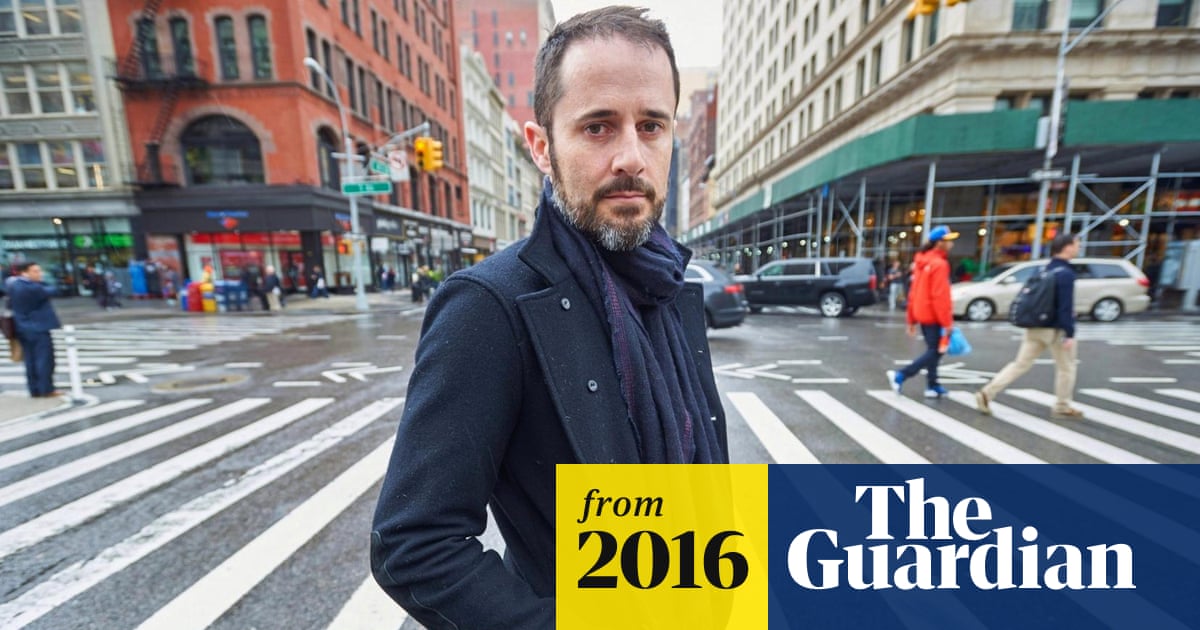
Medium and Twitter founder: ‘We put junk food in front of them and they eat it’
Ev Williams on feedback loops, giving a home to publishers, and finding critical mass
Social Media Is Now Parasocial Media
When practitioners used the term “social media” to describe the internet tools that emerged in the mid-aughts, they were giving a name to the kinds of platforms and protocols that allowed people to socialize with friends and communities of interest by using digital technologies. Twenty years later, users of social media are far more likely to scroll than post – and the content that they consume is often strategically produced and algorithmically curated. In this essay, I argue that the very essence of social media has changed. To more effectively interrogate what we are witnessing, we need to stop presuming that these tools are “social media” and begin recognizing that they are now “parasocial media.” Doing so raises new questions about digitally mediated sociality, not to mention the politics and governance of these platforms.
Leading the future of open science publishing - PLOS
Discover how we are transforming scholarly publishing with a mission-driven commitment to open science, research integrity, and innovation that benefits researchers, institutions, and society worldwide.

Death by a thousand likes: How Facebook and Twitter are killing the open web
Here’s one way to understand the symbiotic relationship between publications and platforms in the digital age. Publications depend on advertising dollars to keep producing content, so they need to hold readers’ attention. Big platforms like Facebook and Twitter already have plenty of attention, but they need vast quantities of content to fill up their newsfeeds. It seems natural, then, that publications have started relying on platforms to drive readership.
Symposium: A Skeptical View of Information Fiduciaries
In recent years, the concept of “information fiduciaries” has surged to the forefront of debates on platform regulation. In a forthcoming essay, we question the wisdom of applying a fiduciary framework to dominant digital platforms.
Reclaiming scientific publishing: Our duty to make science freely accessible to all
When we (Camille Thomas and Romain Vaucher speaking) entered academia as graduate students in France and Switzerland, we were enthusiastic about the vast amount of research available with a simple click on our university computers. However, we also quickly felt disheartened by the significant amount of research work we couldn’t access when wrapping up our theses from home. Luckily, pirates existed. Empowered by Aaron Swartz’s Guerilla Open Access Manifesto, Alexandra Elbakyan created Sci-Hub in 2011, the greatest leak of scientific knowledge of the century. We felt right in the middle of an Open Access (OA) revolution that would finally make all scientific articles, old and new, accessible to everyone. Fifteen years later, our hopes as idealistic early-career researchers have been crushed by the oligopolistic model of scientific publishing and the subtle pressures of the “publish or perish” culture that reigns over our career development. In the meantime, publishers like Frontiers, MDPI and Springer Nature, to name a few, have exponentially expanded their number of titles. They have become increasingly exploitative of scholarly manpower, moving far away from the genuine accessibility they allegedly promised under the guise of this OA transformation. Open Access is to be praised, but the way it has been implemented through the mainstream Gold and Green OA models now primarily serves the status quo of large for-profit publishers. These entities hijack public money and voluntary editorial labour for their own profit and that of their shareholders (Butler et al., 2023; Shu and Larivière, 2024). In a nutshell, to offer reader accessibility, the Gold OA model requires authors to pay an Article Processing Charge (APC; around 2,000 $/€, rarely less, and often much more) covered by individual research funds, funding agencies or university library deals. The Green OA model allows authors to upload their accepted, non-formatted manuscripts to repositories after an embargo period. While both models allow compliance with funding agency mandates, true equity and accessibility are ultimately left behind. In an article we recently published (Vaucher and Thomas, 2026), we describe the mechanisms through which we, as researchers, inadvertently contribute to keeping research exclusive while driving the publishing model down an unsustainable path. Just like our broader economy, our publishing model and the ways science is evaluated fuelled a predatory system that demands more papers, funding and prestige at an ever-faster rate (Walter and Mullins, 2019), likely at the expense of quality, diversity and ethics (Frank et al., 2023; Heen and Vogt, 2024). These concerns aren’t entirely new. What is new, however, is the growing realisation among societies, universities and funding bodies that we must move away from this system. Initiatives like the European Diamond Capacity Hub, ALMASI and craft-OA are actively paving a way forward that we, as scientists, have yet to fully embrace. In the geosciences, a collective and concerted effort is currently being made by researchers to provide fairer, more sustainable alternatives through community-driven Diamond OA journals (which feature no APCs and completely free access to published articles). Volcanica (Farquharson and Wadsworth, 2018), Sedimentologika (Thomas et al., 2023), Tektonika (Fernández-Blanco et al., 2023), Seismica (Rowe et al., 2022), Geomorphica (Lefebvre et al., 2025), Open Paleontology (Drage et al., 2024), Advances in Geochemistry and Cosmochemistry (Pourret et al., 2025), Geodynamica, jSEDI and Planetary Research are all recently created, scholarly-run journals funded by university library investments to promote better ways of publishing. Their articles are peer-reviewed, free for readers to access, and free for authors to publish. They rely entirely on the voluntary involvement of scientists running open-source editorial platforms (such as Open Journal Systems), transparent workflows, copyediting, production and final dissemination. Diamond OA journals offer an alternative path for all of us to transform our broken publishing system and reclaim ownership of our own science. These efforts go hand in hand with greater involvement in our academic societies and non-profit publishing initiatives. Ultimately, real transformation can only happen if all of us as researchers realise how inherently unfair and exclusive the current system is to labs and institutions that cannot afford steep Gold OA APCs or paywalled journal subscriptions. It also means we must collectively stop evaluating science based on journal prestige and the flawed metrics they own (Posada and Chen, 2018; Sabel and Larhammar, 2025; Simons, 2008). Only by breaking these habits can we truly make knowledge accessible to all. References Butler, L.-A., Matthias, L., Simard, M.-A., Mongeon, P., and Haustein, S.: The oligopoly’s shift to open access: How the big five academic publishers profit from article processing charges, Quantitative Science Studies, 4, 778–799, https://doi.org/10.1162/qss_a_00272, 2023. Drage, H. B., Keating, J. N., Nielsen, M. L., Saleh, F., and Hearing, T. W. W.: Open Palaeontology: a new model of diamond open access journal for palaeontology, Open Palaeontology, 1, 1–6, https://doi.org/10.26034/la.opal.2024.6223, 2024. Farquharson, J. I. and Wadsworth, F. B.: Introducing Volcanica: The first diamond open-access journal for volcanology, Volcanica, 1, I–IX, https://doi.org/10.30909/vol.01.01.i-ix, 2018. Fernández-Blanco, D., Lacassin, R., Gouiza, M., Perez-Diaz, L., Magee, C., McCarthy, D., Doré, T., Péron-Pinvidic, G., Kavanagh, J., Bond, C., and Schmitt, R.: Tektonika: The Community-Led Diamond Open-Access Journal for Tectonics and Structural Geology, τeκτoniκa, 1, I–XIII, https://doi.org/10.55575/tektonika2023.1.1.56, 2023. Frank, J., Foster, R., and Pagliari, C.: Open access publishing – noble intention, flawed reality, Social Science & Medicine, 317, 115592, https://doi.org/10.1016/j.socscimed.2022.115592, 2023. Heen, E. and Vogt, H.: Scientific rot: Unsustainable publishing practices threatens trust in medicine, Journal of Evaluation in Clinical Practice, 30, 941–944, https://doi.org/10.1111/jep.13989, 2024. Lefebvre, A., Bosch, R., Burrows, K., Giaime, M., Goodwin, G., Lai, L. S.-H., Stammler, M., and Fernández, R.: Geomorphica: The most accessible journal for the geomorphology community, Geomorphica, 1, https://doi.org/10.59236/geomorphica.v1i1.54, 2025. Posada, A. and Chen, G.: Inequality in Knowledge Production: The Integration of Academic Infrastructure by Big Publishers, in: ELPUB 2018, https://doi.org/10.4000/proceedings.elpub.2018.30, 2018. Pourret, O., Millet, M.-A., Marin-Carbonne, J., Mallik, A., Tierney, J. E., Darling, J. R., Kiseeva, E. S., Torres, M. A., Fonseca, R. O. C., Tartèse, R., Namur, O., Klöcking, M., Matthews, S. W., Dahrén, B., Ickert, R. B., and Board, the inaugural A. in G. and C. editorial: Equitable Access, Open Science, and the Future of Publishing in Geochemistry and Cosmochemistry, Advances in Geochemistry and Cosmochemistry, 1, https://doi.org/10.33063/agc.v1i1.770, 2025. Rowe, C., Agius, M., Convers, J., Funning, G., Galasso, C., Hicks, S., Huynh, T., Lange, J., Lecocq, T., Mark, H., Okuwaki, R., Ragon, T., Rychert, C., Teplitzky, S., and Van den Ende, M.: The launch of Seismica: a seismic shift in publishing, Seismica, 1, https://doi.org/10.26443/seismica.v1i1.255, 2022. Sabel, B. and Larhammar, D.: Reformation of science publishing: the Stockholm Declaration, R Soc Open Sci., 12, 251805, https://doi.org/10.1098/rsos.251805, 2025. Shu, F. and Larivière, V.: The oligopoly of open access publishing, Scientometrics, 129, 519–536, https://doi.org/10.1007/s11192-023-04876-2, 2024. Simons, K.: The Misused Impact Factor, Science, 322, 165–165, https://doi.org/10.1126/science.1165316, 2008. Thomas, C., Privat, A., Vaucher, R., Spychala, Y., Zuchuat, V., Marchegiano, M., Poyatos-Moré, M., Kane, I., and Chiarella, D.: Sedimentologika: a community-driven diamond open access journal in sedimentology, Sedimentologika, 2023. Vaucher, R. and Thomas, C.: Diamond is the new Green—Why Green Open Access is not a sustainable long-term model for scientific publishing, Sedimentologika, 4, https://doi.org/10.57035/journals/sdk.2026.e41.2397, 2026. Walter, P. and Mullins, D.: From symbiont to parasite: the evolution of for-profit science publishing, Molecular Biology of the Cell, https://doi.org/https://doi.org/10.1091/mbc.E19-03-0147, 2019.
Fractured reality - Publications Office of the EU
The report examines the evolving impact of digital technologies on European democracy. In an era of a global struggle to control the information space, this report offers critical insights into the fracturing of perceived realities, the rise of the ‘fantasy-industrial complex’, and the systemic risks posed by the attention economy. It exposes how platforms algorithmically prioritise engagement over accuracy, reinforcing ideological echo chambers and amplifying mis- and disinformation that erode democratic resilience. The report highlights how structural incentives and foreign control of the most important players in the information space undermine information integrity, collective knowledge and civic discourse. In response, the report presents a number of recommendations from fostering alternative public spaces and crowd-sourced knowledge systems to reforming business models, restoring user agency, and advancing EU digital sovereignty through decentralised infrastructure