


How to implement reflexivity in practice? Can the knowledge we produce be emancipatory when our discourses recursively originate in the world we aim to challenge? Critical International Relations (IR) scholars have successfully put reflexivity on the agenda based on the theoretical premise that discourse and knowledge play a socio-political role. However, academics often find themselves at a loss when it comes to implementing reflexivity due to the lack of adapted methodological and pedagogical material. This article shifts reflexivity from meta-reflections on the situatedness of research into a distinctive practice of research and writing that can be learned and taught alongside other research practices. To do so, I develop a methodology based on discourse: reflexive discourse analysis (RDA). Based on the discourse analysis of our own discourse and self-resocialisation, RDA aims to reflexively assess and transform our socio-discursive engagement with the world, so as to render it consistent with our intentional socio-political objectives. RDA builds upon a theoretical framework integrating discourse theory to Bourdieu’s conceptual apparatus for reflexivity and practices illustrated in the works of Comte and La Boétie. To illustrate this methodology, I used this very article as a recursive performance. I show how RDA enabled me to identify implicit discriminative mechanisms within my discourse and transform them into an alternative based on love, to produce an article more in line with my socio-political objectives. Overall, this article turns reflexivity into a critical methodology for social change and demonstrates how to integrate criticality methodologically into research and writing.
We Reject the Use of Generative Artificial Intelligence for Reflexive Qualitative Research
Four hundred and nineteen experienced qualitative researchers from 32 countries invite readers of Qualitative Inquiry to consider their position on use of generative artificial intelligence (GenAI) for qualitative research. We hold the position that analytic approaches such as reflexive thematic analysis are human research practices requiring a subjective, positioned, and reflexive researcher and therefore the use of GenAI in such approaches is not methodologically congruent. We additionally reject GenAI for reflexive qualitative approaches on the grounds of social and environmental justice.
We Reject the Use of Generative Artificial Intelligence for Reflexive Qualitative Research
Four hundred and nineteen experienced qualitative researchers from 32 countries invite readers of Qualitative Inquiry to consider their position on use of generative artificial intelligence (GenAI) for qualitative research. We hold the position that analytic approaches such as reflexive thematic analysis are human research practices requiring a subjective, positioned, and reflexive researcher and therefore the use of GenAI in such approaches is not methodologically congruent. We additionally reject GenAI for reflexive qualitative approaches on the grounds of social and environmental justice.
Toward a Theory of Culturally Relevant Pedagogy
In the midst of discussions about improving education, teacher education, equity, and diversity, little has been done to make pedagogy a central area of investigation. This article attempts to challenge notions about the intersection of culture and teaching that rely solely on microanalytic or macroanalytic perspectives. Rather, the article attempts to build on the work done in both of these areas and proposes a culturally relevant theory of education. By raising questions about the location of the researcher in pedagogical research, the article attempts to explicate the theoretical framework of the author in the nexus of collaborative and reflexive research. The pedagogical practices of eight exemplary teachers of African-American students serve as the investigative “site.” Their practices and reflections on those practices provide a way to define and recognize culturally relevant pedagogy.
Conducting a Qualitative Document Analysis
Document analysis has been an underused approach to qualitative research. This approach can be valuable for various reasons. When used to analyze pre-existing texts, this method allows researchers to conduct studies they might otherwise not be able to complete. Some researchers may not have the resources or time needed to do field research. Although videoconferencing technology and other types of software can be used to reduce some of the obstacles qualitative researchers sometimes encounter, these tools are associated with various problems. Participants might be unskillful in using technology or may not be able to afford it. Conducting a document analysis can also reduce some of the ethical concerns associated with other qualitative methods. Since document analysis is a valuable research method, one would expect to find a wide variety of literature on this topic. Unfortunately, the literature on documentary research is scant. This paper is designed to close the gap in the literature on conducting a qualitative document analysis by focusing on the advantages and limitations of using documents as a source of data and providing strategies for selecting documents. It also offers reasons for using reflexive thematic analysis and includes a hypothetical example of how a researcher might conduct a document analysis.
Maite Taboada
Maite Taboada. Professor. Department of Linguistics, Simon Fraser University. Research: discourse analysis, computational linguistics
Argumentation theory | Communication and Mass Media | Research Starters | EBSCO Research
<p>Argumentation theory explores the processes and methods of reasoning and debate used by individuals in both formal and informal contexts. The theory has roots in ancient philosophical discourse, particularly from figures like Aristotle, and has evolved through the contributions of modern philosophers such as Chaïm Perelman and Stephen Toulmin. It highlights how arguments are structured, identifying key components such as claims, grounds (or data), and warrants, which collectively help participants make their case. </p> <p>Additionally, arguments can be categorized into three main types: factual claims, which are verifiable; judgment or value claims, which are subjective; and policy claims, which pertain to proposed courses of action. This framework acknowledges the influence of personal biases, often shaping the reasoning process, and emphasizes the importance of logical support, backing, qualifiers, and rebuttals in strengthening arguments. In academic contexts, the theory suggests that creating valid topics should focus on policy arguments, while also addressing counterarguments to foster a comprehensive debate. Overall, argumentation theory serves as a critical tool for understanding how reasoning and persuasive communication function in various scenarios.</p>

Identity, positionality and reflexivity: relevance and application to research paramedics
This article introduces the reader to the concepts of identity, positionality and reflexivity and outlines their relevance to research paramedics. We outline how a researcher’s identity and positionality can influence all aspects of research, including the research question, study design, data collection and data analysis. We discuss that the ‘insider’ position of paramedics conducting research with other paramedics or within their specific clinical setting has considerable benefits to participant access, understanding of data and dissemination, while highlighting the difficulties of role duality and power dynamics. While positionality is concerned with the researcher clearly stating their assumptions relating to the research topic, the research design, context and process, as well as the research participants; reflexivity involves the researcher questioning their assumptions and finding strategies to address these. The researcher must reflect upon the way the research is carried out and explain to the reader how they moved through the research processes to reach certain conclusions, with the aim of producing a trustworthy and honest account of the research. Throughout this article, we provide examples of how these concepts have been considered and applied by a research paramedic while conducting their PhD research studies within a pre-hospital setting, to illustrate how they can be applied practically.
Document Analysis as a Qualitative Research Method
This article examines the function of documents as a data source in qualitative research and discusses document analysis procedure in the context of actual research experiences. Targeted to research novices, the article takes a nuts‐and‐bolts approach to document analysis. It describes the nature and forms of documents, outlines the advantages and limitations of document analysis, and offers specific examples of the use of documents in the research process. The application of document analysis to a grounded theory study is illustrated.

(PDF) Post-truth and Disinformation: Using discourse analysis to understand the creation of emotional and rival narratives in Brexit
PDF | The present research explores the concept of post-truth and disinformation in regard to Brexit. It is a qualitative and exploratory investigation.... | Find, read and cite all the research you need on ResearchGate

Getting started - Docs
Discourse Graphs are a tool and ecosystem for collaborative knowledge synthesis, enabling researchers to map ideas and arguments in a modular, composable graph format.
Culture & truth : the remaking of social analysis
xii, 253 pages ; 22 cm; Argues for a new approach to thinking and writing about culture. Exposing old conceptions, the book argues that new ethnographic writing must come to terms with the dynamic nature of social reality - with history, spontaneity, and human emotions; Originally published: Boston: Beacon, 1989; Includes index; Self-Renewing 2017; Includes index

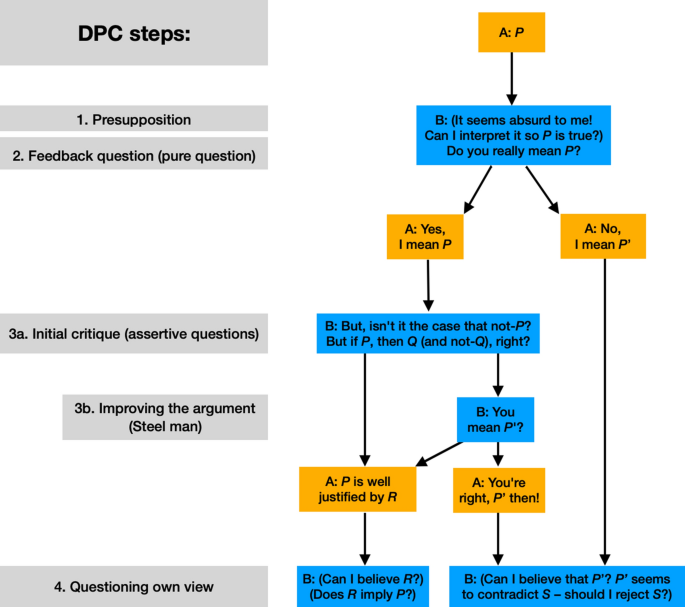
The Dialectical Principle of Charity: A Procedure for a Critical Discussion
This paper aims to discuss a well-known concept from argumentation theory, namely the principle of charity. It will show that this principle, especially in its contemporary version as formulated by Donald Davidson, meets with some serious problems. Since we need the principle of charity in any kind of critical discussion, we propose the way of modifying it according to the presupponendum—the rule written in the sixteenth century by Ignatius Loyola. While also corresponding with pragma-dialectical rules, it also provides additional content. This will be termed the dialectical principle of charity, and it offers a few steps to be performed during an argument in order to make sure that the participants understand each other well and are not deceived by any cognitive bias. The meaning of these results could be of great significance for argumentation theory, pragma-dialectics and the practice of public discourse as it enhances the principle of charity and makes it easier to apply in argumentation.
Why Context Matters: Or, Where Did Anglo-American Philosophy Go Wrong? - Imprint Academic
Why were so many luminaries of European philosophy — such as Bergson, Heidegger, Husserl, Merleau-Ponty, and Sartre, even Marx and Freud — kept out of the philosophy curriculum of Anglo-American universities for most of the 20th century? Why were the schools of philosophy they founded derided as continental philosophy and deemed more suitable for the departments of literature and psychology than philosophy? This book argues that the institutionally sanctioned contrast between allegedly legitimate philosophy and its spurious continental counterpart became entrenched thanks to two intertwined metaphysical presuppositions at the heart of positivism. The first is the principle that higher-level complex systems are epiphenomenal. The second is that all causes are mechanical. In contrast to their continental European counterparts, Anglo-American metaphysicians and philosophers of science repeatedly resisted the idea that higher level phenomena might be, ontologically-speaking, relational. This book proposes that, had the alternative path that emphasizes context-dependence been selected, a scientifically respectable relational ontology might have come to inform Anglo-American metaphysics and epistemology as well as the actual practice of science — without falling prey to non-natural deus ex machina proposals. Four female British philosophers at Oxford during WWII attempted to do exactly that. Anscombe, Foot, Midgley, and Murdoch raised serious objections to Oxbridge’s Newton-inspired Positivism as early as the 1940s. The four good friends advocated for a context-dependent worldview. This book situates the four women philosophers’ valiant challenge to the entrenched paradigm as a case study of exactly why and how context matters. Paperback 165 pp. £14.95

Okay, so it's not private, but I threw together a related proposal that could help with this on discourse. This has come up in conversations with @thisismissem.social and @knowtheory.net recently as well.

Proposal: Composable Moderation Working Group
discourse.atprotocol.communityDiscourse Graphs

And related concepts
Sociopolitical analysis

General collection for now (may reorganize into more specific collections)
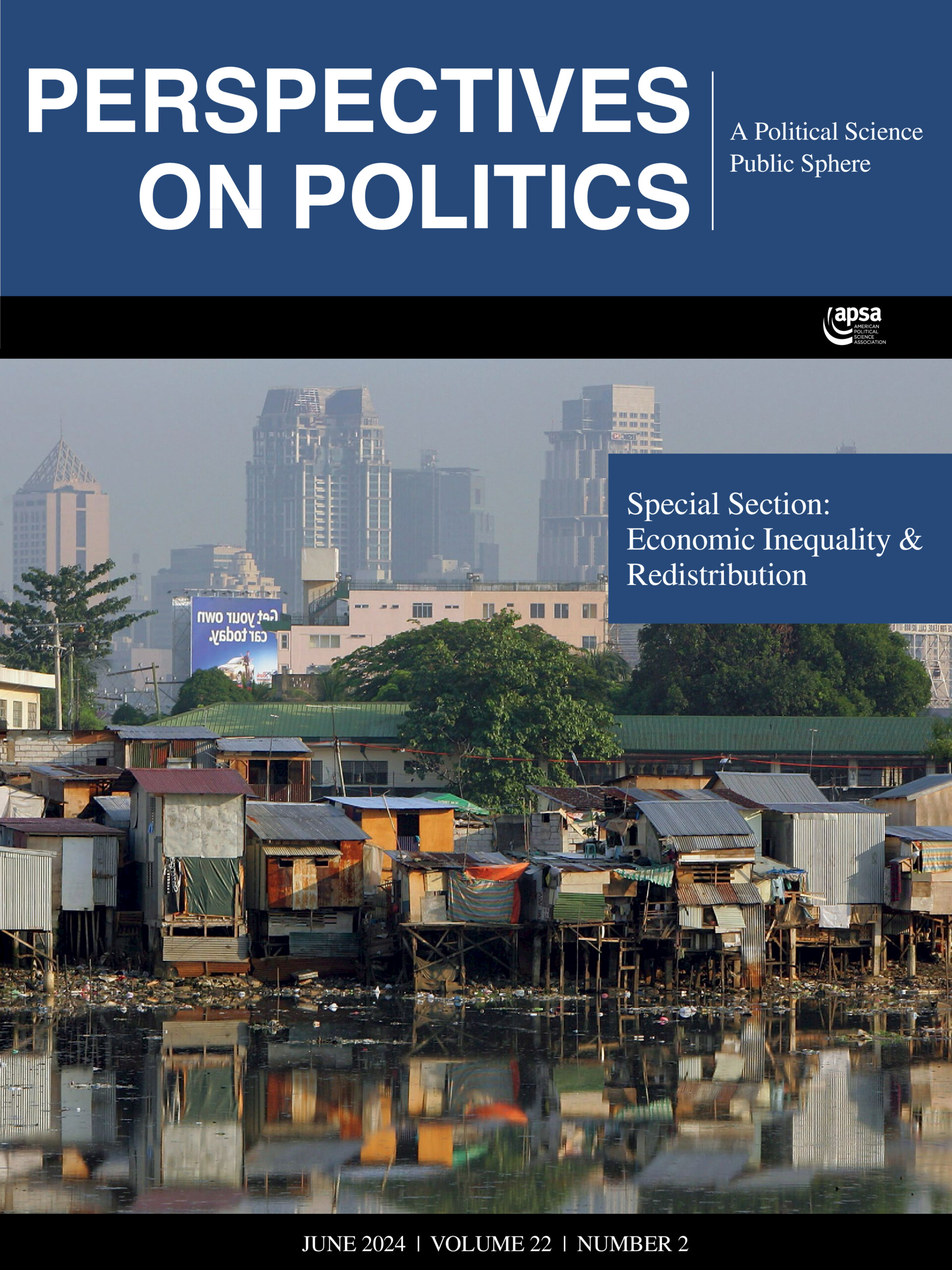
It’s Not Polarization; It’s the Radicalization of the Political Right
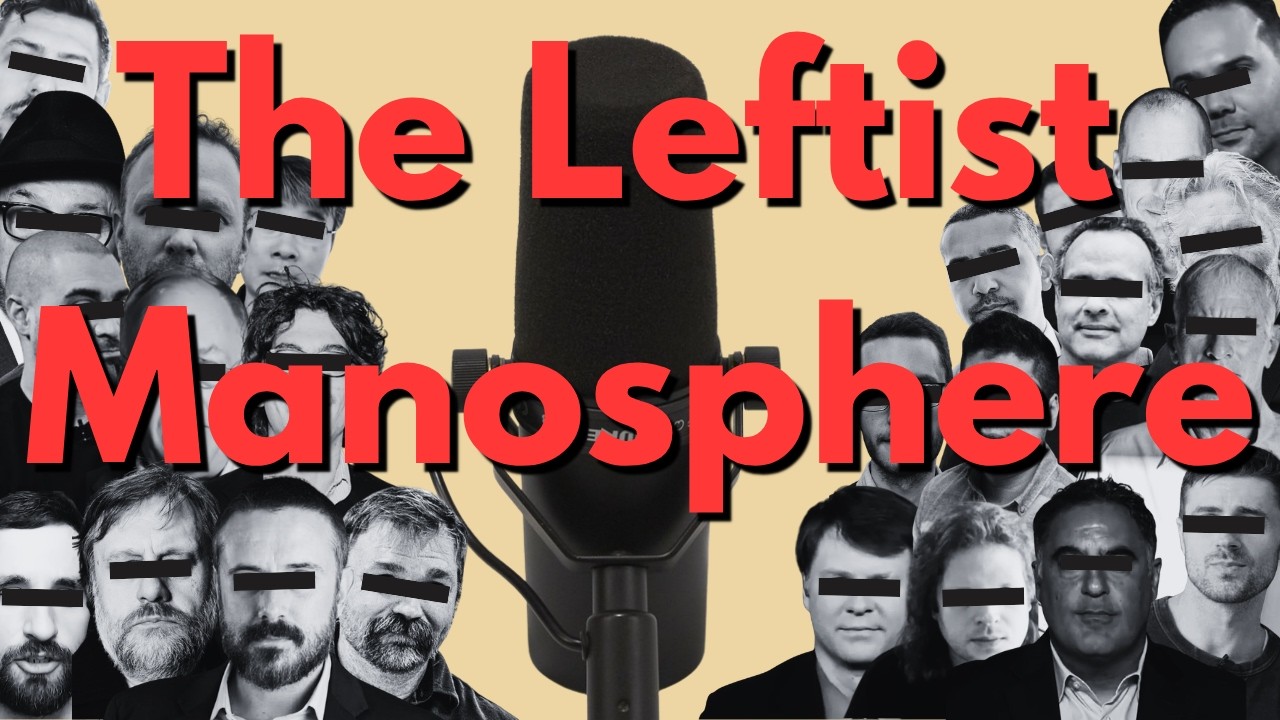
The Leftist Manosphere and Identity Politics

Language Access in Healthcare — Discourse Graph
Reason Commons | Reason Commons — Issue Trees & Logical Thinking Process

Issue-based information system

Logial Thinking Process (LTP) / Issue Tree App and Exploration - Issue Trees & Logical Thinking Process
LinkedClaims — Decentralized Verifiable Claims on ATProto

Where Should Science Go Next
