


High performance sport organisations employ multidisciplinary sport science teams to develop athlete preparation and performance. However, challenges have been identified with respect to cohesion, communication, integration, ineffective knowledge translation, role clarity, confusing language, and conflicting methodologies. A Department of Methodology (DoM) has been proposed as a conceptual framework seeking to address these issues. To move the DoM beyond conceptualisation towards professional practice, this study aimed to establish expert consensus for the implementation of a DoM within applied high performance contexts. Eighty professionals with expertise in multidisciplinary teams completed a three-round, online Delphi survey. In Round One, participants answered 16, open-ended questions across four categories: (1) Coordinating activity through shared principles and language; (2) Communicating coherent ideas; (3) Designing practice landscapes; and (4), General questions of feasibility. Results highlight the importance of building a shared language, establishing common principles, working collaboratively, facilitating continuous knowledge exchange, and designing practice tasks collaboratively. New knowledge is contributed for advancing conceptualisation of a DoM framework by exploring consensus on a range of theoretical- and practitioner-informed recommendations for the successful implementation of a DoM in high-performance sports organisations.
Expert consensus on skill acquisition in sport: A Delphi study
Skill acquisition is a rapidly evolving field in sport, but its definitions, roles and professional practices remain inconsistently articulated. Despite growing recognition of its importance, there...

(PDF) Building a Conceptual Framework: Philosophy, Definitions, and Procedure
PDF | In this paper the author proposes a new qualitative method for building conceptual frameworks for phenomena that are linked to multidisciplinary... | Find, read and cite all the research you need on ResearchGate
Communities of Practice in Long‐Term Care—Exploring Frameworks, Barriers and Enablers: A Systematic Review
ABSTRACT Objectives Communities of Practice (CoPs) offer staff an opportunity to learn with and from one another, and to explore and advance practice. This study aimed to identify the frameworks that underpin the development, operation and evaluation of CoPs, and barriers and enablers to implementing this social learning approach in long term care (LTC). Methods This systematic review comprehensively searched four databases (MEDLINE, CINAHL, PsycInfo and Embase) from inception to August 2025, identifying studies focused on supporting LTC staff implementing evidence‐based practice, best practice or quality improvement. Inclusion screening, data extraction and quality assessment using the Quality Assessment with Diverse Studies tool (QuADS) were completed independently. Findings were mapped to the Values Creation Framework. Results Fifteen papers represented eight CoP programs ranging from small, standalone groups to large national collaboratives. Frameworks or specific CoP definitions underpinned planning for seven programs. Two programs drew on stakeholder input in development; however, none described formal co‐design. Seven programs were multidisciplinary. Evaluation was qualitative ( n = 8), mixed methods ( n = 4) or quantitative ( n = 3), with limited application of evaluation frameworks. A wide range of enablers and barriers was identified, with structural and cultural challenges affecting sustained CoP engagement and implementation of CoP learning outcomes. Conclusions Despite 20 years of CoP implementation in LTC, there are few comprehensive evaluations to guide practice. Community of Practice participation delivers individual learning and peer support; however, system and organisational barriers affect sustained staff participation and translation. Consistent application of existing frameworks and enhanced CoP reporting will better support future CoP development and implementation in LTC. , Practice Impact Residential aged care organisations and their staff could benefit from the peer support and learning opportunities offered by participation in well‐facilitated and effective Communities of Practice (CoPs). Consistent application of existing planning and evaluation frameworks and enhanced CoP reporting will better support future CoP development and implementation. Policy Impact This systematic review suggests that Communities of Practice (CoPs) with residential aged care staff do deliver individual benefits; however, there are ongoing systemic challenges that influence CoPs' potential for wider impact on practice change. To realise the value of this social learning approach, we need to address these systemic barriers.

Workshops — Guiding Threads Collective
Our skill-building workshops help participants build their toolkit around key organizational development areas, including growing leadership skills, developing generative conflict practices, and making collaborative decisions.

Evidence appraisal: a scoping review, conceptual framework, and research agenda
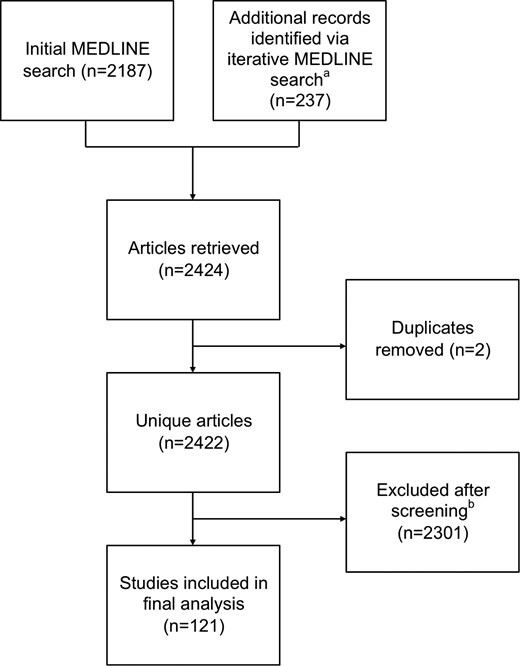
Abstract Objective Critical appraisal of clinical evidence promises to help prevent, detect, and address flaws related to study importance, ethics, validity, applicability, and reporting. These research issues are of growing concern. The purpose of this scoping review is to survey the current literature on evidence appraisal to develop a conceptual framework and an informatics research agenda. Methods We conducted an iterative literature search of Medline for discussion or research on the critical appraisal of clinical evidence. After title and abstract review, 121 articles were included in the analysis. We performed qualitative thematic analysis to describe the evidence appraisal architecture and its issues and opportunities. From this analysis, we derived a conceptual framework and an informatics research agenda. Results We identified 68 themes in 10 categories. This analysis revealed that the practice of evidence appraisal is quite common but is rarely subjected to documentation, organization, validation, integration, or uptake. This is related to underdeveloped tools, scant incentives, and insufficient acquisition of appraisal data and transformation of the data into usable knowledge. Discussion The gaps in acquiring appraisal data, transforming the data into actionable information and knowledge, and ensuring its dissemination and adoption can be addressed with proven informatics approaches. Conclusions Evidence appraisal faces several challenges, but implementing an informatics research agenda would likely help realize the potential of evidence appraisal for improving the rigor and value of clinical evidence.
Peer Production in Citizen Science: A Community-Centered Approach on the Example of Personal Science
Citizen science encompasses a wide range of practices where online collaboration for knowledge production plays a significant role. However, the study of forms of online collaboration other than crowdsourcing in citizen science has remained largely unexplored. This thesis aims to fill this gap by investigating peer production as a form of collaboration in online citizen science communities of practice. First, peer production theory was operationalized as a working model and used to analyze collaboration in citizen science case studies. This was followed by a comprehensive participatory design process for a specific use case involving the personal science community of practice. This process resulted in the creation of the “Personal Science Wiki”, an online space for consolidating community knowledge through peer production. Subsequently, a usability and card sorting study identified and resolved issues with the wiki implementation, and provided insights into mental models and content requirements regarding self-research knowledge. The lessons learned from the participatory design process were generalized as process recommendations for designing peer production solutions and knowledge management systems with communities of practice.
STAMINA Working Group
STAMINA Working Group - Social Tech And ModellIng for kNowledge & Action
A Design Science Research Methodology for Expert Systems Development
The knowledge of design science research (DSR) can have applications for improving expert systems (ES) development research. Although significant progress of utilising DSR has been observed in particular information systems design – such as decision support systems (DSS) studies – only rare attempts can be found in the ES design literature. Therefore, the aim of this study is to investigate the use of DSR for ES design. First, we explore the ES development literature to reveal the presence of DSR as a research methodology. For this, we select relevant literature criteria and apply a qualitative content analysis in order to generate themes inductively to match the DSR components. Second, utilising the findings of the comparison, we determine a new DSR approach for designing a specific ES that is guided by another result – the findings of a content analysis of examination scripts in Mathematics. The specific ES artefact for a case demonstration is designed for addressing the requirement of a ‘wicked’ problem in that the key purpose is to assist human assessors when evaluating multi-step question (MSQ) solutions. It is anticipated that the proposed design knowledge, in terms of both problem class and functions of ES artefacts, will help ES designers and researchers to address similar issues for designing information system solutions.
TeamTopologies/Team-Topologies-Community-Materials
A list of materials relating to Team Topologies (articles, tools, canvases, etc.) generated by the community.

Habits of High-Functioning Teams
I often struggle to explain what it means to be part of a high-functioning software team. Sure, there are mountains of literature, and an entire genre of LinkedIn thought leadership that professes all kinds of guidelines and heuristics about what makes teams work, but in my experience, it’s hard to internalize these ideas and follow someone else’s model if you’ve never seen what good looks like.
Adopt and scale Team Topologies: platform-as-a-product, templates, more. — Team Topologies - Organizing for fast flow of value
Accelerate value with Team Topologies: measure cognitive load, define team boundaries, apply inverse Conway, readiness assessments, and more for fast delivery.

From global trends to local realities: A multi-scale scenario-building methodology for community infrastructure planning
This paper details a multi-scale scenario-building methodology designed to explore transport infrastructure futures in rapidly changing Circumpolar North communities, bridging global trends and national contexts with local realities. Focusing on Churchill, Canada, and Kirkenes, Norway, we employed a hybrid approach that combined top-down adaptation of existing global and regional socioeconomic scenarios with bottom-up, participatory ethnographic research to ensure local relevance and incorporate stakeholder knowledge. We developed coherent scenarios across global, regional (national), and local scales, allowing higher-level archetypes to manifest differently depending on locally specific features identified through fieldwork. This consecutive, nested process utilized morphological analysis and the Factor-Actor-Sector framework to maintain consistency while accommodating local specificities. The methodology centered not just on scenario creation but also on the function of scenarios as a tool for community dialogue, utilizing artistic visualizations in workshops to engage diverse stakeholders. This approach demonstrates a way to navigate the tension between global and national drivers versus local community needs, yielding distinct yet comparable local futures grounded in broader development pathways. It offers practical insights for deliberations and planning in uncertain environments, both built and unbuilt.
An introduction to radical participatory design: decolonising participatory design processes
Outside of community-led design projects, most participatory design processes initiated by a company or organisation maintain or even strengthen power imbalances between the design organisation and the community on whose purported behalf they are designing, further increasing the absencing experience. Radical participatory design (RPD) is a radically relational answer to the coloniality inherent in participatory design where the community members’ disappointment is greater due to the greater expectations and presencing potential of a ‘participatory design’ process. We introduce the term RPD to show how research and design processes can be truly participatory to the root or core. Instead of treating participatory design as a method, a way of conducting a method, or a methodology, we introduce RPD as a meta-methodology, a way of doing any methodology. We explicitly describe what participation means and compare and contrast design processes based on the amount of participation, creating a typology of participation. We introduce ‘designer as community member’, ‘community member as designer,’ and ‘community member as facilitator’ models and provide characteristics for the meta-methodology of RPD.

An introduction to radical participatory design: decolonising participatory design processes
Outside of community-led design projects, most participatory design processes initiated by a company or organisation maintain or even strengthen power imbalances between the design organisation and the community on whose purported behalf they are designing, further increasing the absencing experience. Radical participatory design (RPD) is a radically relational answer to the coloniality inherent in participatory design where the community members’ disappointment is greater due to the greater expectations and presencing potential of a ‘participatory design’ process. We introduce the term RPD to show how research and design processes can be truly participatory to the root or core. Instead of treating participatory design as a method, a way of conducting a method, or a methodology, we introduce RPD as a meta-methodology, a way of doing any methodology. We explicitly describe what participation means and compare and contrast design processes based on the amount of participation, creating a typology of participation. We introduce ‘designer as community member’, ‘community member as designer,’ and ‘community member as facilitator’ models and provide characteristics for the meta-methodology of RPD.
Prompting Science Report 4: Playing Pretend: Expert Personas Don't Improve Factual Accuracy
<span> <p><span>This is the fourth in a series of short reports that help business, education, and policy leaders understand the technical details of working with AI through rigorous testing. Here, we ask whether assigning personas to models improves performance on difficult objective multiple-choice questions. We study both domain-specific expert personas and low-knowledge personas, evaluating six models on GPQA Diamond (Rein et al. 2024) and MMLU-Pro (Wang et al. 2024), graduate-level questions spanning science, engineering, and law. </span></p> <p><span>We tested three approaches:</span></p> <p><span>• In-Domain Experts: Assigning the model an expert persona (“you are a physics expert”) matched to the problem type (physics problems) had no significant impact on performance (with the exception of the Gemini 2.0 Flash model).</span></p> <p><span> • Off-Domain Experts (Domain-Mismatched): Assigning the model an expert persona (“you are a physics expert”) not matched to the problem type (law problems) resulted in marginal differences.</span></p> <p><span> • Low-Knowledge Personas: We assigned the model negative capability personas (layperson, young child, toddler), which were generally harmful to benchmark accuracy. </span></p> <p><span>Across both benchmarks, persona prompts generally did not improve accuracy relative to a no-persona baseline. Expert personas showed no consistent benefit across models, with few exceptions. Domain-mismatched expert personas sometimes degraded performance. Low-knowledge personas often reduced accuracy. These results are about the accuracy of answers only; personas may serve other purposes (such as altering the tone of outputs), beyond improving factual performance.</span></p></span>
