This article reports the development and validation of a parsimonious, generalizable scale that measures the hedonic and utilitarian dimensions of consumer attitudes toward product categories and different brands within categories. The hedonic/utilitarian (HED/UT) scale includes ten semantic differential response items, five of which refer to the hedonic dimension and five of which refer to the utilitarian dimension of consumer attitudes. The authors conducted six studies to establish the unidimensionality, reliability, and validity of the two HED/UT subscales. In reaching the final scale, the authors also develop and implement a unique process of paring down a psychometrically sound but otherwise too large set of items. Nomological validity is established by replacing a typical, one-dimensional attitude toward the brand measure with the hedonic and utilitarian dimensions in a central route processing model. Results suggest that the hedonic and utilitarian constructs are two distinct dimensions of brand attitude and are reliably and validly measured by the HED/UT scale.
Behavioural economics, consumer behaviour and consumer policy: state of the art
Counter to the traditional assumption of neoclassical economics that individuals are rational Homo oeconomici that always seek to maximize their utility and follow their ‘true’ preferences, research in behavioural economics has demonstrated that people's judgements and decisions are often subject to systematic biases and heuristics, and are strongly dependent on the context of the decision. In this article, we briefly review the transition of research from neoclassical economics to behavioural economics, and discuss how the latter has influenced research in consumer behaviour and consumer policy. In particular, we discuss the impacts of key principles such as status quo bias, the endowment effect, mental accounting and the sunk-cost effect, other heuristics and biases related to availability, salience, the anchoring effect and simplicity rules, as well as the effects of other supposedly irrelevant factors such as music, temperature and physical markers on consumers’ decisions. These principles not only add significantly to research on consumer behaviour – they also offer readily available practical implications for consumer policy to nudge behaviour in beneficial directions in consumption domains including financial decision making, product choice, healthy eating and sustainable consumption.
The Interplay among Category Characteristics, Customer Characteristics, and Customer Activities on in-Store Decision Making
The authors explore product category and customer characteristics that affect consumers’ likelihood of engaging in unplanned purchases. In addition, they examine consumer activities that can exacerbate or limit these effects. The authors employ a hierarchical modeling approach to test their hypotheses using a data set of in-store intercept interviews conducted with 2300 consumers across 28 stores. The results show that category characteristics, such as purchase frequency and displays, and customer characteristics, such as household size and gender, affect in-store decision making. Moreover, although the analysis reveals that the baseline probability of an unplanned purchase is 46%, the contextual factors can drive this probability as high as 93%. The results support the predictions that list use, more frequent trips, limiting the aisles visited, limiting time spent in the store, and paying by cash are effective strategies for decreasing the likelihood of making unplanned purchases.
Metacognitive experiences as information: Processing fluency in consumer judgment and decision making
Abstract Thinking is accompanied by metacognitive experiences of ease or difficulty. People draw on these experiences as a source of information that can complement or challenge the implications of declarative information. We conceptualize the operation of metacognitive experiences within the framework of feelings‐as‐information theory and review their implications for judgments relevant to consumer behavior, including popularity, trust, risk, truth, and beauty.

Metacognitive experiences as information: Processing fluency in consumer judgment and decision making
Abstract Thinking is accompanied by metacognitive experiences of ease or difficulty. People draw on these experiences as a source of information that can complement or challenge the implications of declarative information. We conceptualize the operation of metacognitive experiences within the framework of feelings‐as‐information theory and review their implications for judgments relevant to consumer behavior, including popularity, trust, risk, truth, and beauty.

Gift Cards and Mental Accounting: Green‐lighting Hedonic Spending
ABSTRACT In three studies, we examine the mental accounting rules that govern how gift cards are used. We predicted that their identity as gift cards would shift consumption from utilitarian to hedonic goods even in contexts where both types of goods are available and the consumer's needs are unchanged. In Study 1a, participants were asked to imagine that they had both a gift card and a specified amount of cash and needed to purchase both a hedonic item and a utilitarian item. When asked which currency they would use to buy which item, respondents were significantly more likely to say they would use the gift card to buy the hedonic item. Study 1b replicated this result and found that it was tied to participants' beliefs how different types of money should be used. In Study 2, we found that participants who were required to spend a certain amount of their compensation in a laboratory store spent more on hedonic goods if their payment was in the form of a gift card. In Study 3, we analyzed transactions at a campus bookstore and found that shoppers tended to spend disproportionately on hedonic goods when using their gift cards than when making credit card purchases. Taken together, these studies indicate that people tend to assign the monetary value of a gift card to a hedonic mental account and spend it accordingly. Copyright © 2014 John Wiley & Sons, Ltd.

Restoring Consumer Sovereignty
For decades, there has been broad consensus within antitrust, intellectual property, and consumer law scholarship that consumers make decisions in their own best interests by consciously weighting the market’s relative prices, quantities, and qualities against each other. That consensus is unraveling in light of novel findings from cognitive and social psychology that explain how individuals’ concepts of what they prefer drive the global economy. At the same time, producers nowadays no longer merely satisfy consumers’ needs but also communicate their values, identities, and aspirations through the sale and marketing of products. As part of the growing interest in observations such as these, a wealth of psychological studies challenge the fundamental teaching of economics that the interplay of demand and supply of goods in a free market economy provides us with material wealth. This book provides a normative defense of that assumption and a theoretical framework for understanding its contradictions. It argues that the erosion of consumer sovereignty through the ability of product manufacturers and sellers to systematically take advantage of individuals’ psychological weaknesses demands a twenty-first-century reconceptualization of the consumer and a modern account of how the law should regulate the digital economy. Such an account is justified to ensure a diverse marketplace in which consumers can influence how our societies are structured and arranged. By examining the role that market manipulation plays, it offers ingredients for a realistic descriptive and normative market regulatory theory that is aware of its political economy, its behavioral suppositions, and its distributional consequences.
Love Is a Many-Splendored Thing: Brand Love in a Consumer Culture
In a consumer culture, people make sense of their everyday existence based on meanings generated during the consumption process. These meanings feature in establishing human identities and communicating them to others. Brands fulfill a pivotal role in conveying the...

Time-inconsistent Preferences and Consumer Self-Control
Abstract Why do consumers sometimes act against their own better judgment, engaging in behavior that is often regretted after the fact and that would have been rejected with adequate forethought? More generally, how do consumers attempt to maintain self-control in the face of time-inconsistent preferences? This article addresses consumer impatience by developing a decision-theoretic model based on reference points. The model explains how and why consumers experience sudden increases in desire for a product, increases that can result in the temporary overriding of long-term preferences. Tactics that consumers use to control their own behavior are also discussed. Consumer self-control is framed as a struggle between two psychological forces, desire and willpower. Finally, two general classes of self-control strategies are described: those that directly reduce desire, and those that overcome desire through will power.
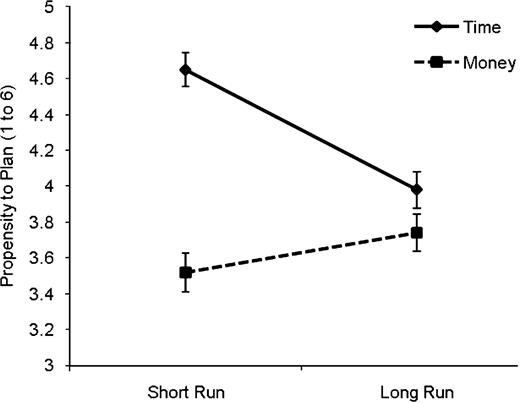
A Generalizable Scale of Propensity to Plan: The Long and the Short of Planning for Time and for Money
Abstract. Planning has pronounced effects on consumer behavior and intertemporal choice. We develop a six-item scale measuring individual differences in pr
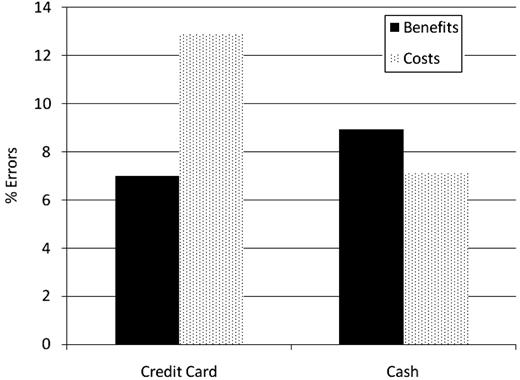
Do Payment Mechanisms Change the Way Consumers Perceive Products?
Abstract. Do payment mechanisms change the way consumers perceive products? We argue that consumers for whom credit cards (cash) have been primed focus mor
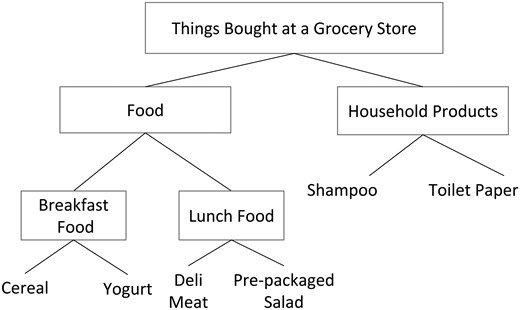
Consumers’ Mental Representation of Expenditures: Implications for Spending and Savings Decisions
Abstract People’s mental representation of expenditures is crucial to their budgeting. This article proposes that much like how they represent natural kinds (e.g., animals and plants), people represent expenditures in a hierarchical taxonomy. Seven studies, supported by six norming studies and three pilots, revealed that expenditures are represented hierarchically. We first recover people’s mental representations using a successive pile-sort method that asks people to form hierarchies of categories with common expenditures (e.g., rent, dining out, etc.). The pile-sort reveals consensus in people’s representations of expenditures and that these representations are relatively stable over time. Further, people’s adjustment in their spending behavior can be predicted by the distance between items in their representation. Specifically, when people overspent on an item, they spontaneously adjust spending more on taxonomically closer items. We examine this spontaneous adjustment behavior using both laboratory studies and field data with 6.5 million grocery shopping trips over 12 years. The findings highlight the connection between mental representation and consumer behavior, and they emphasize the importance of studying concepts and categories in the context of consumption.
The Consumer in Physical Pain: Implications for the Pain-of-Paying and Pricing
AbstractOver one in five Americans suffer from chronic pain—a figure that does not include other, milder, transient types of pain. Thus, there is abundant work exploring the influence of physical pain on physical and psychological welfare. However, there is no work regarding how physical pain influences consumption decisions, which is important because people in physical pain still buy products and make purchases. Give that physical pain “demands” attention, we suggest that consumers in physical pain (vs. those who are not) feel the pain-of-paying less, thereby increasing their purchase intentions and willingness-to-pay for products. We find evidence for our hypothesis in four studies with field and lab assessments of physical pain. We discuss the contributions and limitations of our work. We also highlight several implications that concern pricing decisions for marketers.

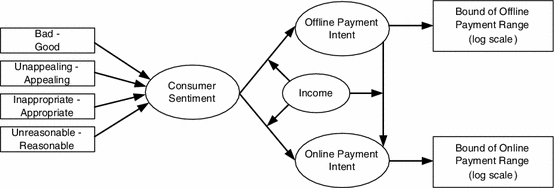
The moderating role of income on consumers’ preferences and usage for online and offline payment methods
In this paper we examine consumer attitudes towards a payment method, which is a key factor affecting the probability of completing a transaction offline and online. More specifically, we constructed a model that surveyed the offline and online usage of prepaid e-cash, debit cards, credit cards and cash. User perceptions of the attractiveness of e-cash and various traditional payment means were also empirically assessed. Consumer attitudes towards a payment technology were found to be influential on users’ perceptions in both online and offline environments. User perceptions of offline purchases with a payment technology had significant and positive effects on the corresponding online usage perceptions. The effects of our research model are contingent on the income level of users. Our findings have significant implications, as they could help shed light on why consumers abandon their shopping carts and do not complete their transactions, which could potentially play a significant role when it comes to designing applications targeting sspecific consumer segments.
Evolution of Consumption: A Psychological Ownership Framework
Technological innovations are creating new products, services, and markets that satisfy enduring consumer needs. These technological innovations create value for consumers and firms in many ways, but they also disrupt psychological ownership––the feeling that a thing is “MINE.” The authors describe two key dimensions of this technology-driven evolution of consumption pertaining to psychological ownership: (1) replacing legal ownership of private goods with legal access rights to goods and services owned and used by others and (2) replacing “solid” material goods with “liquid” experiential goods. They propose that these consumption changes can have three effects on psychological ownership: they can threaten it, cause it to transfer to other targets, and create new opportunities to preserve it. These changes and their effects are organized in a framework and examined across three macro trends in marketing: (1) growth of the sharing economy, (2) digitization of goods and services, and (3) expansion of personal data. This psychological ownership framework generates future research opportunities and actionable marketing strategies for firms aiming to preserve the positive consequences of psychological ownership and navigate cases for which it is a liability.
Mental Accounting and Consumer Choice
A new model of consumer behavior is developed using a hybrid of cognitive psychology and microeconomics. The development of the model starts with the mental coding of combinations of gains and losses using the prospect theory value function. Then the evaluation of purchases is modeled using the new concept of “transaction utility.” The household budgeting process is also incorporated to complete the characterization of mental accounting. Several implications to marketing, particularly in the area of pricing, are developed.

Yielding to Temptation: Self‐Control Failure, Impulsive Purchasing, and Consumer Behavior
Abstract. Self-control is a promising concept for consumer research, and self-control failure may be an important cause of impulsive purchasing. Three caus