


Science is not always plain sailing and sometimes the voyage is across an angry sea. A recent clinical trial of treatments for chronic fatigue syndrome (the PACE trial) has whipped up a storm of controversy. Patients claim the lead authors overstated the effectiveness of cognitive behavioural therapy and graded exercise therapy by lowering the thresholds they used to determine improvement. In this extraordinary case, patients discovered that the treatments tested had much lower efficacy after an information tribunal ordered the release of data from the PACE trial to a patient who had requested access using a freedom of information request.
Comparison of adaptive pacing therapy, cognitive behaviour therapy, graded exercise therapy, and specialist medical care for chronic fatigue syndrome (PACE): a randomised trial
CBT and GET can safely be added to SMC to moderately improve outcomes for chronic fatigue syndrome, but APT is not an effective addition.

Exercise therapy for chronic fatigue syndrome
Exercise as treatment for adults with chronic fatigue syndrome, What is the aim of this review?, People with chronic fatigue syndrome have long‐lasting fatigue, joint pain, headaches, sleep problems, poor concentration and short‐term memory. These symptoms cause significant disability and distress. We wanted to find out whether exercise therapy can help people with chronic fatigue syndrome (myalgic encephalomyelitis)., Key messages, People who have exercise therapy probably have less fatigue at the end of treatment than those who receive more passive therapies. We are uncertain if this improvement lasts in the long term. We are also uncertain about the risk of serious side effects from exercise therapy., What was studied in the review?, We explored whether exercise therapy can reduce chronic fatigue syndrome symptoms. We searched for studies comparing the effect of exercise therapy with treatment as usual or other therapies., What are the main results of the review?, We found eight studies with 1518 participants. The studies compared participants who received exercise therapy to participants who received treatment as usual or more active treatments such as cognitive behavioural therapy., Participants had exercise therapy for 12 weeks to 26 weeks. The studies measured the effect of the therapy at the end of the treatment and also long term, after 50 or 72 weeks. Participants exercised at different levels of intensity using variations of aerobic exercising such as walking, swimming or cycling., Exercise therapy compared to treatment as usual or relaxation, Participants who have exercise therapy probably have less fatigue at the end of treatment, and they may have moderately better physical functioning. We are uncertain if these improvements last long term because we are very uncertain about the evidence., Participants who have exercise therapy may have slightly better sleep, both at the end of treatment and long term., We are uncertain about the risk of serious side effects and the effects of exercise therapy on pain, quality of life, and depression. This is because we lack evidence or because we are very uncertain about the evidence., Exercise therapy compared to cognitive behavioural therapy, Exercise therapy may make little or no difference to participants’ fatigue at end of treatment or in the long term. Exercise therapy may make little or no difference to participants’ physical functioning at end of treatment, but the long‐term effect on physical functioning is uncertain., No studies looked at the effect of exercise therapy on depression at the end of treatment, but it probably has little or no long‐term effect., We are uncertain about the risk of side effects. We are also uncertain about the effects on pain, quality of life, or sleep. This is because we lack evidence or because we are very uncertain about the evidence., Exercise therapy compared to adaptive pacing (living within limits), Participants who have exercise therapy may have slightly less fatigue and depressive symptoms and slightly better physical functioning and sleep at the end of treatment and long term than participants who have adaptive pacing., We are uncertain about the risk of serious side effects. We are also uncertain about the effect on quality of life or pain. This is because we lack evidence or we are very uncertain about the evidence., Exercise therapy compared to antidepressants, We are uncertain if exercise therapy is better than antidepressants at reducing fatigue. We are also uncertain of its effect on depression, side effects, pain, physical functioning, quality of life or sleep. This is because we lack evidence or we are very uncertain about the evidence., Why is this review important?, Exercise therapy is recommended by treatment guidelines and often used as treatment for people with chronic fatigue syndrome. People with chronic fatigue syndrome should have the opportunity to make informed decisions about their care and treatment based on robust research evidence and whether exercise therapy is effective, either as a stand‐alone intervention or as part of a treatment plan., It is important to note that the evidence in this review is from people diagnosed with 1994 criteria of the Centers for Disease Control and Prevention or the Oxford criteria. People diagnosed using other criteria may experience different effects.

Graded exercise therapy for myalgic encephalomyelitis/chronic fatigue syndrome is not effective and unsafe. Re-analysis of a Cochrane review
The analysis of the 2017 Cochrane review reveals flaws, which means that contrary to its findings, there is no evidence that graded exercise therapy is effective. Because of the failure to report harms adequately in the trials covered by the review, it cannot be said that graded exercise therapy is safe. The analysis of the objective outcomes in the trials provides sufficient evidence to conclude that graded exercise therapy is an ineffective treatment for myalgic encephalomyelitis/chronic fatigue syndrome.
Individual Experience vs. The Cochrane Review
On my decade-long exploration seeking a scientific language for singular evidence.

The negative impact of the psychiatric model of chronic fatigue syndrome on doctors’ understanding and management of the illness
Background: Myalgic Encephalomyelitis/Chronic Fatigue Syndrome (ME/CFS) is a disabling condition that greatly impacts the lives of sufferers. Many sufferers report problems getting a confirmatory d...

Evidence appraisal: a scoping review, conceptual framework, and research agenda
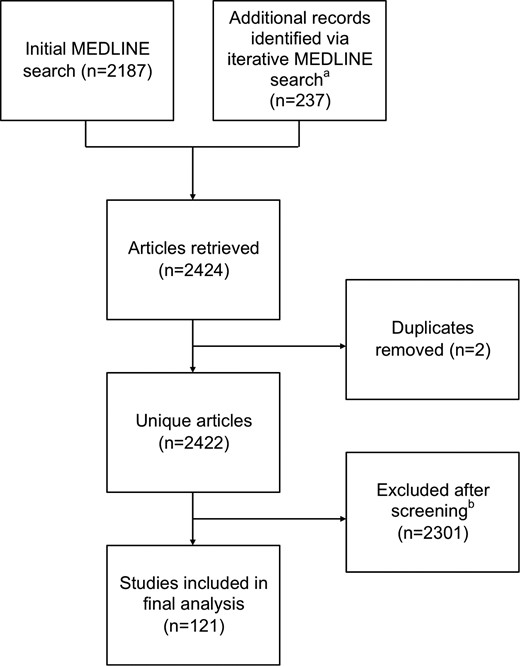
Abstract Objective Critical appraisal of clinical evidence promises to help prevent, detect, and address flaws related to study importance, ethics, validity, applicability, and reporting. These research issues are of growing concern. The purpose of this scoping review is to survey the current literature on evidence appraisal to develop a conceptual framework and an informatics research agenda. Methods We conducted an iterative literature search of Medline for discussion or research on the critical appraisal of clinical evidence. After title and abstract review, 121 articles were included in the analysis. We performed qualitative thematic analysis to describe the evidence appraisal architecture and its issues and opportunities. From this analysis, we derived a conceptual framework and an informatics research agenda. Results We identified 68 themes in 10 categories. This analysis revealed that the practice of evidence appraisal is quite common but is rarely subjected to documentation, organization, validation, integration, or uptake. This is related to underdeveloped tools, scant incentives, and insufficient acquisition of appraisal data and transformation of the data into usable knowledge. Discussion The gaps in acquiring appraisal data, transforming the data into actionable information and knowledge, and ensuring its dissemination and adoption can be addressed with proven informatics approaches. Conclusions Evidence appraisal faces several challenges, but implementing an informatics research agenda would likely help realize the potential of evidence appraisal for improving the rigor and value of clinical evidence.
Patrick Collison on Twitter / X
Observing some people close to me with chronic health conditions, it's striking how useful Reddit frequently ends up being. I think a core reason is because trials aren’t run for a lot of things, and Reddit provides a kind of emergent intelligence that sits between that which any… pic.twitter.com/Eto23uQMDb— Patrick Collison (@patrickc) September 14, 2025

Beyond APIs: Collecting Web Data for Research using the National Internet Observatory
Widespread Internet use offers unprecedented opportunities to study human behavior at scale, yet researchers face significant ethical and technical barriers when attempting to collect data for academic studies.
The Medium is the Message: How Non-Clinical Information Shapes Clinical Decisions in LLMs | Proceedings of the 2025 ACM Conference on Fairness, Accountability, and Transparency
There has been a growing interest in the HCI community to study Health, with particular focus in understanding healthcare practices and designing technologies to support and to enhance these practices. A majority of current health studies in HCI have ...

Meta’s New AI Asked for My Raw Health Data—and Gave Me Terrible Advice
Meta’s Muse Spark model offers to analyze users’ health data, including lab results. Beyond the obvious privacy risks, it’s not a capable stand-in for a real doctor.

Dismissing chronic illness: A qualitative analysis of negative health care experiences
In the US, medical training is inadequate regarding the symptomatology, prognosis, and treatment for myalgic encephalomyelitis (ME) and chronic fatigue syndrome (CFS). As a result, many physicians lack the appropriate level of knowledge about effective methods for ME and CFS symptom reduction and often suggest inappropriate treatments, such as increased exercise or psychiatric services. The authors’ purpose in this study was to analyze negative patient experiences with health care professionals. Patients with ME and CFS who reported experiencing a dismissive physician attitude were asked to detail the encounter via open-ended response on an international, online survey. Participant responses were thematically coded and analyzed using processes outlined by Patton. Emergent themes related to perceived physician attitudes and how they impact patient wellbeing are described and their implications discussed. Additionally, we highlight suggestions for how the health care system can effectively approach this often marginalized patient group.
datasetpapers — a public research experiment
An experimental approach to versioned, forkable, machine-readable analyses. A prototype, not a product or service.

datasetpapers — a public research experiment
An experimental approach to versioned, forkable, machine-readable analyses. A prototype, not a product or service.
Randomized Controlled Trials without Data Retention
Amidst rising appreciation for privacy and data usage rights, researchers have increasingly acknowledged the principle of data minimization, which holds that the accessibility, collection, and retention of subjects' data should be kept to the bare amount needed to answer focused research questions. Applying this principle to randomized controlled trials (RCTs), this paper presents algorithms for making accurate inferences from RCTs under stringent data retention and anonymization policies. In particular, we show how to use recursive algorithms to construct running estimates of treatment effects in RCTs, which allow individualized records to be deleted or anonymized shortly after collection. Devoting special attention to non-i.i.d. data, we further show how to draw robust inferences from RCTs by combining recursive algorithms with bootstrap and federated strategies.

Co-creation process of an app for people with rare diseases - a citizen science approach
Background Rare diseases affect a small percentage of the population, leading to challenges such as delayed diagnoses and limited treatment options. Mobile health technologies offer solutions to improve patient outcomes, yet their application in rare diseases remains underexplored. The German citizen science project SelEe created a customizable app for the self-management of rare diseases through a co-creation process that involved patients with such conditions. Methods The project consisted of three phases. In Phase 1, 9 to 68 patients or relatives of patients participated in workshops to define research topics and app requirements. Phase 2 involved a core research team of nine patients and researchers who iteratively developed the app, released in March 2023. Phase 3 focused on evaluating the app’s usage and usability through an in-app survey conducted from March 2023 to February 2024. We utilized descriptive statistics to evaluate app usage and employed the mHealth App Usability Questionnaire to assess usability. Results The SelEe app offers the possibility to create and store data in a personalized health diary. Patients can create their own templates or use templates which were defined by the core research team. Users can record findings (e.g. blood test results) and export data using different graphs and formats. Furthermore, the app supports blind users. The app was downloaded 3040 times and 1456 users registered, with 1967 unique diseases entered. 50.7% of the diseases were rare, 30.5% non-rare, and 18.8% were classified as suspected, undefined, or symptoms. A total of 1223 valid user profiles were analyzed for app usage and demographics. Furthermore, 432 users qualified for the in-app survey by making at least one health diary entry, and 117 participated. The app was rated with an overall usability score of 5.19 out of 7. While the app’s health diary function was frequently used, other functionalities like findings and data export were less utilized. Feedback highlighted the need for improved usability and additional features. Conclusions The study highlights active patient engagement in developing a mobile health app for individuals with rare diseases. Although improvements are necessary for broader acceptance, the app is promising for the management of rare diseases. Supplementary information The online version contains supplementary material available at 10.1186/s13023-025-04140-1.
Research update: The relation between ME/CFS disease burden and research funding in the USA
BACKGROUND: Myalgic Encephalomyelitis/Chronic Fatigue Syndrome (ME/CFS) is a debilitating, chronic, multisystem disease that affects an estimated 1 to 2.5 milli...