


Emojis are paralinguistic elements that are used in computer-mediated communication to express emotions, convey tone, or simply depict objects or statements. This study examines how the (excessive) use of emojis affects knowledge, message credibility, and source trustworthiness. To this end, we conducted three online experiments using social media posts, in which we systematically varied the number of emojis and the source of the message. The results show that displaying many emojis decreases message credibility and source trustworthiness. As a mechanism explaining this effect, we also demonstrate that displaying many emojis is perceived as a persuasive attempt, triggering affective and cognitive reactance, and ultimately reducing message credibility. Moreover, the study shows that using (a large amount of) emojis in a message negatively affects factual knowledge.
The Conservatism of Emoji
Emoji offer you new possibilities for digital expression, but only if you’re speaking their language


Social media ‘trust’/’distrust’ buttons could reduce spread of misinformation | UCL News
The addition of ‘trust’ and ‘distrust’ buttons on social media, alongside standard ‘like’ buttons, could help to reduce the spread of misinformation, finds a new experimental study led by UCL researchers.

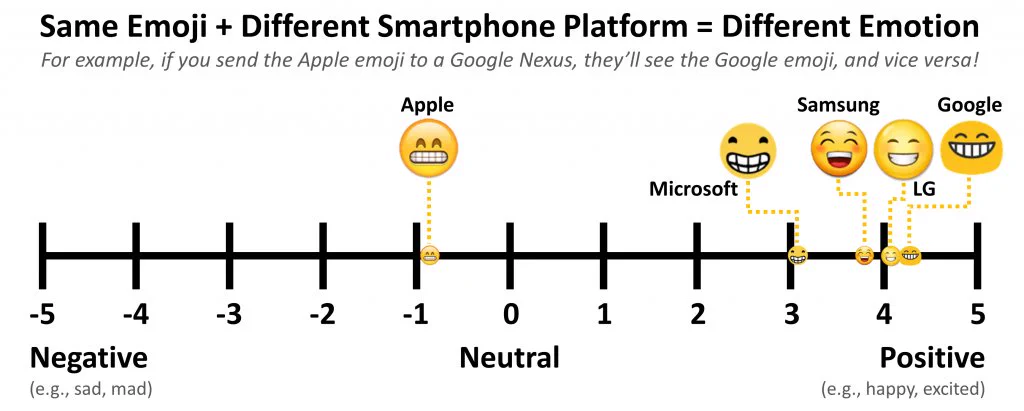
today in post-structural emoji and unicode standards studies https://t.co/YepxBxAhfV 😁
today in post-structural emoji and unicode standards studies https://t.co/YepxBxAhfV 😁 pic.twitter.com/9T1gLSK6Zz— Sara M. Watson (@smwat) April 12, 2016
Evaluating Twitter’s algorithmic amplification of low-credibility content: an observational study
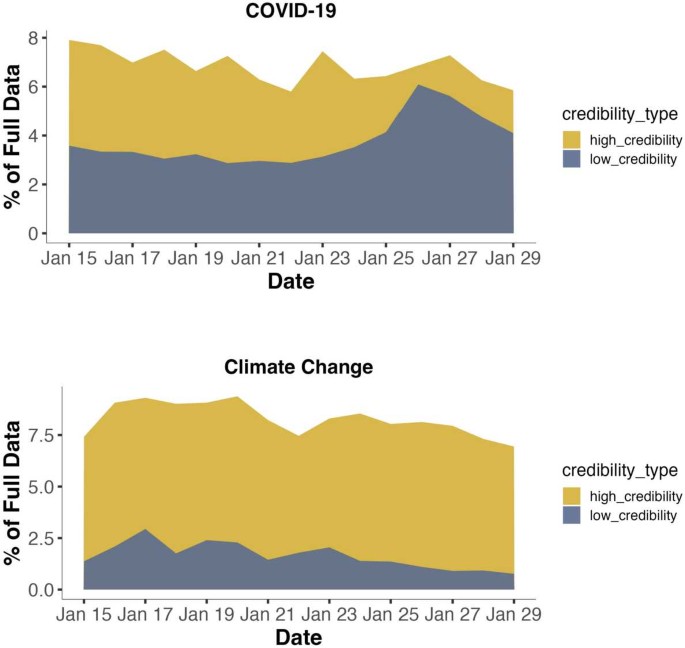
Artificial intelligence (AI)-powered recommender systems play a crucial role in determining the content that users are exposed to on social media platforms. However, the behavioural patterns of these systems are often opaque, complicating the evaluation of their impact on the dissemination and consumption of disinformation and misinformation. To begin addressing this evidence gap, this study presents a measurement approach that uses observed digital traces to infer the status of algorithmic amplification of low-credibility content on Twitter over a 14-day period in January 2023. Using an original dataset of ≈ 2.7 million posts on COVID-19 and climate change published on the platform, this study identifies tweets sharing information from low-credibility domains, and uses a bootstrapping model with two stratifications, a tweet’s engagement level and a user’s followers level, to compare any differences in impressions generated between low-credibility and high-credibility samples. Additional stratification variables of toxicity, political bias, and verified status are also examined. This analysis provides valuable observational evidence on whether the Twitter algorithm favours the visibility of low-credibility content, with results indicating that, on aggregate, tweets containing low-credibility URL domains perform better than tweets that do not across both datasets. However, this effect is largely attributable to a difference in high-engagement, high-followers tweets, which are very impactful in terms of impressions generation, and are more likely receive amplified visibility when containing low-credibility content. Furthermore, high toxicity tweets and those with right-leaning bias see heightened amplification, as do low-credibility tweets from verified accounts. Ultimately, this suggests that Twitter’s recommender system may have facilitated the diffusion of false content by amplifying the visibility of low-credibility content with high-engagement generated by very influential users.
Evaluating Twitter’s algorithmic amplification of low-credibility content: an observational study
Artificial intelligence (AI)-powered recommender systems play a crucial role in determining the content that users are exposed to on social media platforms. However, the behavioural patterns of these systems are often opaque, complicating the evaluation of their impact on the dissemination and consumption of disinformation and misinformation. To begin addressing this evidence gap, this study presents a measurement approach that uses observed digital traces to infer the status of algorithmic amplification of low-credibility content on Twitter over a 14-day period in January 2023. Using an original dataset of ≈ 2.7 million posts on COVID-19 and climate change published on the platform, this study identifies tweets sharing information from low-credibility domains, and uses a bootstrapping model with two stratifications, a tweet’s engagement level and a user’s followers level, to compare any differences in impressions generated between low-credibility and high-credibility samples. Additional stratification variables of toxicity, political bias, and verified status are also examined. This analysis provides valuable observational evidence on whether the Twitter algorithm favours the visibility of low-credibility content, with results indicating that, on aggregate, tweets containing low-credibility URL domains perform better than tweets that do not across both datasets. However, this effect is largely attributable to a difference in high-engagement, high-followers tweets, which are very impactful in terms of impressions generation, and are more likely receive amplified visibility when containing low-credibility content. Furthermore, high toxicity tweets and those with right-leaning bias see heightened amplification, as do low-credibility tweets from verified accounts. Ultimately, this suggests that Twitter’s recommender system may have facilitated the diffusion of false content by amplifying the visibility of low-credibility content with high-engagement generated by very influential users.
Engagement, user satisfaction, and the amplification of divisive content on social media
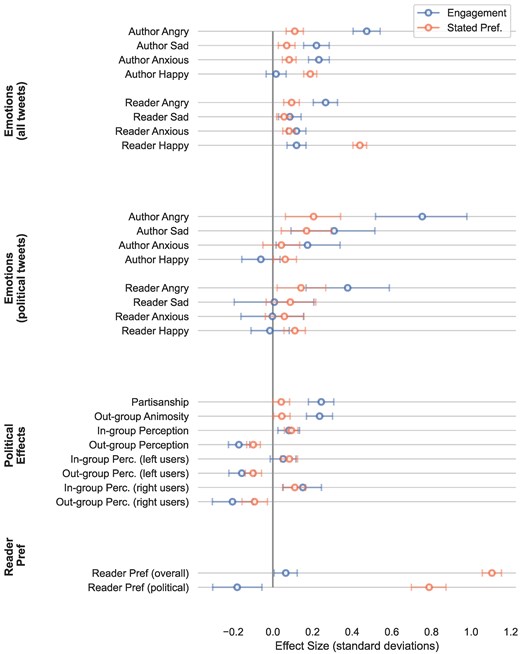
Abstract Social media ranking algorithms typically optimize for users’ revealed preferences, i.e. user engagement such as clicks, shares, and likes. Many have hypothesized that by focusing on users’ revealed preferences, these algorithms may exacerbate human behavioral biases. In a preregistered algorithmic audit, we found that, relative to a reverse-chronological baseline, Twitter’s engagement-based ranking algorithm amplifies emotionally charged, out-group hostile content that users say makes them feel worse about their political out-group. Furthermore, we find that users do not prefer the political tweets selected by the algorithm, suggesting that the engagement-based algorithm underperforms in satisfying users’ stated preferences. Finally, we explore the implications of an alternative approach that ranks content based on users’ stated preferences and find a reduction in angry, partisan, and out-group hostile content, but also a potential reinforcement of proattitudinal content. Overall, our findings suggest that greater integration of stated preferences into social media ranking algorithms could promote better online discourse, though potential trade-offs also warrant further investigation.
Confronting Disinformation Spreaders on Twitter Only Makes It Worse, MIT Scientists Say - Slashdot
According to a new study conducted by researchers at MIT, being corrected online just makes the original posters more toxic and obnoxious. From a report: Basically, the new thinking is that correcting fake news, disinformation, and horrible tweets at all is bad and makes everything worse. This is a ...

Reaction lexicon
Helloo! With few Bluesky clients implementing Bluemoji, there has been conversation around emoji reactions on posts. I feel like standardizing here or having some discussion around it might be worth it. This topic has been touched on before on GitHub, but has been lost during the move to Tangled, so more reasons to restart it. Here’s my rough vision as a conversation starter: { "lexicon": 1, "id": "community.lexicon.interaction.reaction", "defs": { "main": { "type": "record", ...
The Dynamics of Distortion: How Successive Summarization Alters the Retelling of News
This work advances and tests a theory of how news information evolves as it is successively retold by consumers. Drawing on data from over 11,000 participants across ten experiments, the authors offer evidence that when news is repeatedly retold, it undergoes a stylistic transformation termed “disagreeable personalization,” wherein original facts are increasingly supplanted by opinions and interpretations with a slant toward negativity. The central thesis is that when retellers believe they are more (vs. less) knowledgeable than their recipient about the information they are relaying, they feel more compelled to provide guidance on its meaning and to do so in a persuasive manner. This enhanced motivation to guide persuasively, in turn, leads retellers to not only select the subset of facts they deem most essential but, critically, to provide their interpretations and opinions on those facts, with negativity being used as a means of grabbing their audience’s attention. Implications of this work for research on retelling and consumer information diffusion are explored.
Overperception of moral outrage in online social networks inflates beliefs about intergroup hostility
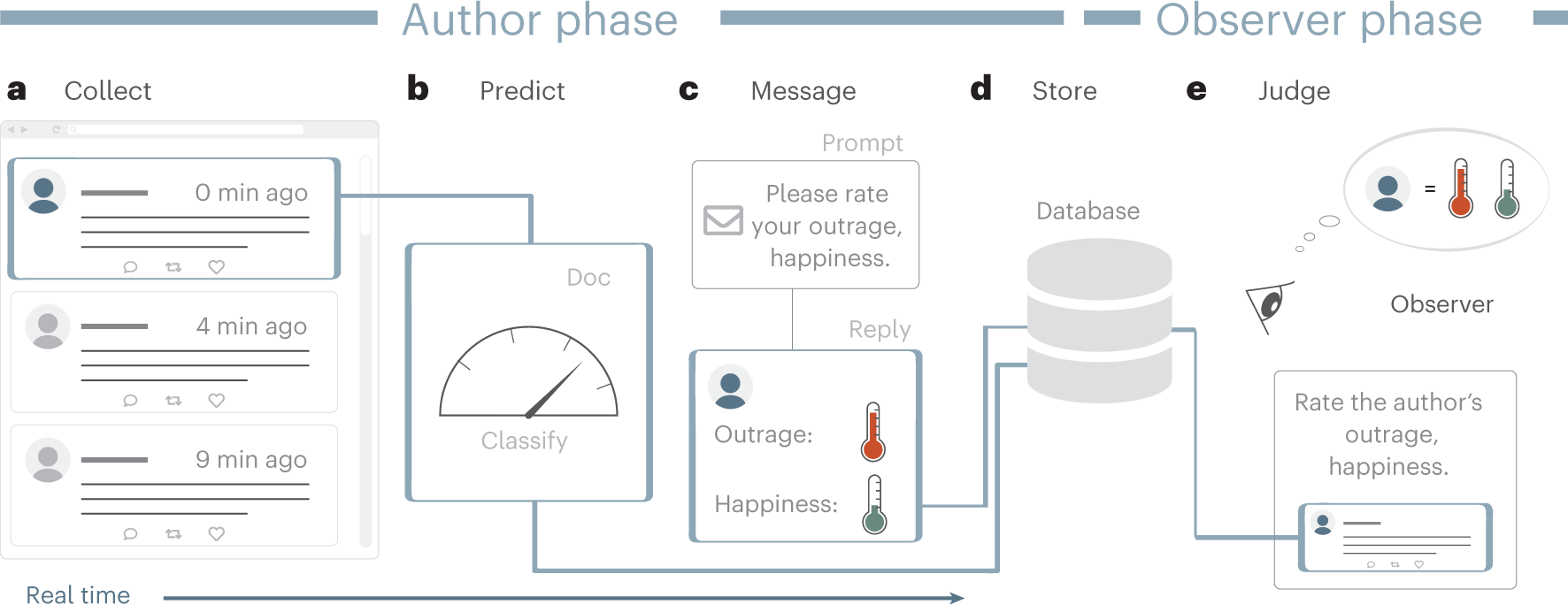
As individuals and political leaders increasingly interact in online social networks, it is important to understand the dynamics of emotion perception online. Here, we propose that social media users overperceive levels of moral outrage felt by individuals and groups, inflating beliefs about intergroup hostility. Using a Twitter field survey, we measured authors’ moral outrage in real time and compared authors’ reports to observers’ judgements of the authors’ moral outrage. We find that observers systematically overperceive moral outrage in authors, inferring more intense moral outrage experiences from messages than the authors of those messages actually reported. This effect was stronger in participants who spent more time on social media to learn about politics. Preregistered confirmatory behavioural experiments found that overperception of individuals’ moral outrage causes overperception of collective moral outrage and inflates beliefs about hostile communication norms, group affective polarization and ideological extremity. Together, these results highlight how individual-level overperceptions of online moral outrage produce collective overperceptions that have the potential to warp our social knowledge of moral and political attitudes.
Introducing a network for thoughtful conversations
The quality of conversations on the Internet is terrible. Most platforms like Twitter, Facebook, Instagram, Reddit, etc. optimize for engagement as their key metric. This spawns and rewards behavior that leads to bragging of gameable metrics such as likes and followers, self-feeding thought bubbles, knee-jerk reactions, “if you’re not on our side, you’re on their side” mentality, and thought policing even by people who think they’re fighting for a good cause. Today’s Internet doesn’t incentiviz
"The limits of my emojis mean the limits of my world"

Orion Reed
Emoji is neoliberal, not working class. We have 👮 police, 🏦 banks, 💹 stocks go up, 👔 office necktie, 🏛️ government, ⚖️ law, 🤴👸 royalty but no wages stub, no union card, no "on strike" sign, no pink slip. there's a levitating businessman emoji 🕴️ but no picket sign.
