

How misaligned incentives undermine open source projects — and why 'monetize later' often leads to the very restrictions open source was meant to avoid.
Fueling Open Source with Vibes & Money
Economists think Open Source is a business model. Devs know better, and fund it accordingly.
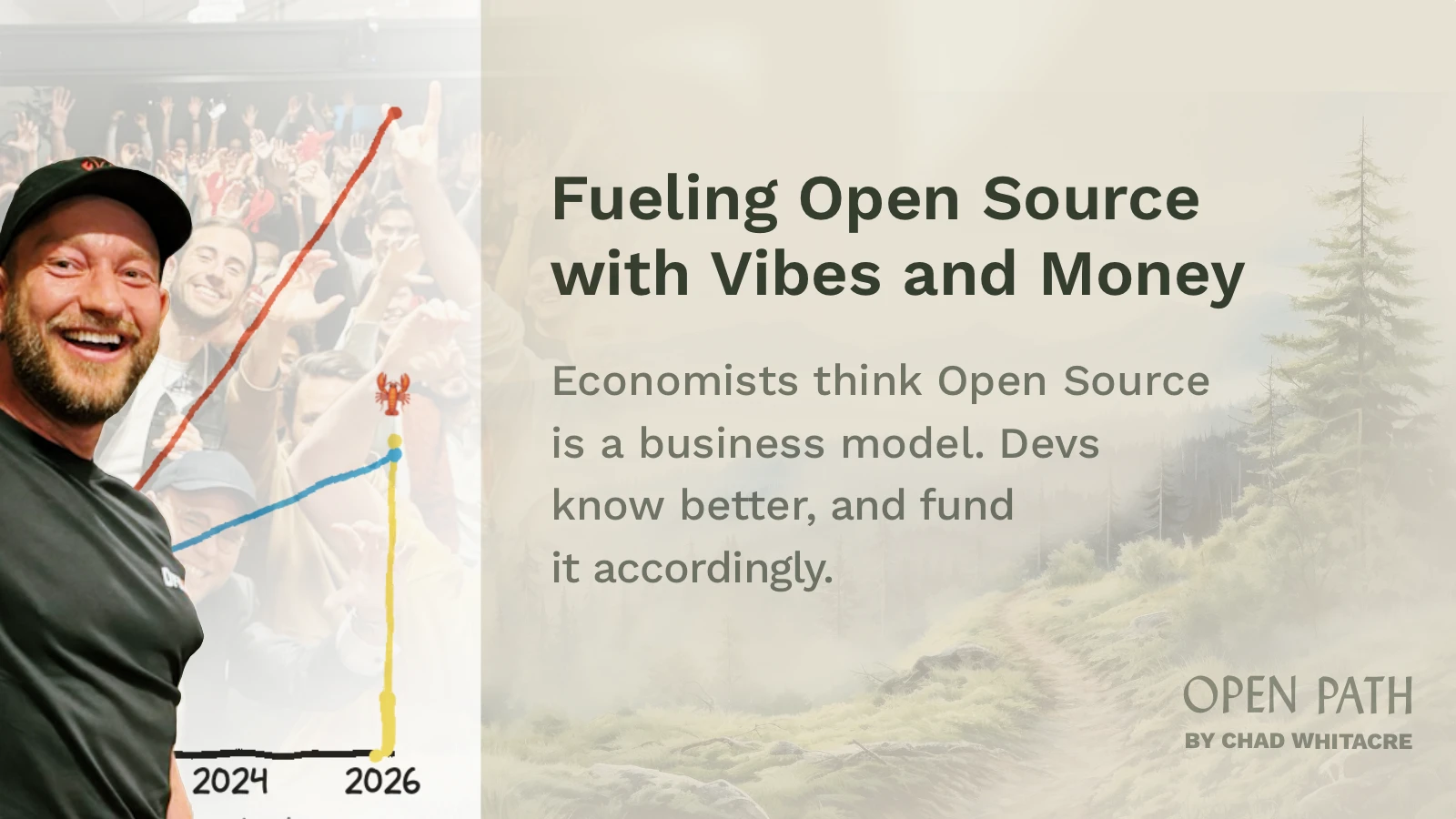
It’s time to rethink Open Source
Why developers give away valuable work for free — and what can be done to take that money back.

Some startups are going ‘fair source’ to avoid the pitfalls of open source licensing | TechCrunch
New alternative category to 'closed source' could help companies monetize software in the open -- without going all-in on open source.

Why Funding Open Source is Hard
tl;dr: Either developers need to change, or GitHub needs to change

Why open source: 25 reasons to embrace it | Ben Balter
Open source isn't a fad. Here are twenty-five economic, moral, and personal reasons your organization should embrace it.
The Asymmetry of Open Source - Matt Holt
A comprehensive guide to funding open source software projects

Open Source is four kinds of economic goods
Open Source code and the stewardship around it have different economics. That distinction helps show what a project might charge for, what it must budget for, and how it could fund stewardship without making the code less open.

Open source is 20: How it changed programming and business forever
"The reward of victory is often another set of battles."
Open Source is a cost-allocation system
Because the right to use the software is not tied to payment, the license does not connect the people who benefit, the people who decide, and the people who bear the costs. Projects have to build those connections deliberately through governance.

Open Source Doesn’t Make Money Because It Isn’t Designed To Make Money
We all know the story: you can’t make money on open source. Is it really true?
The Commercial Open Source Pledge
I’m pretty frustrated by some of the discussion around the recent relicensing decisions by commercial open source companies. A fair bit of it seems confused to me, and I think this is mostly …
One Startup's Heretical Plan to Turn Open Source Code Into Cash
With a new kind of license, open sourcers are trying to strike a balance between getting paid and preserving their values.


Balancing Makers and Takers to scale and sustain Open Source
To scale and sustain Open Source ecosystems in a more efficient and fair manner, Open Source projects need to embrace new governance, coordination and incentive models.
Scaling Open Source communities
Successful Open Source projects must transition from pure volunteerism to include paid contributions, mirroring how public goods like roads evolved historically.
I can see a whole lot of people agreeing with this. Kinda the same with open source in general, but few open source projects are social protocols seeking widespread adoption. It's a particular flavor of narrative disconnection from reality we have to bridge out of to get out of our own way.

⠁⠀⠀⠀⠠
Every @proto developer sounds like this to me:
