


With the emergence of LLM “AI”, everyone will have to learn what many disabled people have always understood
machines will never understand language
I thought language was too complicated for machines to understand, until I got sick. a lifelong, meandering journey of parsing, learning, and fixing my broken body.
Artificial intelligences and human scientists exhibit...
We investigate the effectiveness of artificial intelligences (AI)-specifically large language models (LLMs)-relative to human scientists at high-level cognitive tasks in social science such as...

LLMs are good at playing you
Large language models seem just like humans, but some of this is in our heads.

Sense-making reconsidered: large language models and the blind spot of embodied cognition
Large Language Models (LLMs) demonstrate a kind of linguistic competence that theories of embodied and enactive cognition have long deemed impossible for systems lacking the meaningful perspective of a living being, i.e., the capacity for sense-making. Facing up to this unexpected technological development requires confronting what I propose to call the “AI dilemma”: either frontier LLMs are capable of sense-making despite lacking biological embodiment, or the kind of linguistic competence they exhibit does not necessarily require sense-making. In their chapter on cognition, Frank, Thompson, and Gleiser (2024) maintain that no AI system comes close to realizing relevance, a position that derives much of its motivation from past practical failures. However, frontier LLMs have effectively overcome Dreyfus’ commonsense knowledge problem, such that their dismissal as categorically mindless risks undermining Frank et al.’s central claim that human cognition is deeply intertwined with lived experience. I therefore argue in favor of the alternative side of the AI dilemma: human-level linguistic competence of LLMs should be recognized as a novel non‑biological form of sense‑making, based on a technologically‑mediated embodiment whose enabling properties are in need of further theoretical analysis. This reorientation invites enactive theory to clarify which aspects of sense-making may be universal and which aspects are specifically contingent on organic life, thereby advancing its conceptual framework in dialogue with contemporary AI.
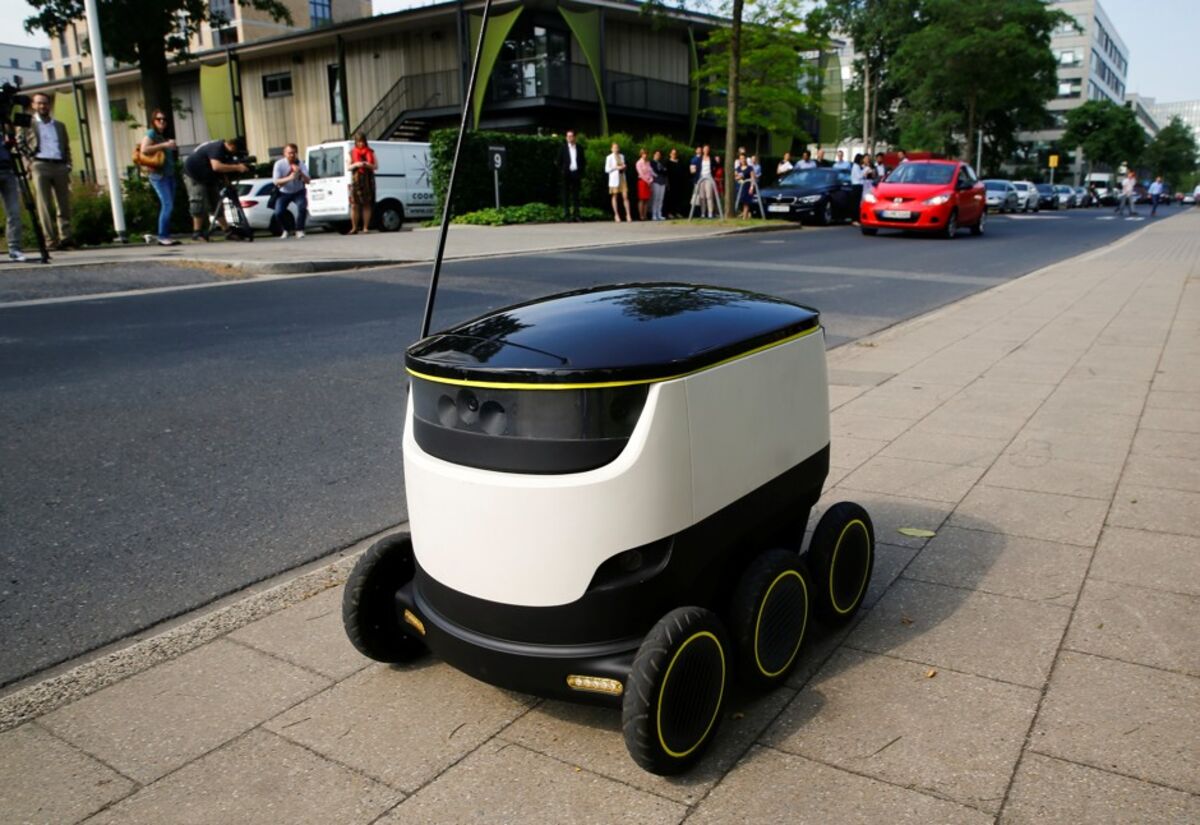
The influence of artificial intelligence on individuals with disabilities
The rapid advancement of artificial intelligence (AI) is reshaping assistive technologies, offering new possibilities for enhancing the independence, …
There's Something Fundamentally Wrong With LLMs
LLMs aren't trained on the "vast majority of speech," experts warn, a major blind spot that could have sweeping consequences.

Large language models are not the problem
If a Large Language Model (LLM) can replicate your scientific contribution, the problem is not the LLM. What does it say about our field that so much of the anxiety about AI comes down to the fear that a machine could do what we do? Perhaps it says we should be doing something better.

MiniMax-Intelligence with everyone
MiniMax is a leading global technology company and one of the pioneers of large language models (LLMs) in Asia. Our mission is to build a world where intelligence thrives with everyone.

Big AI is accelerating the metacrisis: What can we do?
The world is in the grip of ecological, meaning, and language crises that are converging into a metacrisis. Big AI is accelerating them all. LLM engineering sits at the core. Despite the public good motives of language engineers and the promise of LLMs, this work is being leveraged to create unprecedented wealth and power for a handful of individuals and corporations while causing existential harm to life on earth. As a profession, we urgently need to come together to explore alternatives and to design a life-affirming future for our field of natural language processing that is centered on human flourishing on a living planet.
Why Tech Needs More Designers With Disabilities
A life-threatening encounter with AI technology convinced me that the needs of people with disabilities need to be engineered into our autonomous future.
AI learns language from skewed sources. That could change how we humans speak – and think | Bruce Schneier
Large language models aren’t trained on real-life conversations. As we encounter their language, it could affect our own

Nothing About Us, Without Us: Disability Justice and AI
Intersectionality, ways that AI can support the disabled, and how we can win the race to make AI more inclusive.

We Don't Understand Neural Networks At The Algorithmic Level
The largest ongoing debate about AI is “Are Large Language Models (LLMs) intelligent?” That makes sense, at least: the evidence is ambiguous and the stakes a...
Avoiding Ableist Language: Suggestions for Autism Researchers - Kristen Bottema-Beutel, Steven K. Kapp, Jessica Nina Lester, Noah J. Sasson, Brittany N. Hand, 2021
In this commentary, we describe how language used to communicate about autism within much of autism research can reflect and perpetuate ableist ideologies (i.e....

AI’s Memorization Crisis
Large language models don’t “learn”—they copy. And that could change everything for the tech industry.

1/4 Do LLMs understand? "They understand in a way that’s very different from how humans understand," Dileep George, @dileeplearning.bsky.social, of Google DeepMind at the Simons Institute workshop on The Future of Language Models and Transformers. Video: simons.berkeley.edu/talks/dileep-george-google-de…
