The other day I was randomly browsing in a bookstore and stumbled by Empire of the Sum: The Rise and Reign of the Pocket Calculator. As I was flipping through its pages, a realization dawned on me with some force: I... love... calculator. I don't mean as a physical device that you would wish to purchase and use today. I mean as a product of technology and a symbol of a kind of philosophy. Behold:
Qalculate! - the ultimate desktop calculator
Uri Bram 🔍 on Twitter / X
So I got memed into trying MathAcademy and it was one of the weirdest product experiences of my life. In short: I think they have an amazing product, but they're very opinionated about how you use it, and as a result I can't use it at all.Basically: they've figured out some…— Uri Bram 🔍 (@UriBram) January 16, 2025
Kill Math
The power to understand and predict the quantities of the world should not be restricted to those with a freakish knack for manipulating abstract symbols.
When A.I. Comes for Your Purpose in Life
In the span of just a few months, A.I. systems have solved some of the biggest outstanding problems in math — adding mathematicians to the list of those terrified of losing their job to the technology.


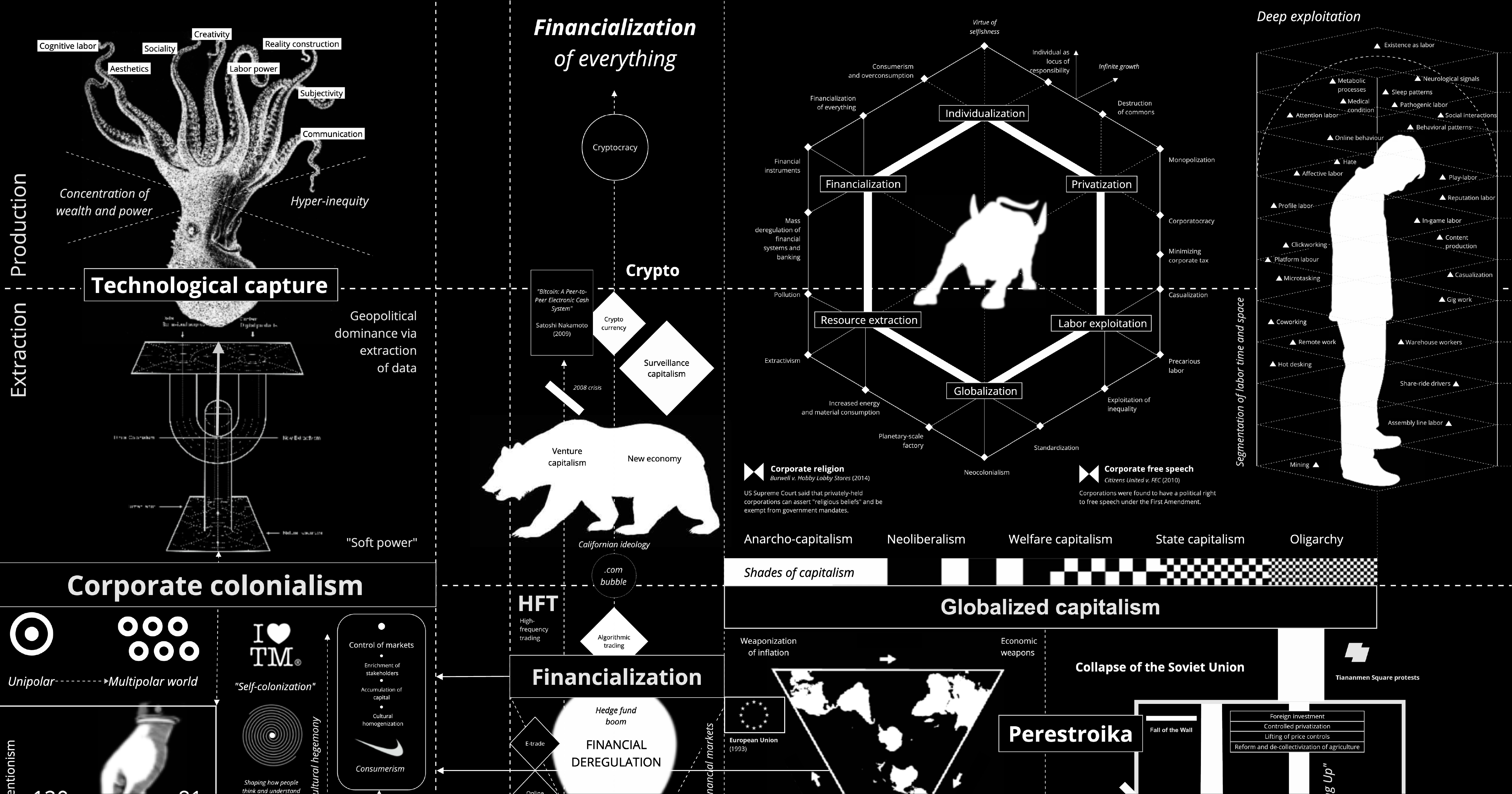
Calculating Empires: A Genealogy of Technology and Power since 1500
Explore how technical and social structures co-evolved over five centuries in this large-scale research visualization.
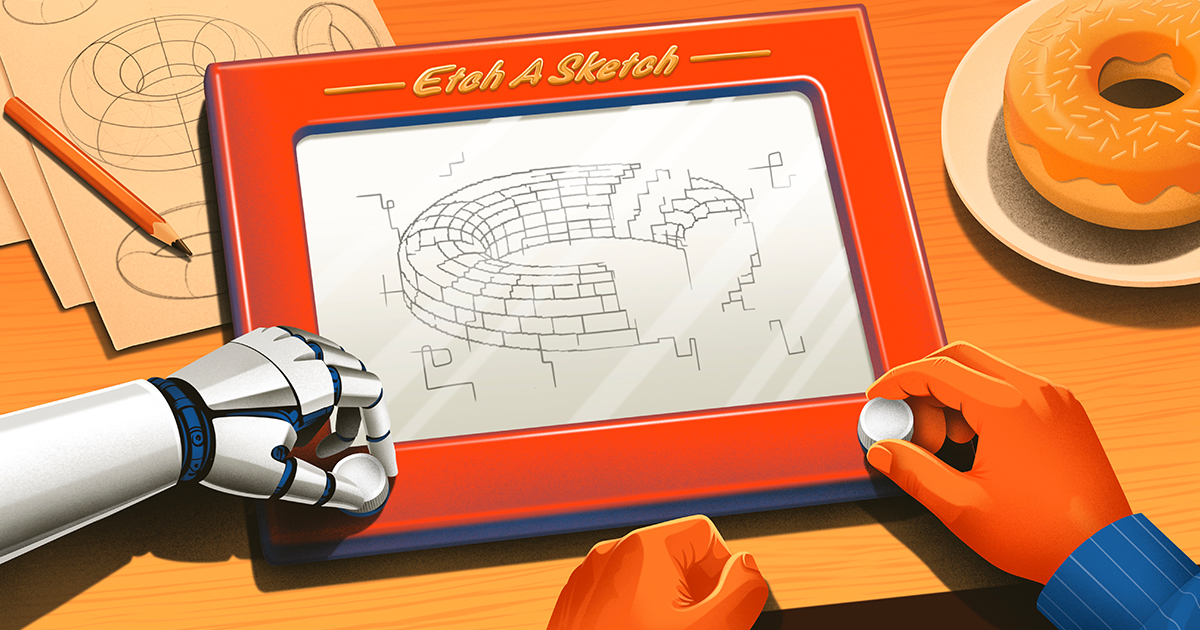
Fidget
Fidget is a library for representing, compiling, and evaluating large-scale math expressions, i.e. hundreds or thousands of arithmetic clauses. It's mainly designed as a backend for implicit surfaces, but the library is flexible enough for many different uses!

Embracing AI and formalization: Experimenting with tomorrow’s mathematical tools
Embracing AI and formalization: Experimenting with tomorrow’s mathematical tools. By Jarod Alper
Misperception of Exponential Growth: Are People Aware of Their Errors?
Previous research shows that individuals make systematic errors when judging exponential growth, which has harmful effects for their financial well-being. This study analyzes how far individuals are aware of their errors and how these errors are shaped by arithmetic and conceptual problems. Whereas arithmetic problems could be overcome using computational assistance like a pocket calculator, this is not the case for conceptual problems, a term we use to subsume other error drivers like a general misunderstanding of exponential growth or overwhelming task complexity. In an incentivized experiment, we find that participants strongly overestimate the accuracy of their intuitive judgment. At the same time, their willingness to pay for arithmetic assistance is too high on average, often much above the actual benefits a calculator provides. Using a multitier system of task complexity we can show that the willingness to pay for arithmetic assistance is hardly related to its benefits, indicating that participants do not really understand how the interplay of arithmetic and conceptual problems shape their errors in exponential growth tasks. Our findings are relevant for policymaking and financial advisory practice and can help to design effective approaches to mitigate the detrimental effects of misperceived exponential growth.

My Thoughts After Using Mathacademy For 1 Month. Subscription Worth It?
The AI Revolution in Math Has Arrived | Quanta Magazine
AI is being used to prove new results at a rapid pace. Mathematicians think this is just the beginning.
FUTO on Twitter / X
There is a rhyme that goes "Boss makes a dollar, I make a dime". The open source equivalent apparently is "Big tech makes a dollar, FOSS dev makes 1/20th of a penny". https://t.co/9lQDIbCX2w— FUTO (@FUTO_Tech) April 2, 2025