

Introducing Claude Fable 5.1 and Claude Mythos 5.1
Our most advanced models for coding and knowledge work. Their research capabilities also offer an early glimpse of how AI models will contribute to scientific progress.

Steve Blank Artificial Intelligence and Machine Learning– Explained
Artificial Intelligence is a once-in-a lifetime commercial and defense game changer (download a PDF of this article here) Hundreds of billions in public and private capital is being invested in Art…

tinygrad: A simple and powerful neural network framework
We write and maintain tinygrad, the fastest growing neural network framework
Winterbot9000: Replacing legendary Dota draft analyst with artificial intelligence
Winter is, in my opinion, the most impressive analyst when it comes to drafting predictions, and anticipating what hero teams are planning…

The Trap of Instant Heroism in the Era of AI
AI has expanded what engineering leaders can do.


Understanding neural networks through sparse circuits
OpenAI is exploring mechanistic interpretability to understand how neural networks reason. Our new sparse model approach could make AI systems more transparent and support safer, more reliable behavior.
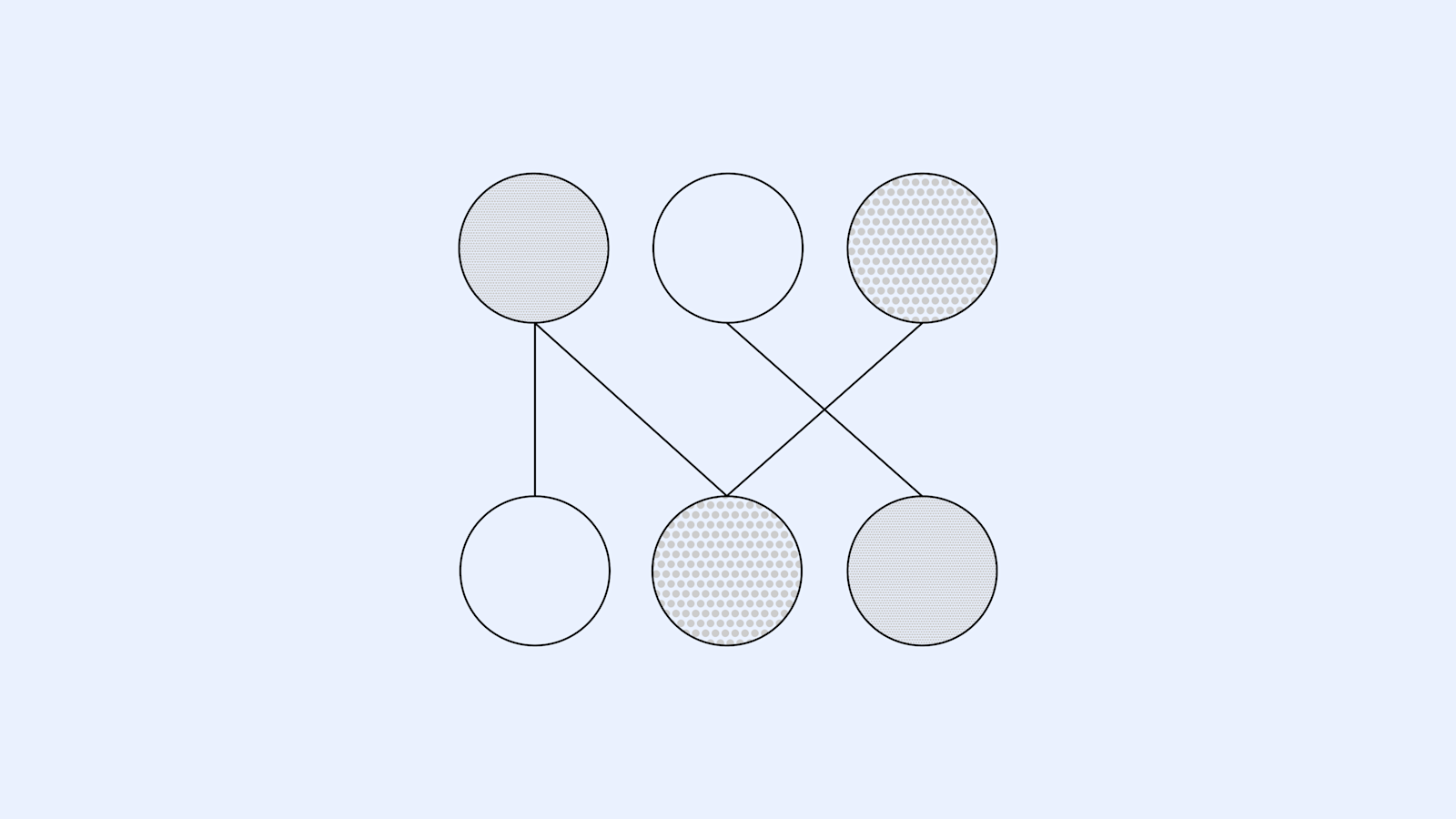
Scalable Training of Artificial Neural Networks with Adaptive Sparse Connectivity inspired by Network Science
View recent discussion. Abstract: Through the success of deep learning in various domains, artificial neural networks are currently among the most used artificial intelligence methods. Taking inspiration from the network properties of biological neural networks (e.g. sparsity, scale-freeness), we argue that (contrary to general practice) artificial neural networks, too, should not have fully-connected layers. Here we propose sparse evolutionary training of artificial neural networks, an algorithm which evolves an initial sparse topology (Erdős-Rényi random graph) of two consecutive layers of neurons into a scale-free topology, during learning. Our method replaces artificial neural networks fully-connected layers with sparse ones before training, reducing quadratically the number of parameters, with no decrease in accuracy. We demonstrate our claims on restricted Boltzmann machines, multi-layer perceptrons, and convolutional neural networks for unsupervised and supervised learning on 15 datasets. Our approach has the potential to enable artificial neural networks to scale up beyond what is currently possible.
Representer Point Selection for Explaining Deep Neural Networks
We propose to explain the predictions of a deep neural network, by pointing to the set of what we call representer points in the training set, for a given test point prediction. Specifically, we show that we can decompose the pre-activation prediction of a neural network into a linear combination of activations of training points, with the weights corresponding to what we call representer values, which thus capture the importance of that training point on the learned parameters of the network. But it provides a deeper understanding of the network than simply training point influence: with positive representer values corresponding to excitatory training points, and negative values corresponding to inhibitory points, which as we show provides considerably more insight. Our method is also much more scalable, allowing for real-time feedback in a manner not feasible with influence functions.
Quickly Training Game-Playing Agents with Machine Learning
Posted by Leopold Haller and Hernan Moraldo, Software Engineers, Google Research In the last two decades, dramatic advances in compute and connecti...


Curriculum learning
Humans and animals learn much better when the examples are not randomly presented but organized in a meaningful order which illustrates gradually more concepts, and gradually more complex ones. Here, we formalize such training strategies in the context of machine learning, and call them "curriculum learning". In the context of recent research studying the difficulty of training in the presence of non-convex training criteria (for deep deterministic and stochastic neural networks), we explore curriculum learning in various set-ups. The experiments show that significant improvements in generalization can be achieved. We hypothesize that curriculum learning has both an effect on the speed of convergence of the training process to a minimum and, in the case of non-convex criteria, on the quality of the local minima obtained: curriculum learning can be seen as a particular form of continuation method (a general strategy for global optimization of non-convex functions).
Dario Amodei — Machines of Loving Grace
How AI Could Transform the World for the Better

Dario Amodei — Machines of Loving Grace
How AI Could Transform the World for the Better