

Musings of a Computer Scientist.
The education of a computer
How to SNIFF out Good Scientific Software
New PLOS Computational Biology paper: "Ten Quick Tips to SNIFF Out Sustainable and Secure Scientific Software"

Facebook’s crisis demands a reevaluation of computer science itself
As Robert Oppenheimer watched a mushroom cloud from the first nuclear detonation bloom over a New Mexico test site, he repeated a line from the Hindu epic Bhagavad-Gita: “Now I am become Death, the destroyer of worlds.” The scientist who helped build the world’s most lethal weapon saw how physicists would forever confront the consequences of their discoveries.

Kyle Booten
Noöhacking1 is the title of my current research program. I use this term for ways that artists and everyday digital media users build and repurpose algorithmic tools in order to take care of their own minds/spirits, an especially challenging and important task amidst a digital milieu that seems designed to make us alienated, unintelligent, and miserable.
E.W. Dijkstra Archive: On the cruelty of really teaching computing science (EWD 1036)
The second part of this talk pursues some of the scientific and educational consequences of the assumption that computers represent a radical novelty. In order to give this assumption clear contents, we have to be much more precise as to what we mean in this context by the adjective "radical". We shall do so in the first part of this talk, in which we shall furthermore supply evidence in support of our assumption.
PRISM: Capturing the Invisible Art of Scientific Practice
A New Tool for Recording and Scaling Laboratory Expertise
No. 016: Biomni in Science, Co-Scientist in Nature, open-vs-closed AI workbenches - The Hallway Track
The Hallway Track No. 016 - How AI is affecting the practice of science
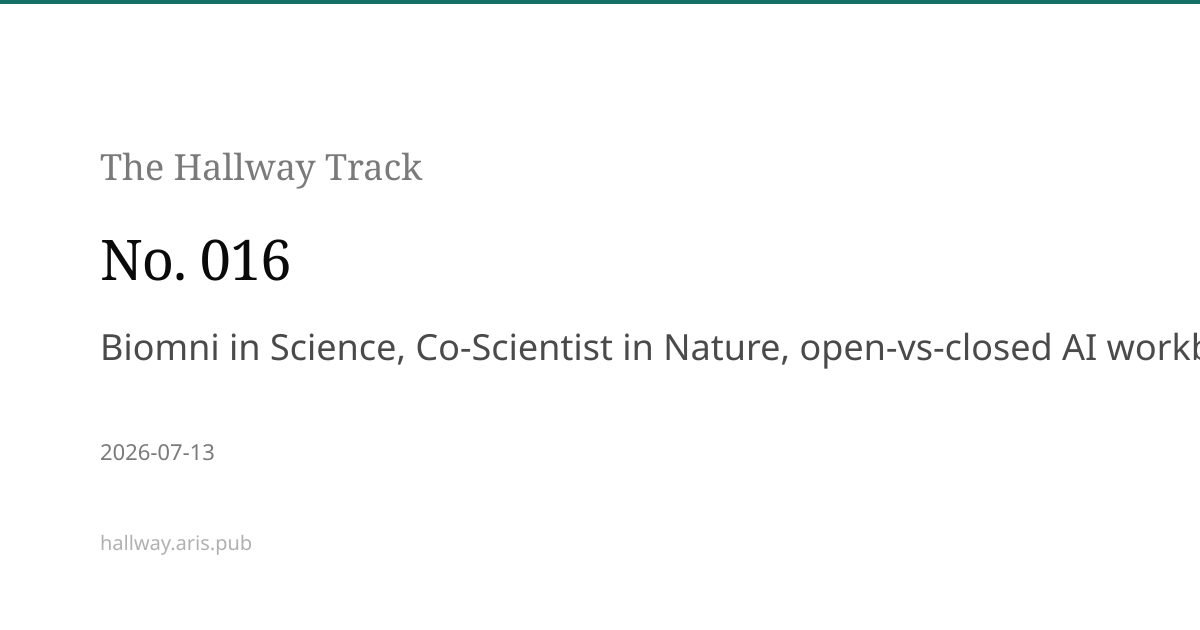
How to spot AI science slop | Lab Muffin Beauty Science
AI-generated science content is super prone to factual errors. Here's how to spot it… Lots of typos and grammatical errors used to signal that something wasn’t checked carefully. Now, it’s AI slop…
Squishy Computer | Gordon Brander | Substack
Learning to build living software. Click to read Squishy Computer, a Substack publication with thousands of subscribers.

Squishy Computer | Gordon Brander | Substack
Learning to build living software. Click to read Squishy Computer, a Substack publication with thousands of subscribers.
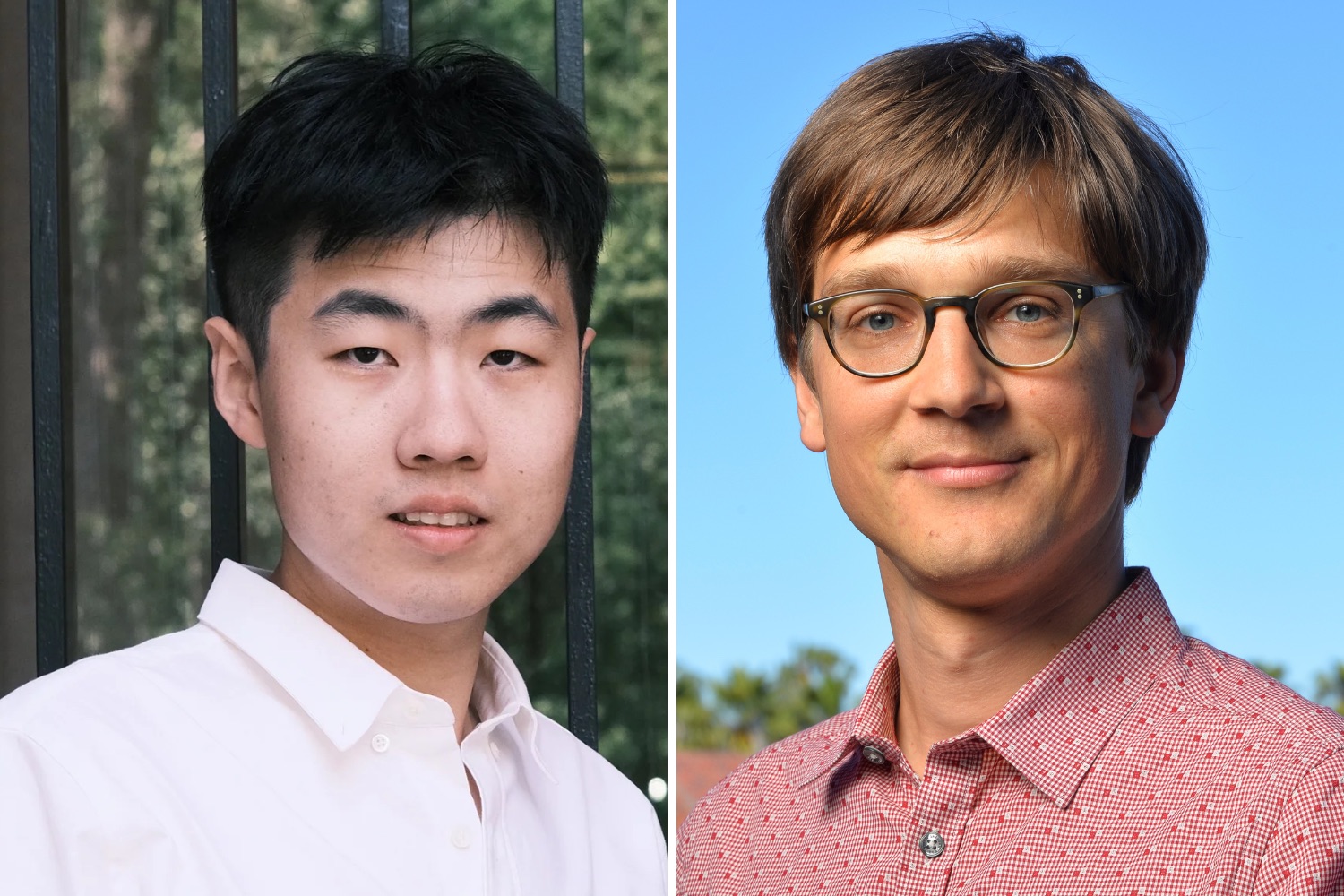
Meet Biomni – an AI-powered biomedical co-scientist
In creating a comprehensive, AI-enabled research agent for the biomedical sciences, Stanford researchers hope to speed innovation by eliminating the tedium of scientific legwork.
Computational Thinking for All Students
Posted by Maggie Johnson, Director of Education and University Relations, Google(Crossposted on the Google for Education Blog, and the the Huffingt...

Panel: Biodesign x AI: Interactions in the Algorithmic Wet Lab
One thing I've been dwelling on is how computing engineering and discourse rely thoroughly on a substance ontology of information, with dumb consequences. I've just found out that @romainbrette.bsky.social, looking at the same in neuroscience, calls it "epistemic phlogiston." I'm so stealing that.

Dog Steals Pizza
static.klipy.com
Ariel M.
@byarielm.fyi
PhD candidate @ UBuffalo • NSF GRFP ChemE doing computational systems biology Multi passionate bean with too many ideas 🫶 Lover of cats, code & crafts

