


Keepsake Trove is a character archive and community for organizing characters, art, folders, journals, and creator credits.
Trove
Australia’s free online research portal. Trove is a collaboration between the National Library of Australia and hundreds of Partner organisations around Australia.
Terminal Trove - The $HOME of all things in the terminal.
Terminal Trove showcases the best of the terminal, Discover a collection of CLI, TUI, and more developer tools at Terminal Trove.
The Comprehensive Digital Preservation Platform
Create, curate, and collaborate on living archives. Start with a FREE GB.

Community Archive
An open, searchable archive of tweets that members of the community have chosen to make public. Browse profiles, search conversations, and build on the data.
Information scraps: How and why information eludes our personal information management tools
In this article we investigate information scraps —personal information where content has been scribbled on Post-it notes, scrawled on the corners of sheets of paper, stuck in our pockets, sent in email messages to ourselves, and stashed in miscellaneous digital text files. Information scraps encode information ranging from ideas and sketches to notes, reminders, shipment tracking numbers, driving directions, and even poetry. Although information scraps are ubiquitous, we have much still to learn about these loose forms of information practice. Why do we keep information scraps outside of our traditional PIM applications? What role do information scraps play in our overall information practice? How might PIM applications be better designed to accommodate and support information scraps' creation, manipulation and retrieval? We pursued these questions by studying the information scrap practices of 27 knowledge workers at five organizations. Our observations shed light on information scraps' content, form, media, and location. From this data, we elaborate on the typical information scrap lifecycle, and identify common roles that information scraps play: temporary storage, archiving, work-in-progress, reminding, and management of unusual data. These roles suggest a set of unmet design needs in current PIM tools: lightweight entry, unconstrained content, flexible use and adaptability, visibility, and mobility.

Search LibGen, the Pirated-Books Database That Meta Used to Train AI
Millions of books and scientific papers are captured in the collection’s current iteration.
RocksDB | A persistent key-value store
RocksDB is an embeddable persistent key-value store for fast storage.

Archiving web sites
I recently took a deep dive into web site archival for friends who were worried about losing co [...]
candystore - Rust
A fast (blazingly, of course), persistent, in-process key-value store that relies on a novel sharding algorithm. Since Candy does not rely on log-structured merge (LSM) trees or B-Trees, no journal/WAL is needed and IOs go directly to file.
Karpathy's LLM Knowledge Base Wiki for Enterprise | Vijoy Pandey posted on the topic | LinkedIn
There's a new kind of computer media in the enterprise: Write once, Read never. The docs are perpetually stale, constantly diverging from reality, and scattered across Confluence, SharePoint, GitHub, Webex (or Slack) threads, Notion, Obsidian - and in my personal life, add Apple Notes, Goodnotes, web clippings, and multiple Google Drives worth of docs and slides that nobody is ever going back to. Karpathy tweeted his LLM knowledge base wiki architecture which went viral last weekend and I decided to give it a run yesterday. Verdict: You *have* to try this out. Prediction: You won’t be able to live without it soon. There were a few mods and decisions I made to the base Karpathy provided. First, the vault / folder structure in Obsidian. I already use Obsidian as a human. Instead of creating separate vaults and dealing with the sync nightmare, I just have folders for Human and Agent, and a Raw folder. (1) The Human/ folder is where I write long form articles and notes independent of the knowledge base wiki. No LLM or agent touches this folder. (2) I do have Arnold Layne, my OpenClaw agent, doing background tasks for me. Raw/ is where both Arnold and I, dump raw snippets. Inclusive of diverse kinds of media. (3) The Agent/ folder is where the LLM (Claude in my case) synthesizes the wiki. No human touches this folder. Second, some customizations to CLAUDE.md for enterprise-like usage - (4) Domain extensions - the agent needs to know that quantum computing and agentic AI have different entity types and different provenance thresholds. (5) Primary source protection, when I drop in my own original work, secondary sources can extend it or raise questions against it, but they cannot overwrite it. It sounds like a small thing but its’s not, especially at enterprise scale where provenance actually matters. Karpathy is upfront that what he’s built is working memory for a single agent, and it’s truly remarkable at that. The jump to Shared Context across teams, reconciling conflicting beliefs at org scale, ontologies that don’t collapse under the weight of a hundred contributors - those are much harder problems and what we are exploring with the Internet of Cognition. PS: The screenshot shows my Obsidian vault after just two runs: one with Karpathy’s original tweet and gist file itself (so meta!) and one with our Internet of Cognition paper. Claude (Sonnet) read it, compiled it into structured summaries, entity pages, concept pages, backlinks, merged all the information cohesively, and keeps it all maintained from there. You just read the Wiki. It’s simply magical.

Readeck: Home
Save interesting articles, long read, pictures, videos. Read or revisit them later.

Index of /anime/anime_girls_holding_books
TOKIMEKI Diary
A private personal archive that automatically syncs your Bluesky posts, likes, and reposts — with a calendar, full-text search, and insights to look back on.
Post-Archive-Everything

For me personally there is a journey here - I was a firm believer in archive everything. This peaked in a period where I was very interested in IPFS, CIDs, CAS, etc. Now, the next step. Post-Archive(-Everything). Through a series of conversations I came to the conclusion that forgetting is probably more powerful than remembering. The links in this collections play a similar note, or are related to my understanding of this.

FOSDEM 2026 - Willow - Protocols for an uncertain future
Willow - Home
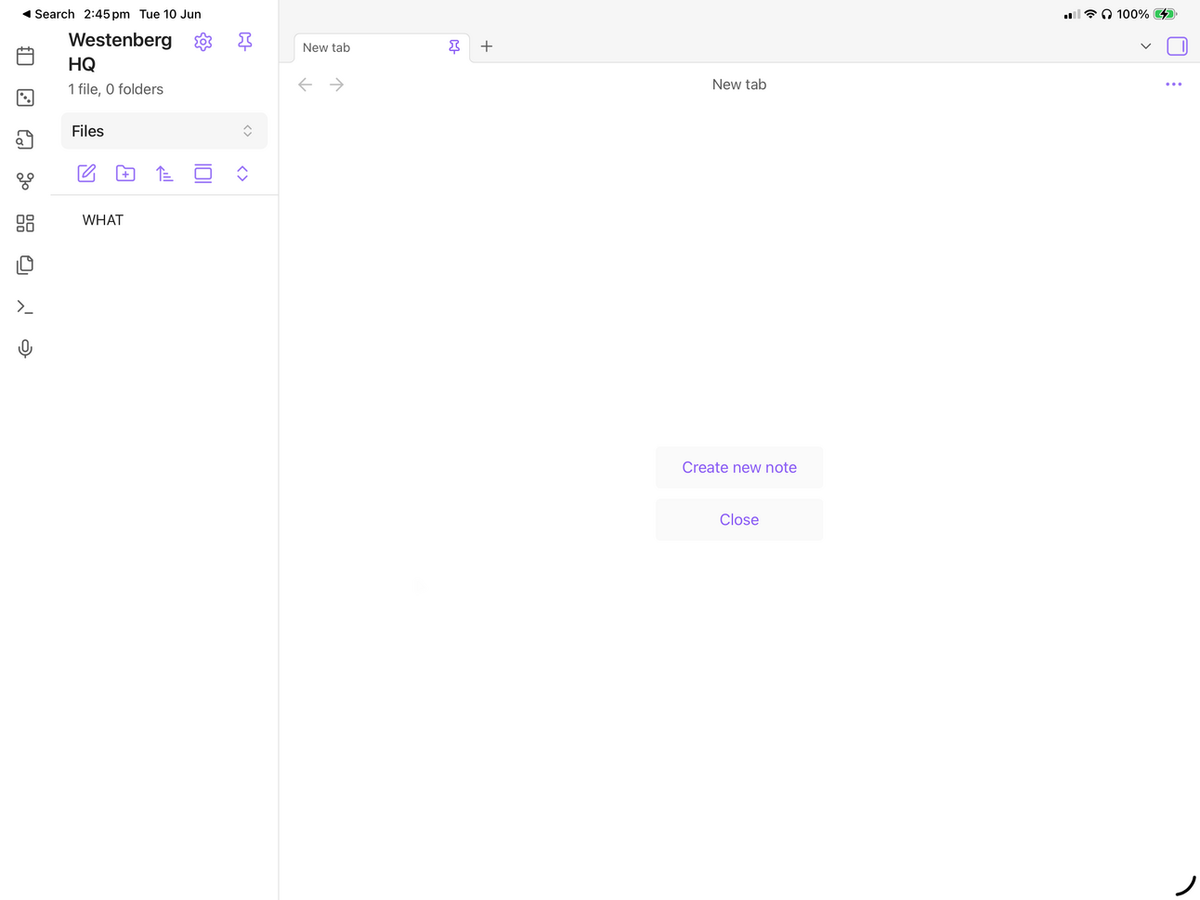
I Deleted My Second Brain