

This is a transcript of my talk at the Castrum Peregrini in Amsterdam on 2 May. (Apologies for the lack of links and references; I will sort them out in due course when I have more time.) ‘Can Eur…
Commoning as a Transformative Social Paradigm | David Bollier
Every so often I am invited to write a piece that in effect answers the question, “Why the commons?” I invariably find new answers to that question each time that I re-engage with it. My latest attempt is an essay, “Commoning as a Transformative Social Paradigm,” which I wrote for the Next System Project as part of its series of proposals for systemic alternatives.
Diversity, equity and inclusion
I'm in favour of diversity, equity and inclusion in open source communities, and here's why I think it matters.

Alternative Cultures Are Beautiful and Important. They're Also Not Enough.
"The conscious destruction of a competing ethic” and the need for organizing and direct action
Home - Inspirit Foundation
We define pluralism as the energetic engagement with diversity, active seeking of understanding across lines of difference, and the nurturing of constructive dialogue that contributes to a deep sense of belonging. In a pluralist society, people of different beliefs and backgrounds can participate equally, coexist peacefully, and thrive together.
As diversity increases, people paradoxically perceive social groups as more similar
With globalization and immigration, societal contexts differ in sheer variety of resident social groups. Social diversity challenges individuals to think in new ways about new kinds of people and where their groups all stand, relative to each other. However, psychological science does not yet specify how human minds represent social diversity, in homogeneous or heterogenous contexts. Mental maps of the array of society’s groups should differ when individuals inhabit more and less diverse ecologies. Nonetheless, predictions disagree on how they should differ. Confirmation bias suggests more diversity means more stereotype dispersion: With increased exposure, perceivers’ mental maps might differentiate more among groups, so their stereotypes would spread out (disperse). In contrast, individuation suggests more diversity means less stereotype dispersion, as perceivers experience within-group variety and between-group overlap. Worldwide, nationwide, individual, and longitudinal datasets ( n = 12,011) revealed a diversity paradox: More diversity consistently meant less stereotype dispersion. Both contextual and perceived ethnic diversity correlate with decreased stereotype dispersion. Countries and US states with higher levels of ethnic diversity (e.g., South Africa and Hawaii, versus South Korea and Vermont), online individuals who perceive more ethnic diversity, and students who moved to more ethnically diverse colleges mentally represent ethnic groups as more similar to each other, on warmth and competence stereotypes. Homogeneity shows more-differentiated stereotypes; ironically, those with the least exposure have the most-distinct stereotypes. Diversity means less-differentiated stereotypes, as in the melting pot metaphor. Diversity and reduced dispersion also correlate positively with subjective wellbeing.

The Illusion of Asymmetric Insight
The Misconception: You celebrate diversity and respect others’ points of view. The Truth: You are driven to create and form groups and then believe others are wrong just because they are oth…

Reimagining Ourselves at the End of Our World: Kinship, Interconnection, and Spirituality in the Metacrisis - The Great Simplification
Over the past decade, the world has become increasingly chaotic and uncertain – and so, too, has our cultural vision for the future. While the events we face now may feel unprecedented, they are rooted in much deeper patterns, which humanity has been playing out for millennia. If we take the time to understand past trends, we can also employ practices and philosophies that might counteract them – such as focusing on kinship, intimacy, and resilience – to help pave the way for a better future. How might we nurture the foundations of a different kind of society, even while the end of our current civilization plays out around us?

Projects – discover our non-empty spaces
Fostering spaces for growth is an important part of our trajectory. We seek to harness the combined power of practice, critical inquiry and creativity to address some of the issues of our times - health, environmental awareness, social equality and multilingual, trans-cultural collaborations.
Dissecting the Google Employee’s Anti-Diversity Manifesto, Piece-by-Piece
Part 1: A narrative on the Google Anti-Diversity Manifesto

Seven Theses Against Viewpoint Diversity
Demands for “viewpoint diversity,” a pillar of the Right’s strategy to remake higher education, collide with the pursuit of truth.

Third Places as Mini-Cosmopolitans - Surfing Modernity
What happens to identity in times of movement and change? In my second post, I proposed the importance of cultivating a third space that is not dependent on…
Links on Status and Culture - January 2024
Read to the end for a longer essay critiquing Ted Gioia's idea of Macro vs. Micro cultures that explains why we get confused about niches and countercultures Personal News I’m spending 2024 writing a new book — a cultural history of the first 25 years of the 21st century.

The importance of diversity in meteorology, technology and AI
The technology sector has long been synonymous with innovation, but lags behind when it comes to diversity. Kirstine Dale, Met Office CAIO, explains why we need to get our house in order.

Just launched at Public Spaces in Amsterdam, The European Social Stack Open Declaration! A set of common principles agreed by complementary technology leaders 🫶 Read the declaration, add your signature, and share: european.social #EUSocialStack #Europe
Cultural Homogenization

Links about how our societal structures are contributing to the homogenization of culture.
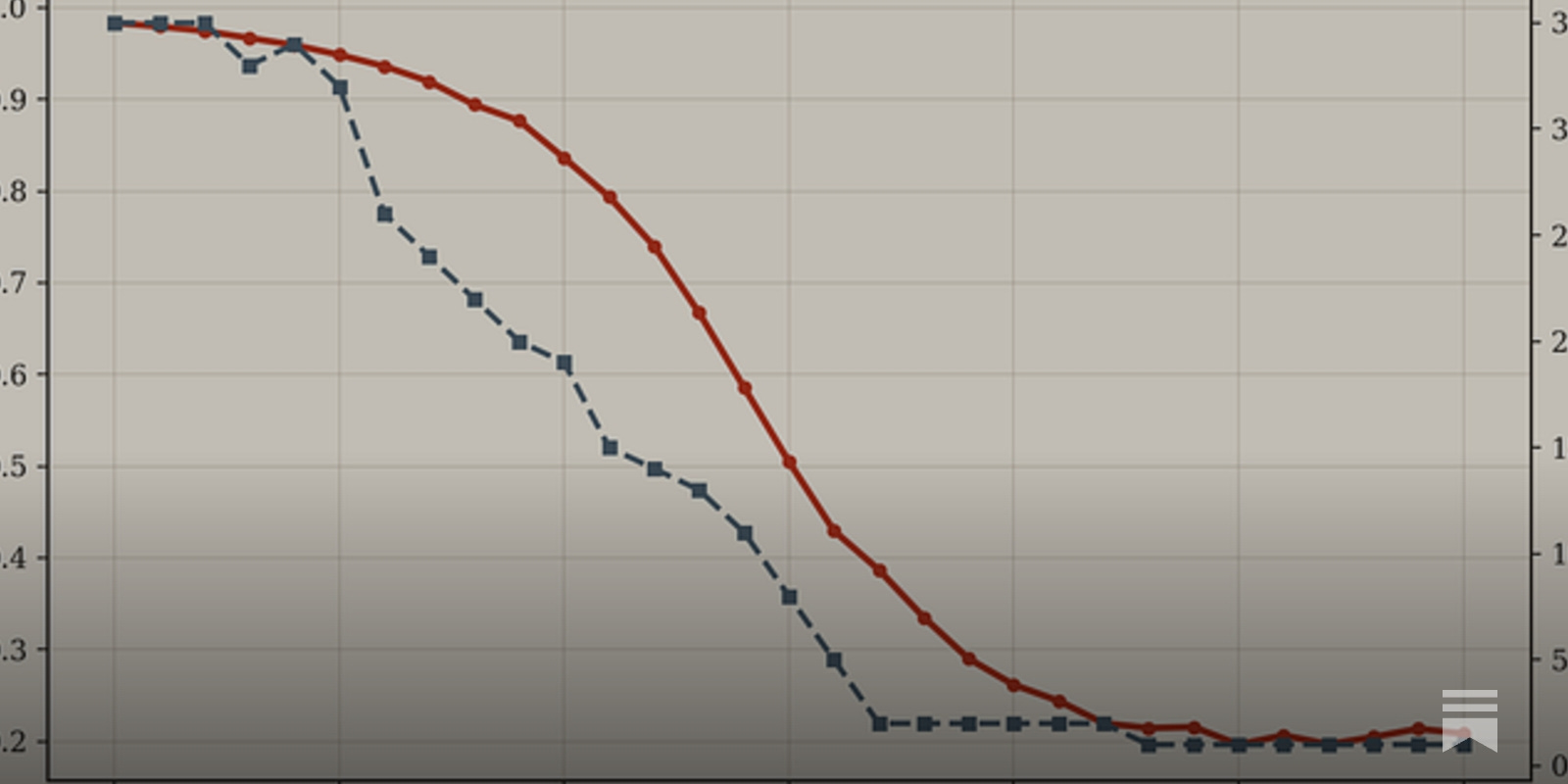
Temperature Zero for Culture: Why Everything Is Starting to Look the Same
