Google’s latest report reveals a completely unprecedented rise in energy consumption – more than any of us expected. Generative AI is a climate carbon bomb.
AI’s climate impact is much smaller than many feared
New findings challenge the widespread belief that AI is an environmental villain. By analyzing U.S. economic data and AI usage across industries, researchers discovered that AI’s energy consumption—while significant locally—barely registers at national or global scales. Even more surprising, AI could help accelerate green technologies rather than hinder them.

AI’s energy usage is less than previously thought | Waterloo News
Contrary to popular belief, new research finds that the use of artificial intelligence has a minimal effect on global greenhouse gas emissions and may actually benefit the environment and the
Google.org Impact Challenge: AI for Science
The Google.org Impact Challenge: AI for Science is a $30M global initiative to accelerate scientific breakthroughs that improve human health and build climate resilience.

We did the math on AI’s energy footprint. Here’s the story you haven’t heard.
The emissions from individual AI text, image, and video queries seem small—until you add up what the industry isn’t tracking and consider where it’s heading next.

Google Earth’s New AI Lets Anyone Fabricate Completely Bullshit Satellite Images
"Tonight I typed just one sentence into Google Earth and put refugees near the Mexican border. Then I planted a nuclear plant in Iran. Then I put a fatal crash on a street in Amsterdam."

The weather and climate science AI revolution isn’t revolutionary
Machine learning has its limits—how is it being used?

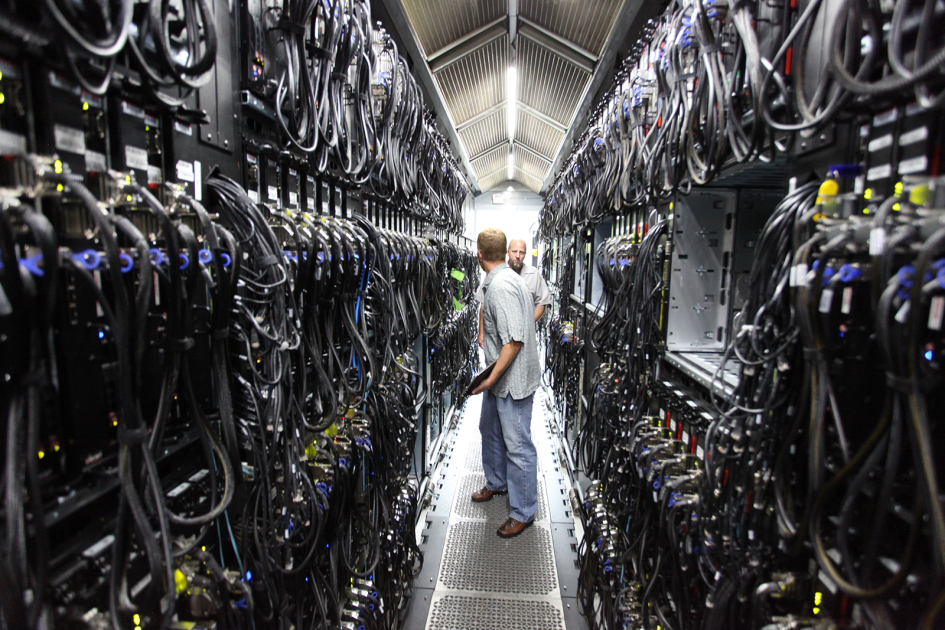
Environmental Cost of Artificial Intelligence: Carbon, Water, and Land Footprints
AI’s rapid growth drives huge energy, water, and land use, raising environmental and equity challenges across its global infrastructure.
Environmental Cost of Artificial Intelligence: Carbon, Water, and Land Footprints
AI’s rapid growth drives huge energy, water, and land use, raising environmental and equity challenges across its global infrastructure.
Google Cloud Next 2026: The End Of The AI Pilot Era
Google Cloud Next 2026 opened with Thomas Kurian declaring the end of the AI pilot era and Sundar Pichai comparing the enterprise refrain of last year (“Can we build an agent?”) to today’s: “How do we manage thousands of them?” Google Cloud Next ’26 answers the second question with a single product story: Gemini Enterprise […]

Ditch the niceties in AI prompts to save energy use, say researchers
A UN report warns of the rapid growth in AI energy consumption, but suggests users can improve efficiency by making prompts more concise

Incomputable Earth: Technology and the Anthropocene Hypothesis
This open access collection argues that climate breakdown represents an irreducibly incomputable problem that cannot be resolved through algorithmic optimization or cybernetic planetary management.

Google research shows the fast rise of AI-generated misinformation | CBC News
From fake images of war to celebrity hoaxes, AI technology has spawned new forms of reality-warping misinformation online. New analysis co-authored by Google researchers shows just how quickly the problem has grown.

Google is its own worst enemy
In its bid to push AI, it’s destroying its products and trying to kill the web too
Google Cuts Its Giant Electricity Bill With DeepMind-Powered AI
Google just paid for part of its acquisition of DeepMind in a surprising way.
Inside the AI Index: 12 Takeaways from the 2026 Report | Stanford HAI
The annual report reveals a field hitting breakthrough capabilities while raising urgent questions about environmental costs, transparency, and who benefits from the technology.

Driving the UK’s next chapter: From AI potential to agentic reality | Google Cloud Blog
Organizations like HSBC, Ineffable Intelligence, Starling, Vodafone, and the UK and local governments are showcasing their transformation with Google Cloud at the London Summit.