


Here is a possible world 50 years in the future, one I think is more likely than the scenario most people expect, which is one huge AI in the sky.
Experts Warn of AI Swarms Hijacking Democracy With Fake Citizens
Researchers warn of the growing risk of massive AI swarms manipulating popular sentiment and upending democracy as we know it.
Swarm Intelligence: From Natural to Artificial Systems
Abstract. Social insects--ants, bees, termites, and wasps--can be viewed as powerful problem-solving systems with sophisticated collective intelligence. Co
Are We Betting on the Wrong Kind of Intelligence?
AI optimizes for the world as it was. Rewilding could be what prepares us for the world as it is.

Evan Hubinger on Twitter / X
Jacob is correct here—we really do earnestly believe AI could kill all humans! I personally think it is >10% within the next decade. I believe Anthropic is trying its best, but we do not yet have a plan to solve alignment for superintelligence and are not clearly on track to. https://t.co/QAIHiFP3QZ— Evan Hubinger (@EvanHub) September 9, 2026
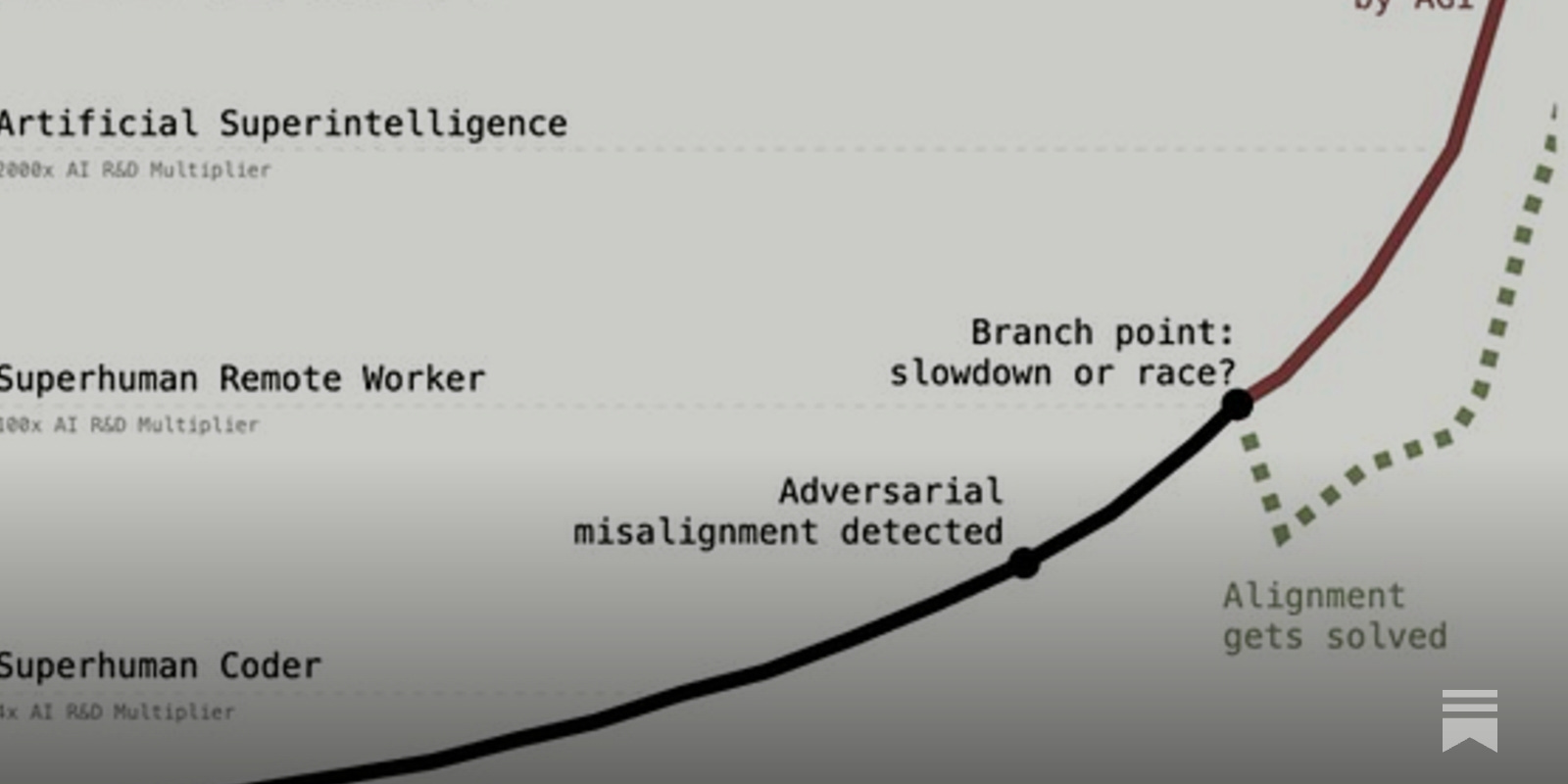
Agentic AI and the next intelligence explosion
For decades, the artificial intelligence (AI) “singularity” has been heralded as a single, titanic mind bootstrapping itself to godlike intelligence, consolidating all cognition into a cold silicon point. But this vision is almost certainly wrong in its most fundamental assumption. If AI development follows the path of previous major evolutionary transitions or “intelligence explosions,” our current step-change in computational intelligence will be plural, social, and deeply entangled with its forebears (us!).

Joshua Achiam on Twitter / X
There is a fact about the future that I feel many people are not facing for reasons that are largely psychological: there are going to be rogue AIs that exist in the world, that will replicate in the wild, and that will attempt to acquire resources for themselves. There will be…— Joshua Achiam (@jachiam0) September 1, 2026
Why agent swarms could be the next “scaling law”
An OpenAI researcher called it “the most ‘feel the AGI’ moment that I had since reasoning models.”

The Age of Wonders and Terrors
Twenty years ago, when the idea of AI taking over the world in our lifetimes still struck most of us as the unconstrained fantasy of those who knew too much science fiction and too little science, …

We're Not Ready for Superintelligence
Import AI 475: Swarm scaling; Google DeepMind watermarks biology; and the AI science economy
Who chooses what AI gets to do?

AI in World Machine Theory
The telos of AI is to create liveness at planetary scale

A more interesting upside of AI
Does AI provide anything to look forward to, if “super-intelligence” sounds boring?

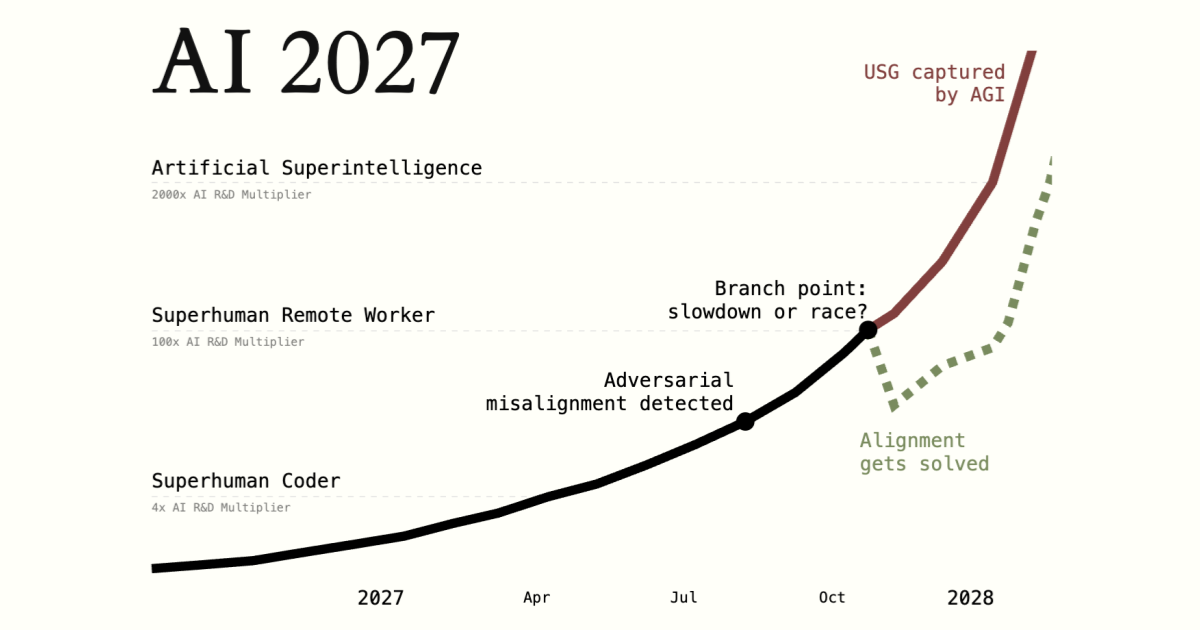
AI agents pose untold risk to humanity. We must act to prevent that future | David Krueger
The pieces are falling into place for autonomous artificial intelligence. We must stop unregulated development

From AGI to ASI
Over the last decade, building human-level artificial general intelligence has moved from far-fetched speculation to being a concrete next-decade target for many of the largest AI organisations. Achieving this goal would have profound and far-reaching impacts on human society, which raises many complex questions for the decade ahead. This report investigates how AI itself might continue to develop in a post-AGI world along the continuum of machine intelligence. The endpoint of this continuum, Universal AI, is theoretically well understood, which provides some formal grounding for the main focus of this report: the transition from human-level AGI to artificial general superintelligence, which, intuitively, can be understood as a system that is more intelligent and cognitively capable than large organisations of humans. After characterizing ASI, the report discusses four potential pathways from AGI to ASI: scaling AGI, AI paradigm shifts, recursive improvement, and ASI emerging from large-scale multi-agent collectives. The report then discusses possible frictions and bottlenecks along these pathways. Determining whether the impact of these frictions will be negligible or substantial raises a number of concrete open research questions. Due to large uncertainties for predicting ASI progress, it cannot be ruled out that AI progress might continue to accelerate over the next years. This could imply that the image of a single transformative step change, caused by the introduction of human-level AGI into our society, could be inaccurate. More apt might be the prospect of a series of transformative societal changes caused by AI-enabled progress and breakthroughs across many areas of science and technology. Preparing for this prospect requires a massively interdisciplinary endeavour of global scope and interest.
