It’s late on a beautiful Friday afternoon, and you’re getting ready to sign off and enjoy the weather. Just as you’re wrapping up, a teammate pings about an urgent latency spike and needs your help. You remember a similar incident, which metrics to investigate, diagnostic tests to run, and where the logs pointed last time. Isolating the issue won’t be especially difficult. It’s just that you need to be across several tools, and you can only be in one place at one time.
Amazon's vibe-coding tool Kiro reportedly vibed too hard
: Bezos-corp blames user error for outage, 'specifically misconfigured access controls'

KiroCrew/src/kiro_crew/sel.py at 4b71782cf12c2ee5a533b15150ab960f31a9c599 · kirodotdev/KiroCrew
A persistent workspace for development work that self-improves and continues beyond one session. - kirodotdev/KiroCrew
KiroCrew/docs/system-specs/modules/sel.md at 4b71782cf12c2ee5a533b15150ab960f31a9c599 · kirodotdev/KiroCrew
A persistent workspace for development work that self-improves and continues beyond one session. - kirodotdev/KiroCrew
OpenTelemetry: A Guide to Observability with Go | Blog
Modern applications are often complex, distributed systems. Debugging them is not fun: you have to follow requests across services, logs get lost, and metrics are often hard to correlate. It's like looking for a needle in a haystack - except the haystack is on fire, and the needle keeps moving. This is where OpenTelemetry (OTel) can help.

eBPF and Kubernetes: Little Helper Minions for Scaling Microservices - Daniel Borkmann, Cilium
Load testing for engineering teams | Grafana k6
k6 is an open-source tool and cloud service that makes load testing easy for developers and QA engineers.
Fragile narrow laggy asynchronous mismatched pipes kill productivity - Tristan Hume
Something I’ve been thinking about recently is how when I’ve worked on any kind of distributed system, including systems as simple as a web app with frontend and backend code, probably upwards of 80% of my time is spent on things I wouldn’t need to do if it weren’t distributed. I came up with the following description of why I think this kind of programming requires so much effort: Everything is fragile narrow laggy asynchronous mismatched untrusted pipes. I think every programmer who’s worked on a networked system has encountered each of these issues, this is just my effort to coherently describe all of them in one place. I hope to prompt you to consider all the different hassles at once and think about how much harder/easier your job would be if you did/didn’t have to deal with these things. I think this is part of why web companies like Twitter seem to have so much lower impressiveness per engineer productivity than other places like game companies or SpaceX, although there’s other pieces to that puzzle. While part of the difficulty of distributed systems is inherent in physics, I think there’s lots of ideas for making each part of the problem easier, many already in common use, and I’ll try to mention lots of them. I hope that we as programmers continually develop more of these techniques and especially general implementations that simplify a problem. Like serialization libraries reducing the need for hand-written parsers/writers, I think there’s a lot of developer time out there to save by implementing generalized solutions where we currently painstakingly reimplement common patterns. I also think all these costs mean you should try really hard to avoid making your system distributed if you don’t have to.
The platform engineer's survival guide to Kubernetes networking, Tue, Jul 9, 2024, 10:00 AM | Meetup
Kubernetes networking can be intimidating for platform engineers, but with the right knowledge, it can become a powerful tool. Understanding the various layers of Kubernete

Causal Islands
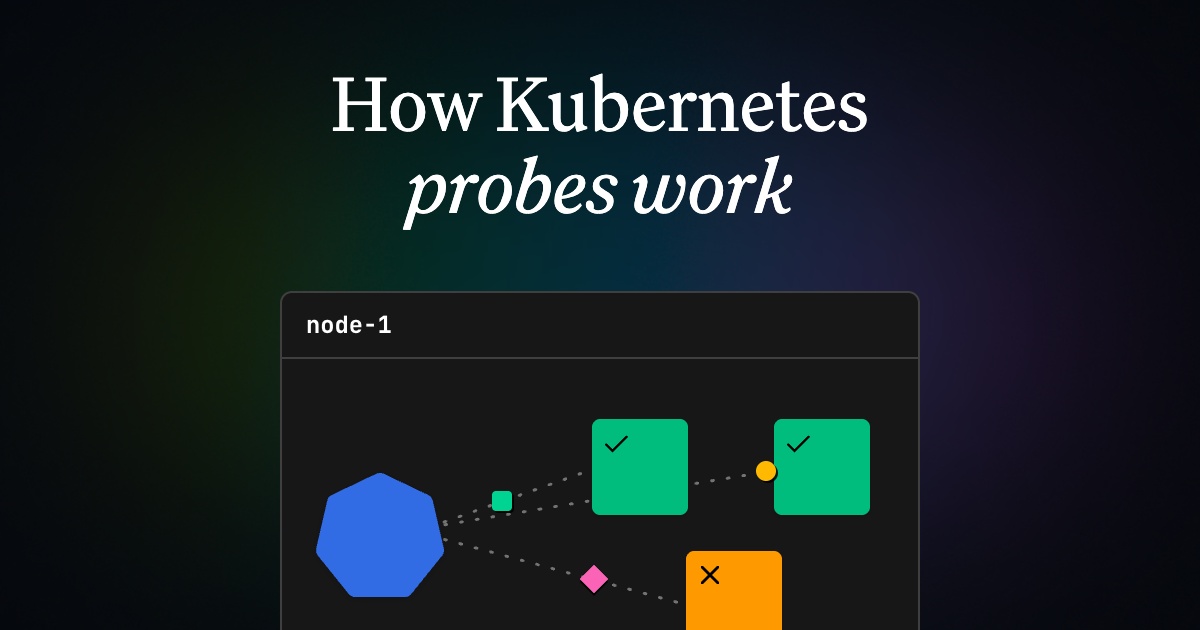
How Kubernetes probes work | ngrok blog
Learn how probes work interactively on simulated Kubernetes clusters running in your browser.
Drone Strikes Knock Out Yandex Data Centers, Bot Traffic Plunges but Partly Recovers
Drone attacks hit three Yandex data centers, and bot traffic from its network dropped sharply. Public data shows a partial rebound and includes search crawlers, limiting what can be inferred. We look at cloud recovery capacity and the impact on corporate paperwork.

My #HomeAssistant dashboard has just started monitoring some important self-hosted network services. It's a mix of the command_line integration, logging and later parsing #rclone return codes and time stamps, curl and github.com/dylandoamaral/uptime-card Let me know if you'd like a #blog post!
I'm building on atproto because building infrastructure like "Drafts and Scheduled Posts for every atproto app" is easy as 1-2-3 and as cool as alf. Announcing alf, the atproto Latency Fabric: leaflet.pub/p/did:plc:3vdrgzr2zybocs45yfh…

a stuffed animal wearing sunglasses and a shirt is sitting at a keyboard .
media.tenor.com