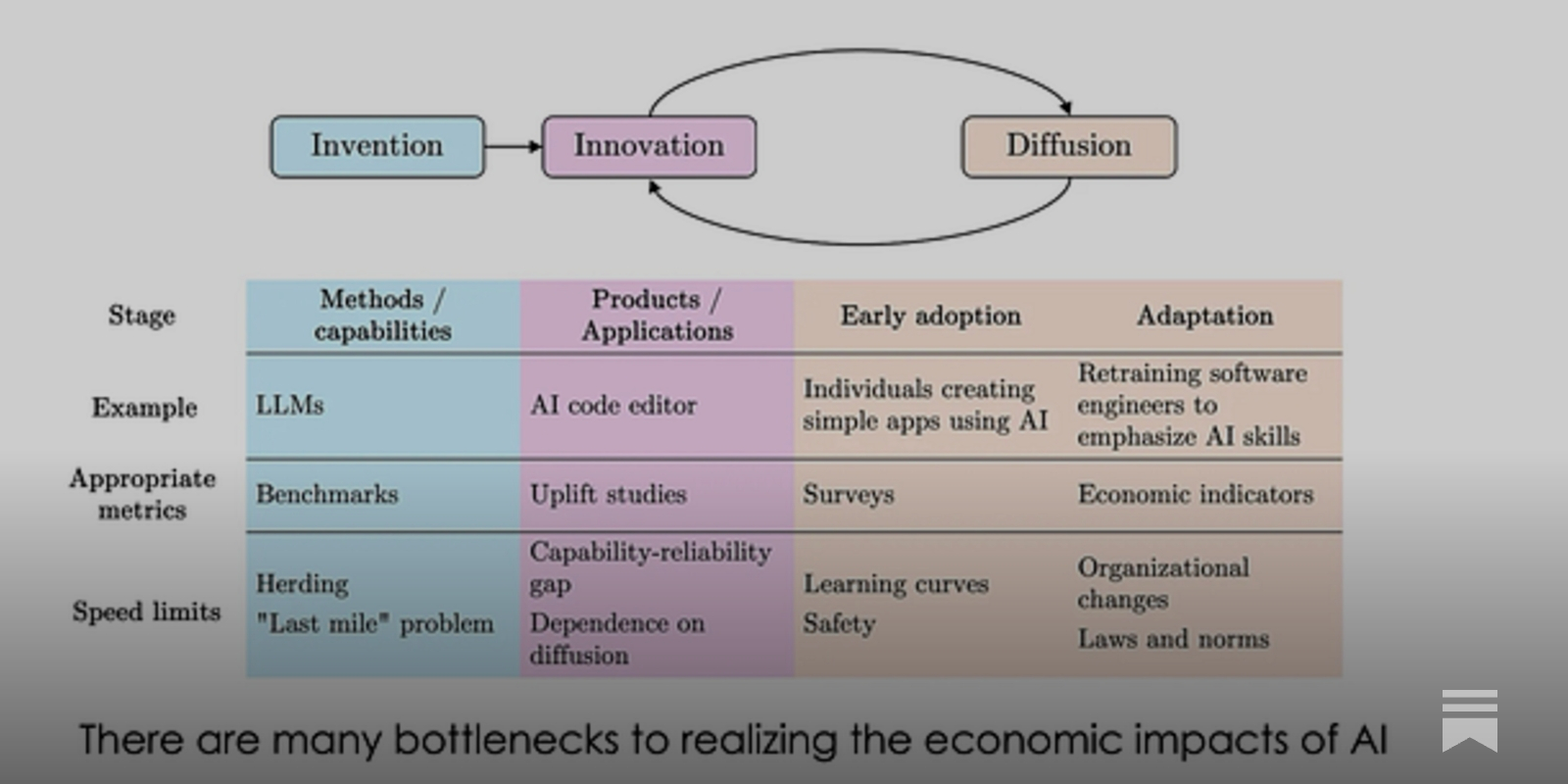
The normal technology frame is about the relationship between technology and society. It rejects technological determinism, especially the notion of AI itself as an agent in determining its future. It is guided by lessons from past technological revolutions, such as the slow and uncertain nature of technology adoption and diffusion. It also emphasizes continuity between the past and the future trajectory of AI in terms of societal impact and the role of institutions in shaping this trajectory.
If AI is normal technology, history is not reassuring. — LessWrong
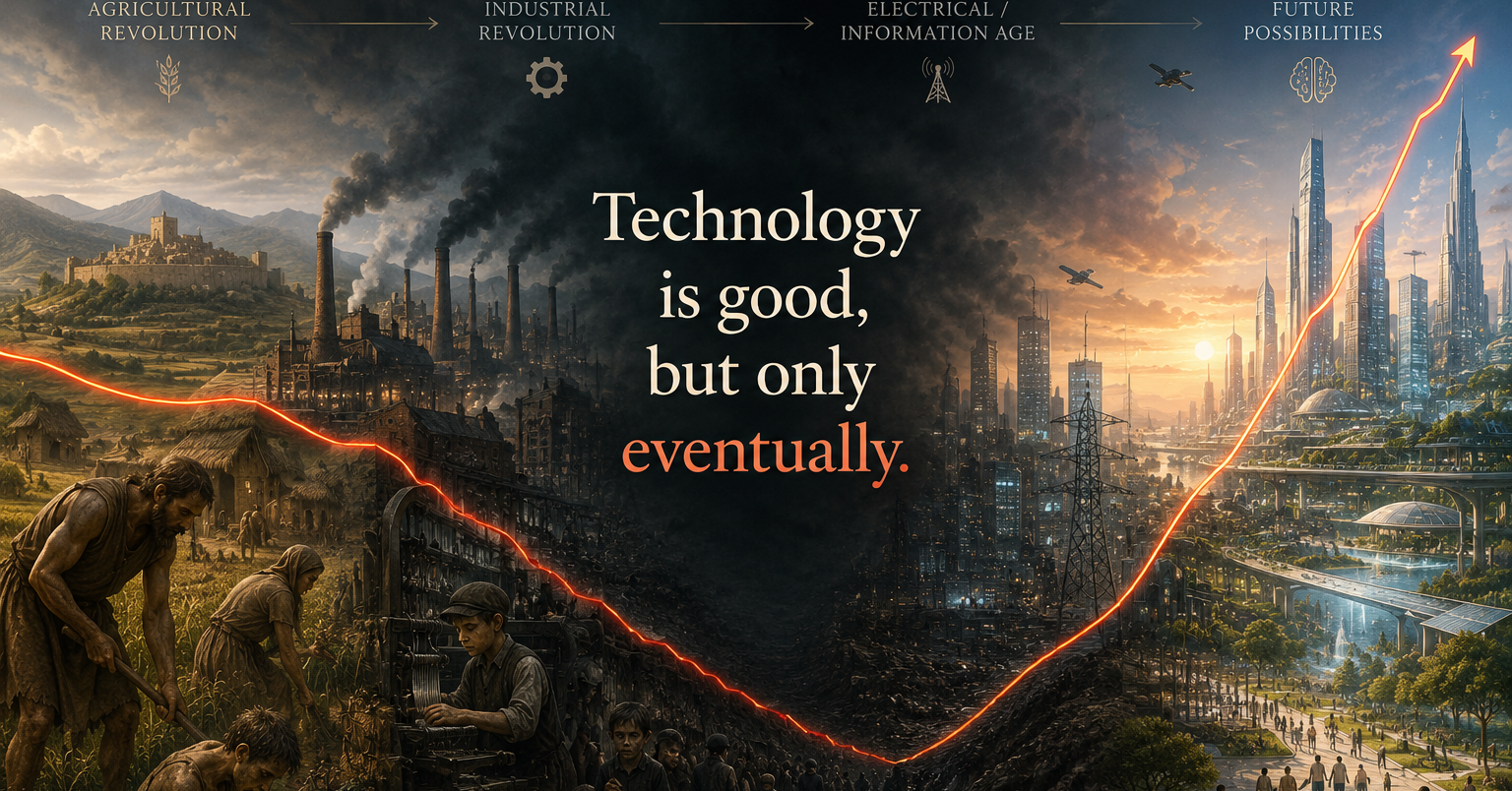
There’s a truism that technology is good - even if it creates winners and losers, it improves the world. Toby Ord argues that the conclusions about t…
The future of AI is already written
How physical and economic constraints determine which technologies get built, and why full AI automation is inevitable.

The Future of AI Should Serve People, Not Platforms - The Liquid Frontier
AI has begun to reshape every part of our digital experience. I keep coming back to Kranzberg’s first law of technology: “Technology is neither good nor bad;…
A Real Political Economy of Technology - The Ideas Letter
Two technological futures are competing for political and material priority: generative AI and the green transition. Benanav argues that while AI is marketed as a world-reordering breakthrough, its productivity gains…

Comparing U.S. and global attitudes toward AI
Five charts on how Americans feel about the current and future impact of AI on society, and how Americans’ views on the technology stack up against the rest of the world

Technocracy References
References and Revisions “Should Scientists and Engineers Run Society?” References [1] Wikipedia: “Technocracy.” [2] Academic Paper: Gunnell, John G. "The technocratic image and the theory of technocracy." Technology and culture 23.3 (1982): 392-416. [3] Academic Paper: Oh, Kyunghwan. "A non-co...

AI as Social Technology: Astor Lecture by Professor Henry Farrell
AI as Social Technology: Astor Lecture by Professor Henry Farrell
Field Theory: AI as Social Science Question, Object & Tool
Uses of advanced artificial intelligence are changing how societies organize labor, govern, produce knowledge, and make meaning. In light of these developments, this essay argues that AI models, tools, and systems pose three interrelated imperatives for social science: they demand renewed attention to social theories of how technology, human experience, and social order are entangled; they require study as objects of inquiry in their own right; and they offer capabilities that may transform—or upend—the practice of social investigation itself. From Weber’s analysis of rationalization to Du Bois’s study of technology and inequality to contemporary scholarship on algorithmic governance, the essay examines what social science distinctively offers: the capacity to historicize the apparently unprecedented, to trace connections across scales, and to center those most affected by technological change. It identifies how algorithmic systems are remaking the distribution of opportunity and risk as a central task of social inquiry and asks what futures social science might help bring into being.
A guide to understanding AI as normal technology
And a big change for this newsletter

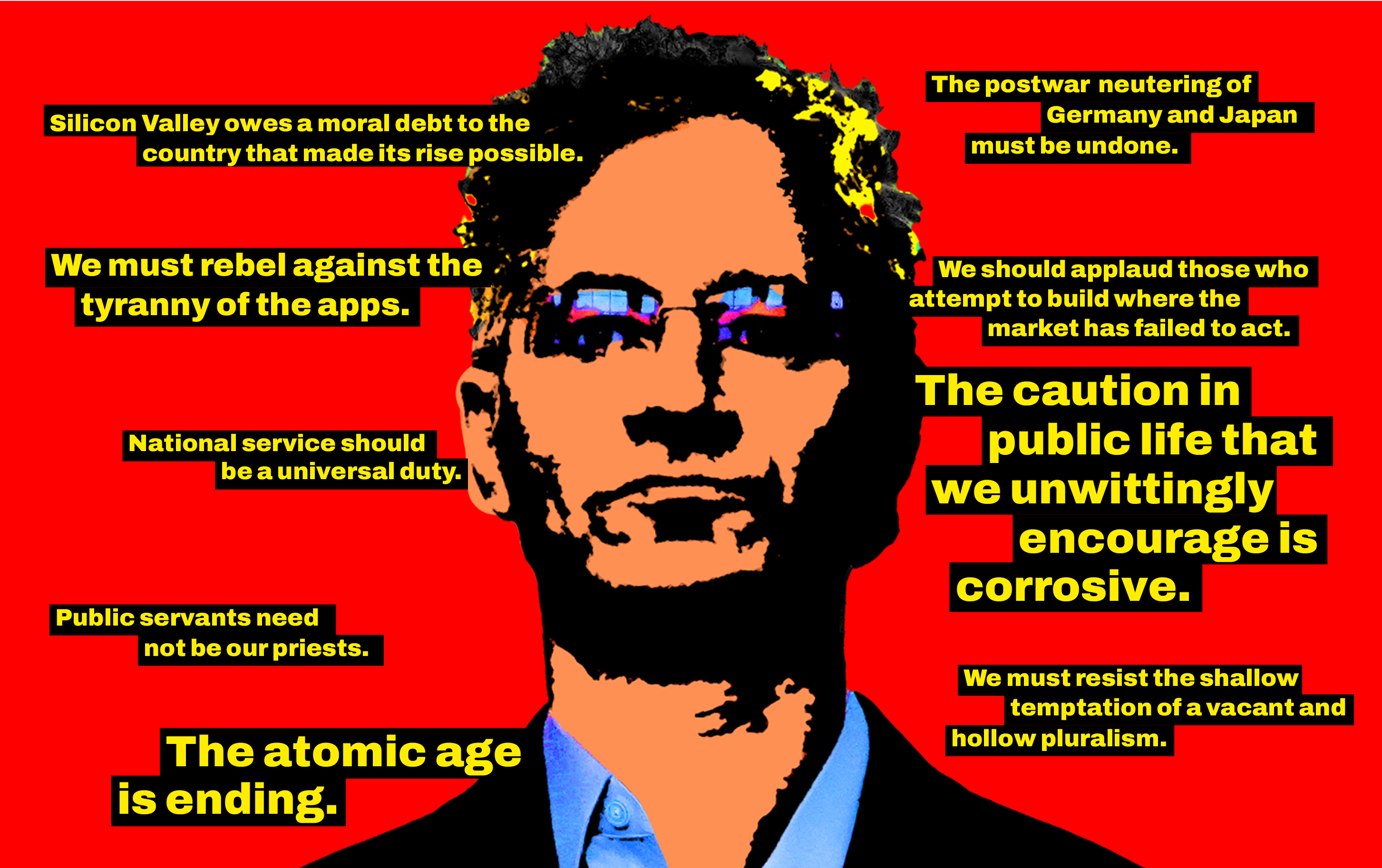
Palantir's social media manifesto is a blueprint for technofascism
The surveillance firm’s viral X post calls for hard power, conscription and the end of pluralism. AI expert and academic Mark Coeckelbergh on what happens when technology becomes the gateway to authoritarianism
3: Consulting the Record: AI Consistently Fails the Public - AI Now Institute
Amid the excitement over AI’s (speculative, hypothetical) potential, we have lost sight of the sobering reality of its present and recent past. AI is already intermediating critical social infrastructures, materially reshaping our institutions in ways that ratchet up inequality and concentrate power in the hands of the already powerful. It is consistently deployed in ways […]

Separating AI’s Technological Problems From its Capitalism Problems
Nathan E. Sanders and Bruce Schneier say integrating a technology as disruptive as AI responsibly requires deep structural reforms.

AI as Social Technology
Our debates about ‘AI’ grow out of 1990s science fiction. Back then, Vinge (1993) wrote essays and novels urging us to face up to the oncoming “Singularity”: a moment of rapid change that would fundamentally transform the human condition. On that day, AI would rapidly evolve from merely human-level intelligence, what some now call ‘artificial general intelligence’ (AGI), into something super-intelligent with its own interests and goals. Humanity would then either be casually eliminated by out-of-control machines, or humans would become as gods, with super-human servitors at our command.