

When Purchase Means License: Digital Ownership's Quiet Erosion
Tech Giants and Giant Slayers: The case for Digital Sovereignty and the Digital Commons | Open Rights Group
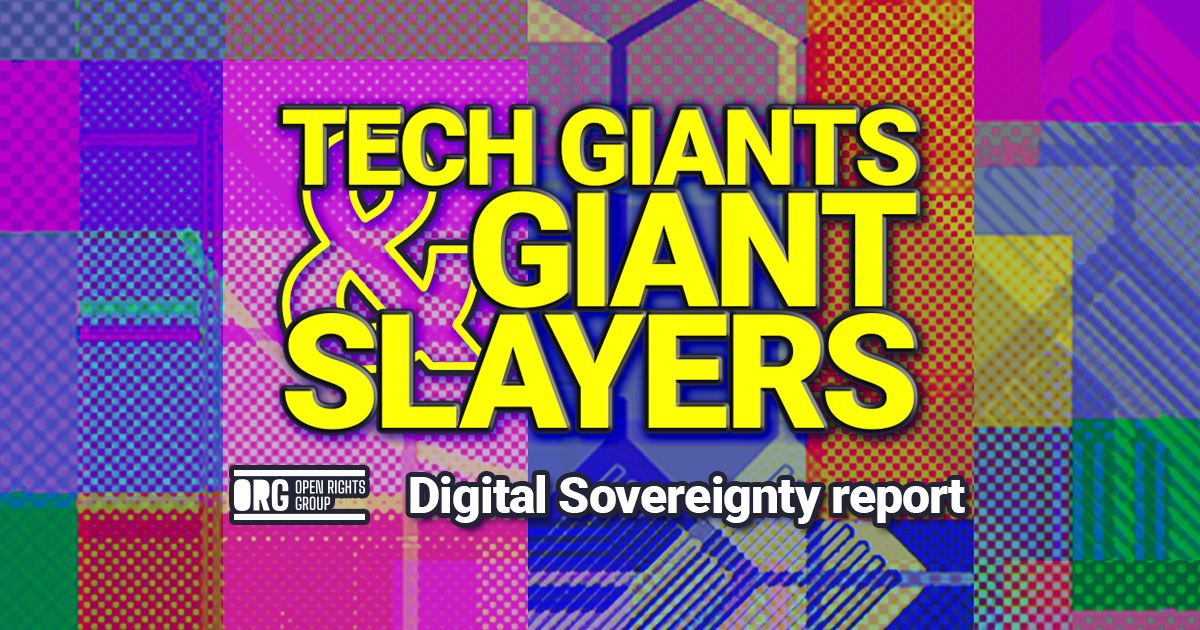
Executive Summary Reclaiming Digital Sovereignty The high cost of digital dependency In Part I The Digital Sovereignty challenge we find: The UK’s current position Part II Current UK policy position shows that: Digital Sovereignty reduces costs and grows the digital economy We show in Part III Beyond the UK how other countries are benefiting from prioritising Digital Sovereignty.
PlayStation keeps reminding us why digital ownership sucks
Time to buy physical games again?

Evolution of Consumption: A Psychological Ownership Framework
Technological innovations are creating new products, services, and markets that satisfy enduring consumer needs. These technological innovations create value for consumers and firms in many ways, but they also disrupt psychological ownership––the feeling that a thing is “MINE.” The authors describe two key dimensions of this technology-driven evolution of consumption pertaining to psychological ownership: (1) replacing legal ownership of private goods with legal access rights to goods and services owned and used by others and (2) replacing “solid” material goods with “liquid” experiential goods. They propose that these consumption changes can have three effects on psychological ownership: they can threaten it, cause it to transfer to other targets, and create new opportunities to preserve it. These changes and their effects are organized in a framework and examined across three macro trends in marketing: (1) growth of the sharing economy, (2) digitization of goods and services, and (3) expansion of personal data. This psychological ownership framework generates future research opportunities and actionable marketing strategies for firms aiming to preserve the positive consequences of psychological ownership and navigate cases for which it is a liability.


Digital Sovereignty
Digital sovereignty has a bad reputation. In internet governance circles, sovereignty is considered awkward enough to be referred to by as the "s-word." It is often associated with misguided attempts at returning to the era of national champions, like building a French search engine or a European Google, or worse with the eternal boogeyman that is the "splinternet." It doesn't have to be this way!
Digital Sovereignty
The term “digital sovereignty” has become an integral part of current political discourse. Across party lines and administrative levels, there is consensus: Being digitally sovereign is desirable and important. However, it often remains unclear what it actually means to be digitally sovereign and how this desirable state should be achieved.
Sovereignty and Landscape | Simon Wardley | 15 comments
X : What is digital sovereignty? Me : I was asked that question by some friends within Government at the beginning of this month. I know some have been working on the idea, which is very encouraging, but I gave my tuppence worth of a definition. "Digital sovereignty is a country's ability to make its own decisions about the technology it uses, the data it creates, and how digital systems work in service of its people rather than being forced to accept choices made by other entities. This requires continuous situational awareness of the economic and technological landscape to anticipate changes, maintain strategic advantage, and shape international digital norms. Digital sovereignty is achieved through strategic control over critical digital assets and relationships, extending from public sector systems to the broader digital ecosystem affecting citizens and economic interests." The key is choice. You are sovereign if you retain the ability to make your own decisions rather than being forced to accept the decisions of others. This doesn't mean you need to own the entire tech stack, or all the data but you do need to maintain control over critical assets and relationships. This can be achieved by many means not just by conflict with others but through co-operation and collaboration (i.e. all the forms of competition matter). You also can consciously compromise, accepting some loss of sovereignty in one space to gain sovereignty in another. Anyway, I quite like the Mike Bracken description https://lnkd.in/eFjzcAdr "Digital sovereignty is the agency and capacity of any organisation to make intelligent, informed choices to shape its digital future by design". I used to do a lot of work on sovereignty many years ago, so if you want to know more about my view and how to achieve this, well I have a series of hopefully useful but somewhat introductory posts. Sovereignty and Landscape https://lnkd.in/eku2X_Ea Societal versus Market benefit https://lnkd.in/eXxkCv-K Whose interests are you serving? https://lnkd.in/eAgHS5wc | 15 comments on LinkedIn

The Pivot to Owned Commerce - David Perell
David explores how owned commerce is the future of media companies. Read now.

How to Save the Net: Take Ownership
We need to do more to develop and empower digital citizens.

Reclaim Control | over your technology, your devices, your data, your digital life.
You have the right to control your data, devices, and services. We coordinate, develop and foster communities of Reclaimers who want digital independence. Together, let's reclaim the right to a technical future of data sovereignty, digital autonomy, responsible governance, and collective care online for all.
Technology and Below-the-Line Labor in the Copyfight over Intellectual Property
Andrew Ross, Technology and Below-the-Line Labor in the Copyfight over Intellectual Property, American Quarterly, Vol. 58, No. 3, Rewiring the "Nation": The Place of Technology in American Studies (Sep., 2006), pp. 743-766
Collectief Eigendom
Cultural practices of collective ownership over natural resources have been around for quite some time. Do these ways of working have a digital counterpart? It may seem simple at first. To translate cultural practices of collective ownership into the digital realm, just use a Creative Commons license to allow others to make use of your work, share further modifications, and contribute to the wealth of the digital commons. That’s it. Some stories are just too good to be true.
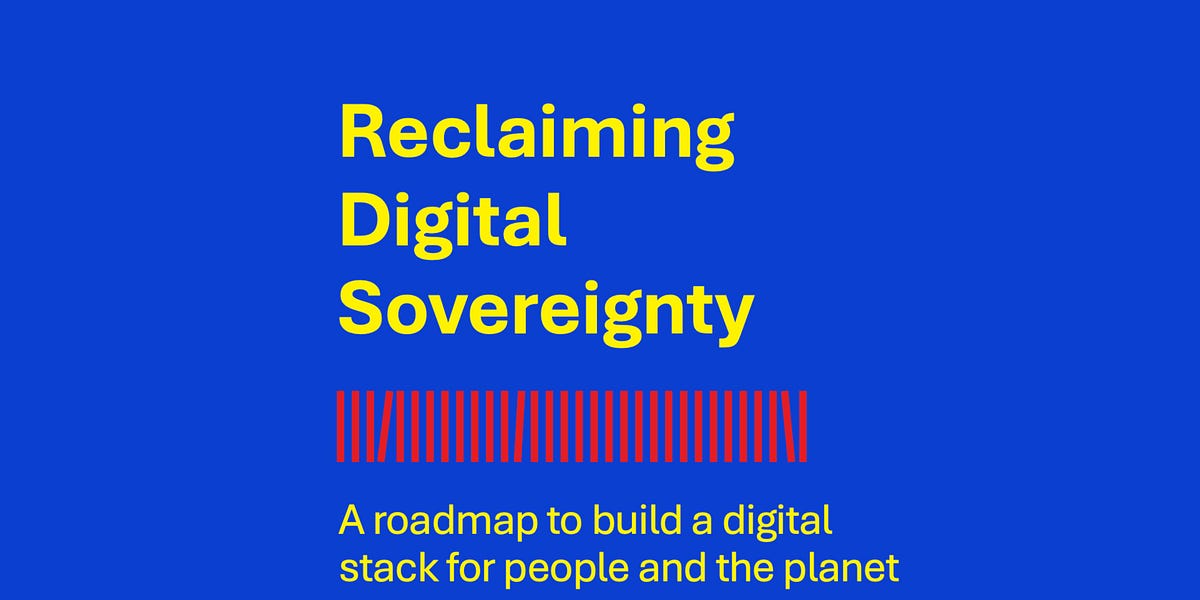
Why we must reclaim digital sovereignty
A new white paper envisions a radically different technological future
Been thinking about what digital ownership could look like on atproto: NOT NFTs/speculation, but real transferable digital objects. An album, artwork, book, etc. with its own DID, provenance, rights, lending, gifting & resale. Access is a service; ownership is an object. PDS to PDS transfer.

