

Parkinson's Law of the Internet states that whatever the bandwidth, applications will always evolve to consume more than is currently available.
How web bloat impacts users with slow devices
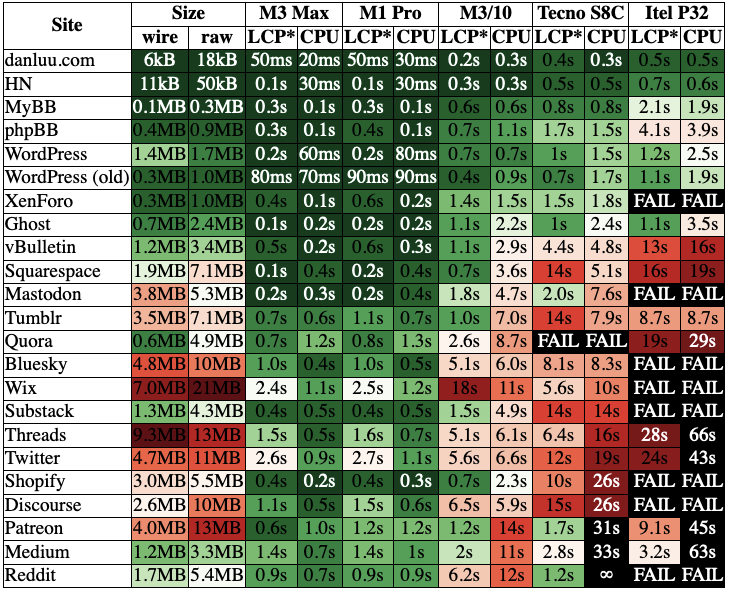
In 2017, we looked at how web bloat affects users with slow connections. Even in the U.S., many users didn't have broadband speeds, making much of the web difficult to use. It's still the case that many users don't have broadband speeds, both inside and outside of the U.S. and that much of the modern web isn't usable for people with slow internet, but the exponential increase in bandwidth (Nielsen suggests this is 50% per year for high-end connections) has outpaced web bloat for typical sites, making this less of a problem than it was in 2017, although it's still a serious problem for people with poor connections.
Sidekick Browser wants to be a productivity-honed 'work OS' on Chromium | TechCrunch
The paradox of connected computing is how much information is made available to us in just a few clicks or taps -- but also how this ocean of available

Abundance vs. Scarcity: Who Controls the Internet After AI?
AI is straining the open web, forcing a choice between abundance with redistribution and scarcity built on paywalls, writes Paul Keller.

The Zero Click Internet
The internet is undergoing the biggest change since its inception. It's huge. And there is no going back. The web is changing into the Zero Click Internet,...

Investing in what moves the internet forward | The Mozilla Blog
Firefox is the only major browser not backed by a billionaire and our independence shapes everything we build. This independence allows us to prioritize bu
Net neutrality and online freedom, why it matters | Proton
Today, we are participating in the Internet-wide Day of Action alongside Amazon, Netflix, Github, and many others to counter this decision.

The New Internet: Tailscale's Vision for the Future of Connectivity
Tailscale's CEO, Avery Pennarun, explores the future of the internet, discussing the evolution of networking, the issues with today's complex systems, and how Tailscale is simplifying connectivity for developers with a new, more efficient approach. Discover the vision for a New Internet.
Web bloat isn’t a knowledge problem | Christian Heilmann
There is a consensus among all browser makers and lovers of the web: the current state of the web is a mess. The average web page is 2.4 megabyte big and has over 200 requests.
Mary Meeker's Latest Must-Read Presentation On The State Of The Web
Mary Meeker's year-end update on internet trends reveals key insights into digital behavior and growth.
State of AI 2025: 100T Token LLM Usage Study | OpenRouter
Read OpenRouter's 2025 State of AI report — an empirical 100 trillion token study of real LLM usage, model trends, and developer insights.
Why Apps Need A New Data Center Stack | TechCrunch
The Internet has changed a lot about people’s lives in the past couple decades. Web and mobile applications let us search for information, buy products, and communicate frictionlessly, from anywhere -- at speeds and in ways never before possible. We get movie recommendations on the dashboards of our cars, produce and publish videos on our phones, and buy thermostats that predict when we will be at work so they can turn down the heat.

Money as Message | Andreessen Horowitz
Network effects — where a product or service becomes more valuable to its users as more people use it — are one of the key ways software businesses maintain a better product and more defensible market position. This is especially true of messaging apps like WeChat — which, as I’ve argued before, is not just...

New Laws Explain Why Fast-Growing Networks Break
Researchers are uncovering the hidden laws that reveal how the Internet grows, how viruses spread, and how financial bubbles burst.

The Dark Forest Theory of the Internet
Why the dark forests of the internet — podcasts, newsletters, and other private channels — are growing, and why might that pose a problem
The internet has evolved to foster a fatal expectation: that the things we depend on every day are free. They aren't, but we're allowed to pretend they are with the help of ad-driven business models. The real cost is substantial, and can be measured in time, money, relationships, health, and more.

Fund Your Internet
fundyourinternet.org