The current outer surface of the Great Pyramid at Giza is made of rough limestone blocks, colored a dark sandy brown from hundreds of years of pollution and wea
History of Concrete - Concrete and Cement History Timeline - Concrete Network
Concrete & cement history outlined on an interactive timeline, spaning from the Egyptian Pyramids to modern decorative concrete, complete with photos and descriptions of each event.

Egyptian blue
Egyptian blue, also known as calcium copper silicate (CaCuSi4O10 or CaOCuO(SiO2)4 (calcium copper tetrasilicate)) or cuprorivaite, is a pigment that was used in ancient Egypt for thousands of years. It is considered to be the first synthetic pigment.

Rome's Pyramid of Cestius reopens for visits
Rome's Pyramid of Cestius reopens to the public following three years of restoration work, with a new lighting system and a refurbished archaeological area.

Egyptian blue is the oldest artificially produced pigment known to Man. It was in use since about 3100 BC in ancient Egypt, India, Greece and Rome.
Egyptian blue is the oldest artificially produced pigment known to Man. It was in use since about 3100 BC in ancient Egypt, India, Greece and Rome.

Archaeologists uncover ancient Byzantine city in Egypt’s western desert
Well-preserved fourth-century quarters reveal details of daily life, urban development and economic activities
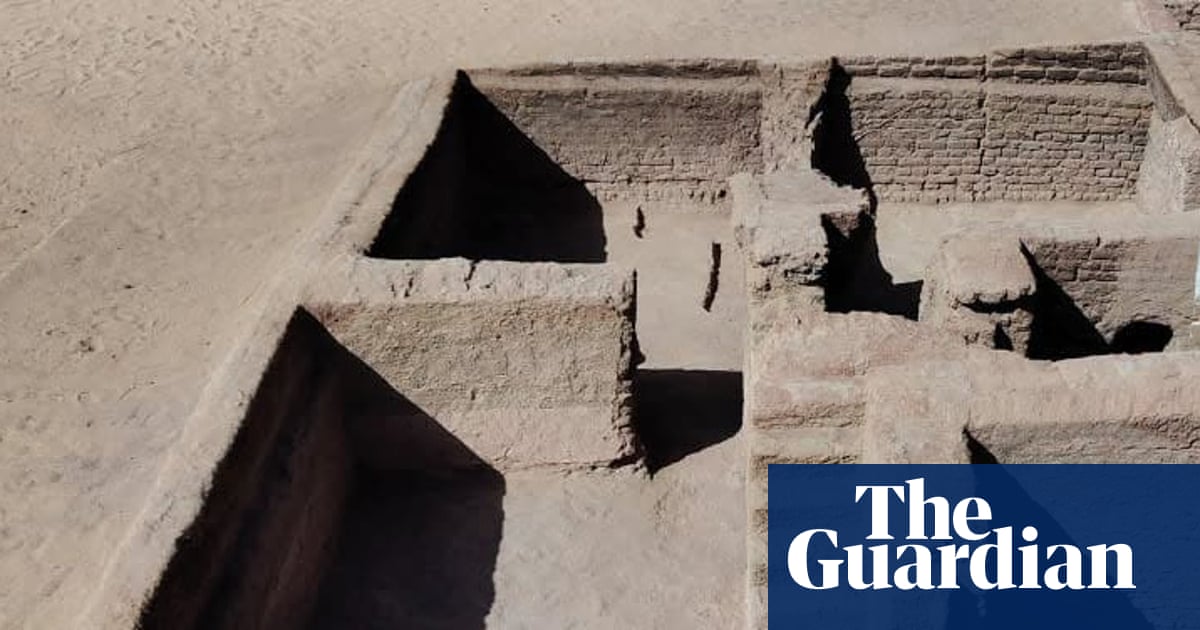
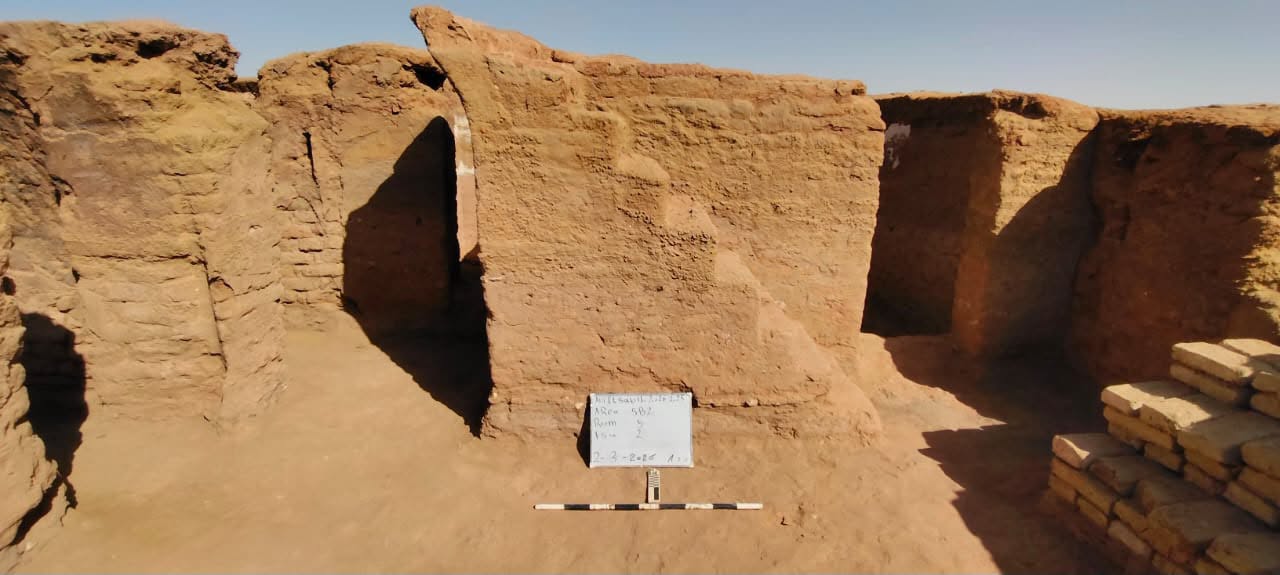
Photos-Miracle in the desert: Entire, intact ancient city hidden in Egypt uncovered - Egypt Independent
Deep within Egypt’s Western Desert, the sands of the Dakhla Oasis have just surrendered a remarkably preserved secret. An Egyptian archaeological mission has discovered an entire, intact residential city dating back to the Byzantine era. Constructed entirely of mud brick at the Ain El-Sabeel site, the sprawling settlement offers a rare, cinematic window into what …
Archaeometallurgical investigation of the Nebra Sky Disc
The world heritage object Nebra Sky Disc is one of the best investigated archaeological objects. The origin of the raw materials it is made of is well known. However, its manufacturing process was not completely clear. Investigations were made in order to clarify the steps of manufacturing from the initial casting to the finished disc using the latest metallographic techniques. Therefore, a small piece from the outer part of the disc was investigated and compared with a replica. Both were prepared regarding the metallographic procedure. Microstructural analysis was made by optical microscopy on a colour etched surface, EDS and electron backscatter diffraction. For the investigation of mechanical properties microhardness measurements were made. It could be found that the Nebra Sky Disc was manufactured from a flat cast followed by hot forging process. During the forging process the disc was heated and forged for approximately 10 times.

What 61,000 hidden structures reveal about Maya civilization
Lidar images suggest connections between cities but also large-scale warfare.

Investigating ancient human DNA preservation on cave walls and in rock art
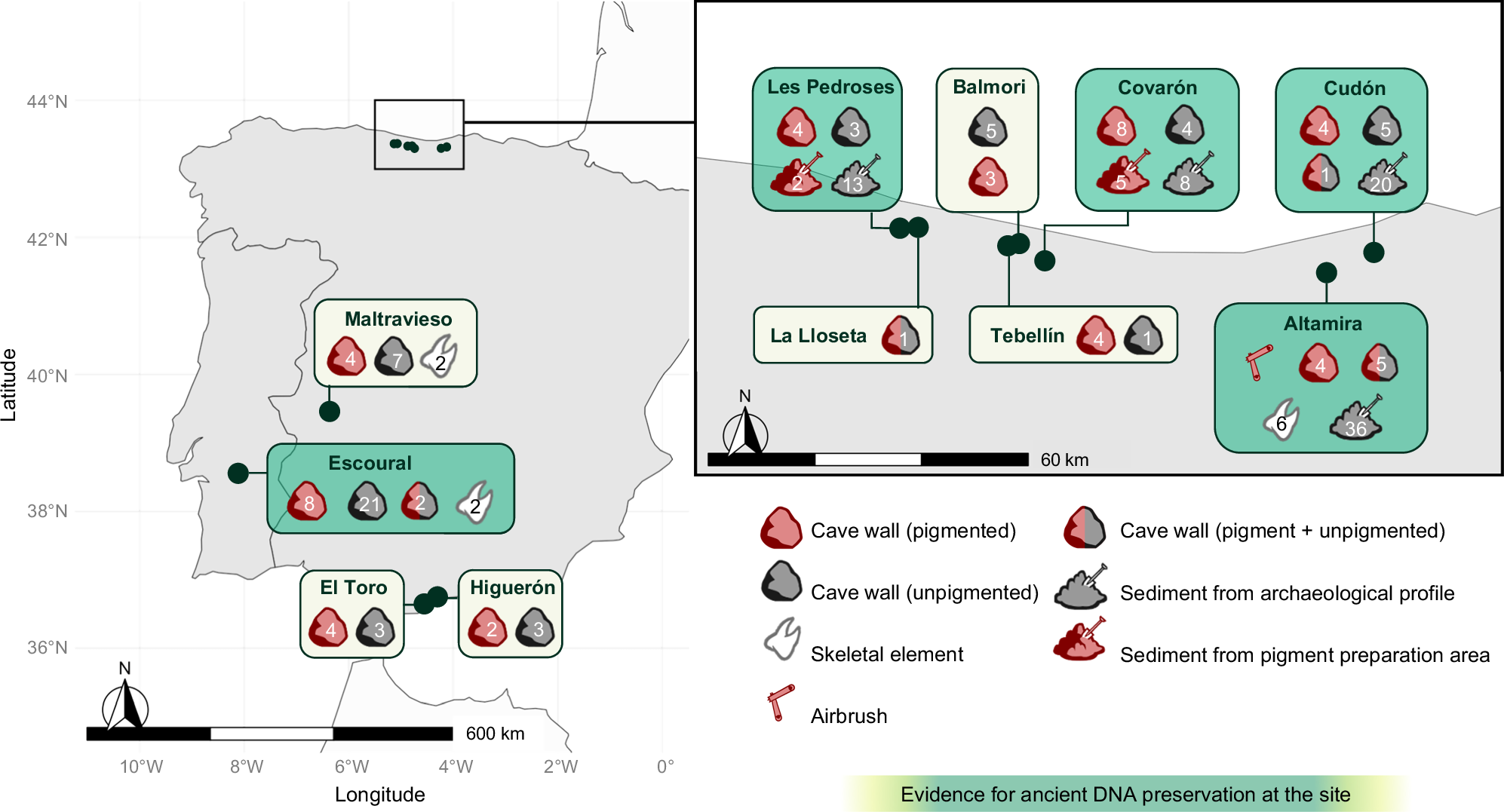
Previous efforts to link Palaeolithic cultural records to specific populations through DNA analysis have focused on materials from archaeological floor deposits such as bones, sediments, and artefacts. In this study, we explore whether rock art, a spatially distinct expression of human activity, can also preserve DNA traces from its creators. We analyse DNA preservation in pigment samples collected in and around 24 rock art panels from 11 caves across Spain and Portugal, including simple marks (from nine sites), hand stencils (Maltravieso Cave, Extremadura, Spain), and figurative paintings (Cave of Altamira, Cantabria, Spain). We recover traces of ancient human mitochondrial and nuclear DNA, unaccompanied by faunal DNA, from a pigmented calcite crust at Escoural Cave (Portugal), as well as from an unpigmented cave wall sample from the same site. The absence of faunal DNA in both samples suggests direct DNA deposition through human contact. In contrast, three additional unpigmented samples, from Escoural and Covarón Cave (Asturias, Spain), yielded mixtures of human and faunal DNA, suggesting indirect deposition. Although our results do not conclusively link ancient human DNA preservation to the generation of cave art, we show that traces of human DNA can persist on cave walls for thousands of years.
30 Years of Google Search Website Design History - 41 Images - Version Museum
A comprehensive visual history of Google.com from 1996 to 2026. See a gallery of the Google.com evolution from the beginning to present day.

Ancient lost city discovered beneath Egypt's desert
A remarkably well preserved 1,600-year-old city complete with a church, watchtowers and bustling streets has been unearthed beneath Egypt's Western Desert.

Tomb of Glowing Lava - How to Model Ultra Realistic Lava
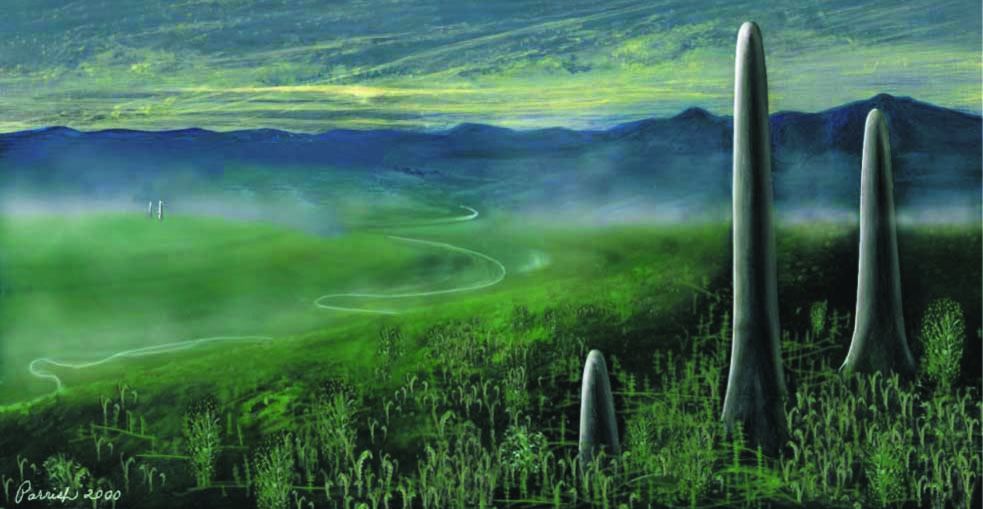
Giant, Mysterious Spires Ruled the Earth Long Before Trees Did. What Exactly Are These Odd-Looking Fossils?
For more than 150 years, scientists have debated whether Prototaxites—which stood roughly 24 feet tall and 3 feet wide—were an early lichen or fungus, like a “giant mushroom”
What will the paper of the future look like? | I4R
In the course of my research, I will occasionally indulge in a session of academic archaeology and follow a trail of references back in time to see if I can find the source of some particular concept or idea. I would like to think that acquiring this ki…
The Great Season — 13FOREST Gallery
On Friday, January 24, 13FOREST Gallery will open The Great Season, an exhibition of new and recent acrylic work by painter Nicole Duennebier. Dark and sumptuous, The Great Season highlights a fantastical six-panel painting that associates the random beauty of nature with an elaborate 19th-century parlor game. Set against black backgrounds, Duennebier’s complex forms strongly refer to Baroque still-life paintings in which fruits and vegetables simultaneously emerge and pass into different stages of maturity. A key difference in Duennebier’s work is that, rather than render images of everyday objects, she bases them on her fascination with biology, particularly bacteria, fungi and other objects hidden from view. Referring to her use of darkness, the artist states that her inky backgrounds are “like a primordial soup, a pool of black that springs forth a decadent and sometimes horrible growth.” Each of the paintings in the show is associated with lush proliferation. In Bright Beast After Nature, for instance, a black background gives rise to a nebula of unfolding, biomorphic forms that seem to divide and overtake one another. Painted in thin, translucent layers, the work suggests a still life captured in only one of many stages it will eventually pass through. With Bright Beast Dissected View Duennebier gives an equally fantastic image of the engine behind such proliferation. Similar to vivisections seen in science textbooks, the painting shows the surface of a soft, woolly plant and the interior, biological source of its existence. In content the “engine” plays with the idea of a still life, but one made of flowers, vegetables and animal viscera. Duennebier’s centerpiece in The Great Season is a vast, six-panel painting titled, Hydnellum Myriorama. Its title refers to a type of fungus found in nature and to a Victorian card game – myriorama – in which children could arrange a series of illustrated cards to form hundreds of different landscapes. In Duennebier’s six panels are hybrid images that resemble Baroque still lifes, coral, fur, crystals and close-ups of microscopic fauna. Each of the forms emerges from nothing and stands bathed in a common light source. Despite the panels’ differing environments, Duennebier negates their importance by enabling viewers to arrange the panels into aesthetic experiences of their own choice. With Hydenellum Myriorama, the random potential of generation and decline in nature is given its parallel in art. Of her own work Duennebier states: “My interests in natural phenomenon (dermoid cysts, fungus, invasive flora/fauna) and my love of candied Old Master opulence always seem to be present in my painting… Painting with attention to detail, I’ve become accustomed to the fact that nature in itself, or anything living really, never totally allows you to have a perfectly idealized experience. Everything is always spewing, dripping, rotting a little.”