

Recently I’ve been thinking a lot about this 2015 observation on Tumblr about the dangerous conflation of respect of personhood and the respect of authority.
The Alt-Right Playbook: The Reverse Gish Gallop
I am a 15-year-old girl. Let me show you the vile misogyny that confronts me on social media every day | Anonymous
Objectification, hate, rape threats: the politicians debating online abuse mean well, but to truly understand, they need to see what I see
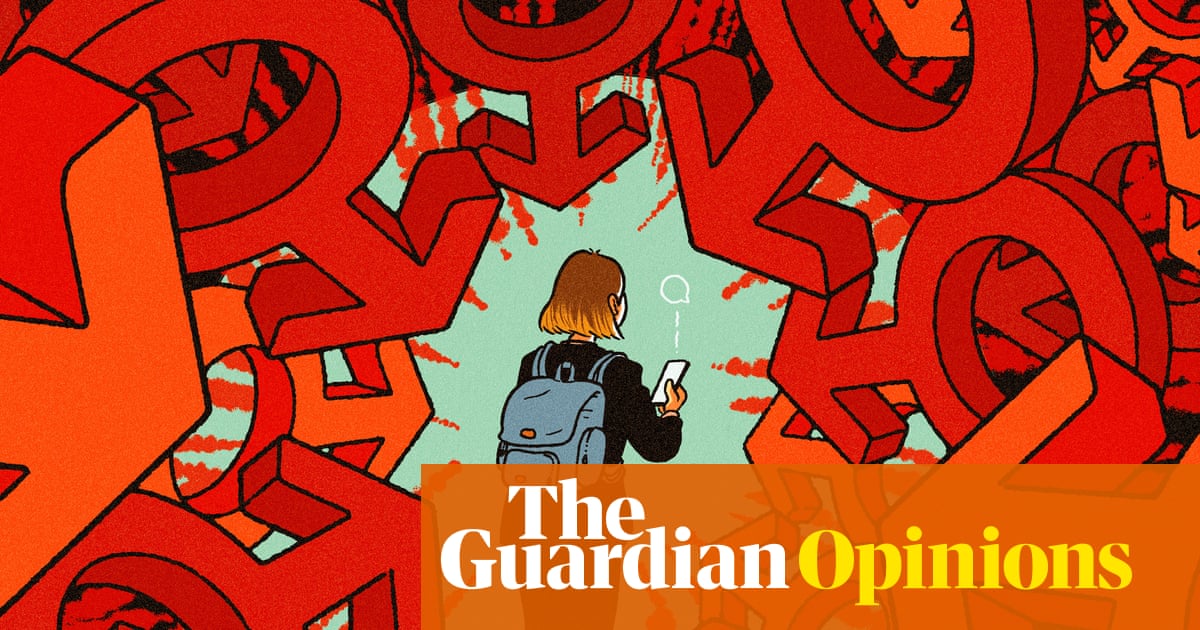
The Alt-Right Playbook: How to Radicalize a Normie
The Alt-Right Playbook: How to Radicalize a Normie
Free Speech Experts: Jonathan Haidt’s Moral Panic Is As Old As Democracy Itself
We’ve been saying for years now that Jonathan Haidt’s crusade against social media and kids is a moral panic dressed up in academic robes, and that the evidence simply does not support …

Sort By Controversial
[Epistemic status: fiction] Thanks for letting me put my story on your blog. Mainstream media is crap and no one would have believed me anyway. This starts in September 2017. I was working for a sm…

Respectability politics
Respectability politics, or the politics of respectability, is a political strategy wherein members of a marginalized community will consciously abandon or punish controversial aspects of their cultural-political identity as a method of assimilating, achieving social mobility,[1] and gaining the respect of the majority culture.[2]
Trust and Faith in Our Web
I’m not Brennan, but I’m very interested in decentralization and a fan of AtProto specifically, so I’d like to weigh in. First I should mention I’ve personally never been able to get into microblogging, so I haven’t touched bluesky myself, despite having an account for ATProto reasons. But I agree it’s concerning that the company chooses to continue to host the content of harmful individuals and calling that act “neutral”. I’m certainly against the idea of the “marketplace of ideas” as it’s cle...

The Alt-Right Playbook: Why Don't You Respond to Criticism?
Free Speech on the Internet: The Crisis of Epistemic Authority
Abstract. Much of our knowledge of the world comes not from direct sensory experience, but from reliance on epistemic authorities: individuals or institutions that tell us what we ought to believe. For example, what most of us believe about natural selection, climate change, or the Holocaust comes from our reliance on epistemic authorities (scientists, historians). Sustaining epistemic authority depends, crucially, on social institutions that inculcate reliable second-order norms about whom to believe about what. The traditional media were crucial, in the age of mass democracy, with promulgating and sustaining such norms. The internet has obliterated the intermediaries who made that possible, and, in the process, undermined the epistemic standing of actual experts. This essay considers some possible changes to existing free speech doctrine to remedy the epistemological crisis brought about by the internet.
Charlie Kirk, Ezra Klein, and the Cost of Civility-Theater Liberalism
“Talking across divides” is laudable—until it becomes a license to launder antidemocratic and dehumanizing ideas.

Wired women : gender and new realities in cyberspace
Come in, CQ: the body on the wire / Ellen Ullman -- The memoirs of a token: an aging Berkeley feminist examines Wired / Paulina Borsook -- How hard can it be? / Karen Coyle -- Closure was never a goal in this piece / Judy Malloy and Cathy Marshall -- Estrogen brigades and "big tits" threads: media fandom online and off / Susan Clerc -- Elites, lamers, narcs and whores: exploring the computer underground / Netta "grayarea" Gilboa -- We are geeks, and we are not guys: the systers mailing list / L. Jean Camp -- Not for the faint of heart: contemplations on Usenet / Judy Anderson "yduJ" -- The price of admission: harassment and free speech in the wild, wild West / Stephanie Brail -- Sex, fear and condescension on campus: cybercensorship at Carnegie Mellon / Donna M. Riley -- Cocktails and thumbtacks in the old West: what would Emily Post say? / Laurel A. Sutton -- "So please stop, thank you": girls online / Michele Evard -- MUDder? I hardly know 'er: adventures of a feminist MUDder / Lori Kendall -- Like magic, only real / Tari Lin Fanderclai -- Coming apart at the seams: sex, text and the virtual body / Shannon McRae; Includes bibliographical references; Ellen Ullman shares an email courtship - Paulina Borsook exposes gender attitudes at the digerati's magazine of record - Karen Coyle on overcoming macho stereotypes - Judy Malloy and Cathy Marshall reflect on their art/research collaboration - Susan Clerc and the zeal of media fandom - Netta Gilboa explores hackers' attitudes toward women - Jean Camp on the Internet's safe havens - Judy Anderson's advice on dodging Usenet flames - Stephanie Brail seeks the line between free speech and harassment - Donna Riley reveals the story of the Clitoral Hoods - Laurel Sutton and the nuances of netiquette - Michele Evard takes news-groups to the fifth grade - Lori Kendall wonders if gender is meaningless online - Tari Lin Fanderclai on MUDs as a powerful teaching tool - Shannon McRae takes a look at "virtual sex"

Data Feminism for AI
Attacks on women and trans people are not happening in a vacuum. Communications scholars W. Lance Bennett and Marianne Kneuer recently argued that we are witnessing the intensification of "illiberal public spheres" around the world (Bennett and Kneuer, 2023). These are characterized by a set of anti-democratic communications tactics that include the denigration and exclusion of minoritized people, targeted attacks on the press and political institutions, and transgression of norms of civil discourse. Such tactics are enabled and amplified by the social media platforms owned by Big Tech, whose business model elevates attention above all other metrics, such that they profit richly off extremism, threats, spectacle, and lies. The success of this corporate partnership with right-wing extremism is evident in the proliferation of book bans (Magnusson, 2024), the demonization of DEI and critical race theory (Crenshaw, 2022), and mob tactics to doxx, intimidate, misrepresent, and otherwise silence people that study misinformation, speak out against racial and gender violence, or rule against insurrectionists (Edmonds, 2024). At the same time, we have seen the continued work of feminists, including Latin American, Indigenous, and abolitionist feminists in the US and globally, doing the work of imagining alternate worlds (Cullors, 2021; Davis, 2022; Ricaurte, 2019; Simpson, 2017). This paper represents our own first attempt to imagine a more equitable, sustainable, feminist world for AI research.

Hey everyone! I’m starting a monthly blog about trends in moderation from Blacksky’s Trust and Safety team called: “What’s Happening on My Feed?” The first post: “Putting the Trust back in Trust and Safety” is out now, check it out: whatshappeningonmyfeed.leaflet.pub/3mpont6fedc2z

Putting the Trust back in Trust and Safety
whatshappeningonmyfeed.leaflet.pubThe forced global adoption of puritanistic American cultural norms vis sexuality and nudity via app store/payment processor rules is one of the least-discussed free speech issues of the last decade and this lack of attention is going to hurt online expression so much in the years to come.

♍ Bee 🐝
I think also we cannot ignore the potential social and cultural ramifications of normalizing the demonification of anything adult or sexual The whole system is stacked against any sort of movement in the other direction and it's not something the porn industry can handle alone at this point

