A time-honored method of extracting cash from stolen credit cards involves “reshipping” scams, which manage the purchase, reshipment and resale of carded consumer goods from America to Eastern Europe — primarily Russia. A new study suggests that some 1.6 million credit and debit cards are used to commit at least $1.8 billion in reshipping fraud each year, and identifies some choke points for disrupting this lucrative money laundering activity.
Pluralistic: How I got scammed (05 Feb 2024) – Pluralistic: Daily links from Cory Doctorow
More specifically, I was tricked by a phone-phisher pretending to be from my bank, and he convinced me to hand over my credit-card number, then did $8,000+ worth of fraud with it before I figured out what happened. And then he tried to do it again, a week later!
How I discovered the underground world of credit card network exploitation
SaaS companies face rising card testing attacks, with similar card parameters hinting at a possible bank leak. Stripe's Radar and custom rul

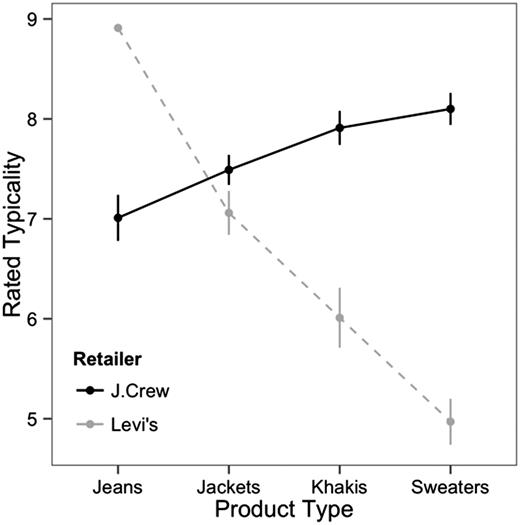
On the Mental Accounting of Restricted-Use Funds: How Gift Cards Change What People Purchase
Abstract. This article emphasizes the role of categorization in mental accounting and proposes that once a mental account is established, purchases that ar
Moral Incentives in Credit Card Debt Repayment: Evidence from a Field Experiment
We study the role of morality in debt repayment, using an experiment with the credit card customers of a large Islamic bank in Indonesia. In our main treatment, clients receive a text message stating that “non-repayment of debts by someone who is able to repay is an injustice.” This moral appeal decreases delinquency by 4.4 percentage points from a baseline of 66 percent and reduces default among customers with the highest ex ante credit risk. Additional treatments help benchmark the effects against direct financial incentives and rule out competing explanations, such as reminder effects, priming religion, and provision of new information.

Rewards and Misperceived Spending: Experimental Evidence from Credit Cards
Using proprietary data, a survey, and an experiment with a major bank in China, this paper studies how credit card rewards affect perceived and actual consumer

Jim Prosser on Twitter / X
Ask: "I've got $12,000 spread across three credit cards racking up interest. What can I do?"Agent: Calculates interest costs, checks hardship options/balance transfer offers, drafts requests to issuers, and builds a realistic repayment schedule.— Jim Prosser (@jimprosser) October 8, 2026
Stop Calling Online Scams ‘Pig Butchering,’ Interpol Warns
Experts say the catchall term for online fraud furthers harm against victims and could dissuade people from reporting attempts to bilk them out of their money.

How Pig Butchering Scams Work — ProPublica
Thousands have lost huge sums after being lured into fraudulent online investment schemes by seemingly attractive strangers who strike up online conversations with them. Here’s a guide to spotting the telltale signs.

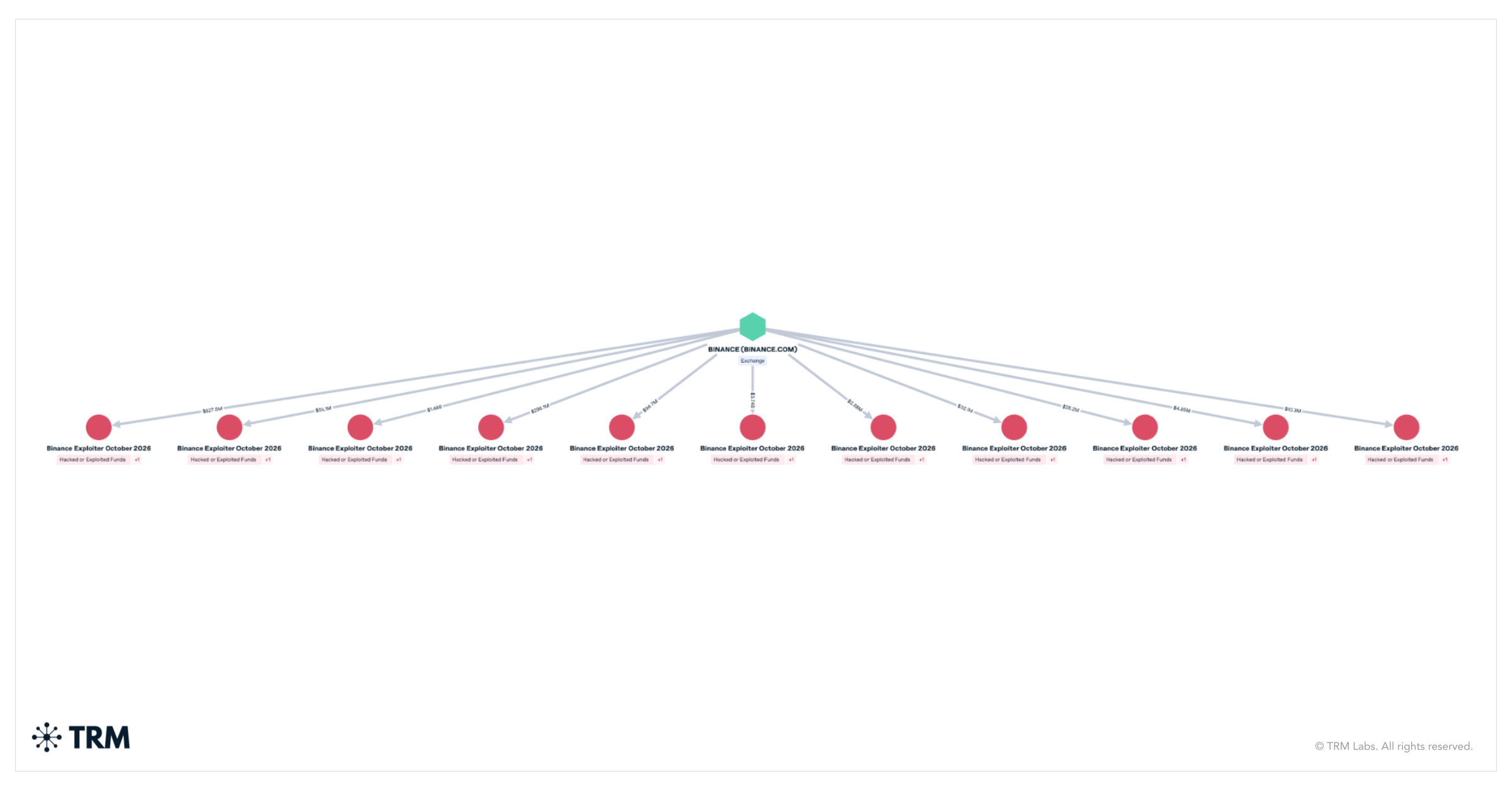
North Korea Steals USD 6.36 Billion From Binance in the Largest Hack in History | TRM Labs
On October 29, 2026, an attacker moved about $6.36 billion out of Binance wallets across ten blockchains, the largest crypto theft on record, and TRM attributes it to North Korea’s TraderTraitor, with evidence pointing to a compromise of Binance’s hot wallet signing infrastructure. About $2.7 billion has been frozen, but the attacker still holds roughly $2.4 billion, and TRM is tracking the funds and alerting partners through the Beacon Network.
The $11 Billion Marketplace Enabling the Crypto Scam Economy
Deepfake scam services. Victim data. Electrified shackles for human trafficking. Crypto tracing firm Elliptic found all were available for sale on an online marketplace linked to Cambodia’s ruling family.
Time to Cut Up Those Debit Cards? Effect of Payment Mode on Willingness to Spend
Financial industry data indicate that consumers increasingly prefer debit cards over credit cards, especially as a means of enforcing financial self-discipline. Given prior research suggesting that credit cards act as spending facilitating stimuli, this move toward reduced credit card use would appear to be in the right direction. Ironically, however, the same logos that were implicated in facilitating spending with credit cards are the logos that appear on debit cards. In what should serve as an eye-opener to consumers, it is found that exposure to debit card logos does result in an increased willingness to spend, similar to credit cards.
Six idées reçues sur la fraude sociale : la manne financière, les cartes Vitale usurpées, les pauvres qui profitent du système…
Parmi les pistes d’économies présentées par François Bayrou lors de son discours sur le budget, le durcissement de la lutte contre la fraude sociale. Estimée à 13 milliards d’euros par an, celle-ci draine des idées reçues : la désignation des responsables, l’origine du déficit de la Sécurité sociale ou la manne financière qui échapperait aux caisses de l’Etat.
Precautionary borrowing and the credit card debt puzzle
PayKings Payment Processing
PayKings provides high-risk merchant accounts and payment processing solutions for businesses across various industries. For over a decade, PayKings has delivered reliable payment processing services, making customer transactions seamless and cost-effective for high-risk businesses.

Purchase Justifiability Drives Payment Choice: Consumers Pay with Card to Remember and Cash to Forget
AbstractAlthough consumers often have multiple payment methods at their fingertips, such as cash and credit/debit cards, prior research is silent on how consumers choose between them. We home in on a key element of purchase—purchase justifiability—that affects how consumers choose to pay. Analysis of 118,042 real-world purchases and six experiments reveals that when consumers are motivated to forget (vs. remember) a purchase because they see it as difficult (vs. easy) to justify, they have an increased preference to pay with cash (vs. card) because cards create a “paper/electronic trail” that aids memory retrieval. These payment preferences are strongest among consumers most likely to recall/track their card spending, and manifest only when card expenses are trackable. We reconcile our results with the classic effect of payment method on pain of paying and discuss implications for merchants and for financial institutions designing payment methods of the future.

Debt Traps? Market Vendors and Moneylender Debt in India and the Philippines
A debt trap occurs when someone takes on a high-interest-rate loan and is barely able to pay back the interest, and thus perpetually finds themselves in debt (often by refinancing). Studying such practices is important for understanding financial decision-making of households in dire circumstances, and also for setting appropriate consumer protection policies. We conduct a simple experiment in three sites in which we paid off high-interest moneylender debt of individuals. Most borrowers returned to debt within six weeks. One to two years after intervention, treatment individuals were borrowing at the same rate as control households.