

Many security-conscious people probably think they’d never fall for a phone-based phishing scam. But if your response to such a scam involves anything other than hanging up and calling back the entity that claims to be calling, you may be in for a rude awakening. Here’s how one security and tech-savvy reader got taken for more than $10,000 in an elaborate, weeks-long ruse.
Scam Number Check Free Reverse Phone Lookup - Who Called Me? | Malwarebytes
Check any phone number for scams, spam, and unknown callers. Our free reverse phone lookup tool identifies who called you. No signup required. Try it now.
PhishTank | Join the fight against phishing
Found a phishing site? Get started now — see if it's in the Tank:
Pluralistic: How I got scammed (05 Feb 2024) – Pluralistic: Daily links from Cory Doctorow
More specifically, I was tricked by a phone-phisher pretending to be from my bank, and he convinced me to hand over my credit-card number, then did $8,000+ worth of fraud with it before I figured out what happened. And then he tried to do it again, a week later!
Analysis | Google’s AI pointed him to a customer service number. It was a scam.
There’s a new AI twist on a travel scam that has fooled people for years. Here’s what you need to know.

All I wanted was a swimming pool. What I got was a $31,000 lesson in Zelle fraud.
In search of a status symbol, I wound up getting ripped off big-time. But the real scam is how America's payment apps treat their customers.
How LLMs Are Recommending Scam Support Numbers
Threat actors are manipulating AI search results to push scam phone numbers. Here’s how the attack works.
Fake Cal Fire social media accounts are asking for donations
LOS ANGELES (KTLA) – As Los Angeles begins rebuilding after the devastating Palisades and Eaton fires leveled entire communities, fraudsters and scammers have taken to social media to take ad…

Mapping the online manipulation economy
A market perspective on digital manipulation may help improve online trust and safety , The internet is awash with inauthentic activity. Although some of this activity is harmless, a substantial proportion can be classified as malicious, including bots designed to steal personal data, networks of inauthentic social media accounts promoting crypto scams, and coordinated political influence operations ( 1 , 2 ). To enhance security, online platforms have implemented measures to counter inauthentic activity, with most requiring users to confirm account authenticity via a one-time password sent through short message service (SMS). However, there exists a thriving market for buying and selling on-demand SMS verifications, which forms a cornerstone of the wider online manipulation economy. Despite its centrality in the digital manipulation ecosystem, this SMS verifications market has not been systematically studied. To address this knowledge gap, we developed the Cambridge Online Trust and Safety Index (COTSI; cotsi.org), which tracks the daily price of SMS verifications for 197 countries and >500 platforms.
FBI disrupts massive AI-powered phishing service using a million URLs
In a coordinated effort, the FBI, working with Google and Black Lotus Labs, has dismantled a massive Chinese phishing-as-a-service operation called Outsider Enterprise with thousands of phishing websites used to steal credit card data and passwords.

Malte Spitz: Your phone company is watching
Scam alert. I know they’re faking pocketstars website but they’re targeting OnlyFans girls to create fake profiles of and steal content. 1/2
98 votes, 119 comments. 576K subscribers in the onlyfansadvice community. This is a educational space for onlyfans creators, ran by onlyfans…
How Pig Butchering Scams Work — ProPublica
Thousands have lost huge sums after being lured into fraudulent online investment schemes by seemingly attractive strangers who strike up online conversations with them. Here’s a guide to spotting the telltale signs.

I haven’t actually opened the emails, but I think I’m getting spoofed emails (or old-fashioned phishing?) from @kyivindependent.com. One email has “That email wasn’t from us” in the subject line
Social media scams/scam compounds/disinfo

So-called pig butchering scams, romance scams, disinformation campaigns, etc.
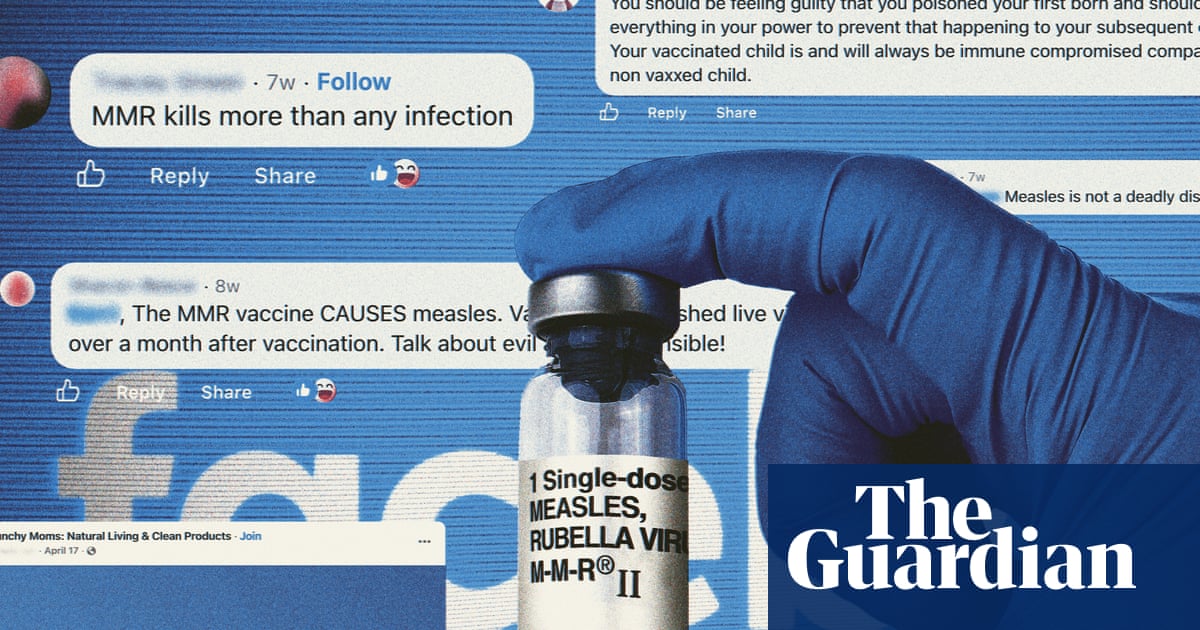
Measles, mumps and misinformation: how Crunchy Moms became ‘the most dangerous’ group on Facebook

SMS Verification Statistics by platforms | COTSI
Mapping the online manipulation economy
OSF

Reranking partisan animosity in algorithmic social media feeds alters affective polarization

Exposure to the Russian Internet Research Agency foreign influence campaign on Twitter in the 2016 US election and its relationship to attitudes and voting behavior
