Explore the evolution and challenges of the Unix Philosophy in modern software development. Learn its relevance and implications in today's tech landscape.
Basics of the Unix Philosophy
The ‘Unix philosophy’ originated with Ken Thompson's early meditations on how to design a small but capable operating system with a clean service interface. It grew as the Unix culture learned things about how to get maximum leverage out of Thompson's design. It absorbed lessons from many sources along the way.
The GNU Operating System and the Free Software Movement
Since 1983, developing the free Unix style operating system GNU, so that computer users can have the freedom to share and improve the software they use.
Nobody Cracks Open a Programming Book Anymore · unix.foo
A sad look at the state of modern programming books.
the world hasn’t figured out yet that you can literally just fix everything with a Nix overlay
There are many things that are uncertain in our industry right now, but one thing I am certain about, and have been for almost 13 years, is that Nix is a terrible programming language. I remember when I first learned it, it felt like pushing shit uphill. The learning cliff

The Art of Unix Programming
This book and its on-line version are distributed under the terms of the Creative Commons Attribution-NoDerivs 1.0 license, with the additional proviso that the right to publish it on paper for sale or other for-profit use is reserved to Pearson Education, Inc. A reference copy of this license may be found at http://creativecommons.org/licenses/by-nd/1.0/legalcode.

The Source History of Cat
A tour of the many historical implementations of the Unix cat utility.
Rust and the Three Laws of Informatics
Rust and the Three Laws of Informatics After 10 years in the Java world, I have recently been looking at Rust more seriously. I am barely beginning Rust programming, yet I feel enthusiastic: I …

Its Time for a New Programming Language
Today, when compared to any other point in programming history, we find ourselves spoiled for choice when it comes to programming…

Plan 9 from Bell Labs
Plan 9 from Bell Labs, an open-source distributed system from the creators of Unix.
Convivial design heuristics for software systems
The theme of this workshop is the proliferation of ideas about calling into question the cultural roots of our current programming languages, and the search for alternative paradigms with other cultural bases.
Declarative Server with NixOS: A Reproducible Infrastructure | Mustafa Erbay
A technical guide exploring how to create a declarative server configuration with NixOS, covering reproducibility and rollback processes.

nixers - A forum for computer enthusiasts interested in Unix, Linux, BSD, Programming and much more.
nixers is a forum and discussion board for topics like Unix and programming.
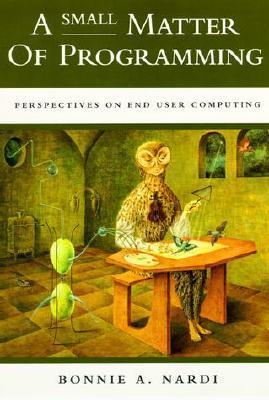
A small matter of programming: perspectives on end user computing
A Small Matter of Programming asks why it has been so d…
Es: A shell with higher-order functions
In the fall of 1990, one of us (Rakitzis) re-implemented the Plan 9 command interpreter, rc, for use as a UNIX shell. Experience with that shell led us to wonder whether a more general approach to the design of shells was possible, and this paper describes the result of that experimentation. We applied concepts from modern functional programming languages, such as Scheme and ML, to shells, which typically are more concerned with UNIX features than language design. Our shell is both simple and highly programmable. By exposing many of the internals and adopting constructs from functional programming languages, we have created a shell which supports new paradigms for programmers.
Nothing new under the sun: everything is a file
The Unix revolution was built on a key principle: everything is a file. Now, with the rise of AI Agents, LLMs have access to half a century of file-based arcana. The result? Everything is becoming a file again.