

The most complete and granular data collection of scientist activities and the platform to share and collaborate with other scientists.
PRISM: Capturing the Invisible Art of Scientific Practice
A New Tool for Recording and Scaling Laboratory Expertise

Cosmik Lab Notes 001: Semble Alpha - Cosmik Labs
I am ecstatic for this. I'm gonna start using this for tracking reading, research, and references for various projects. It's a bit bare bones while it's in alpha but there are tons of opportunities with this.
Zooniverse
The Zooniverse is the world's largest and most popular platform for people-powered research.

labs · luna
80+ small interactive labs — atproto tools, dev utilities, data explorers on uk open-gov / twitch / mastodon firehoses, media converters, and games.
Metagov x Future of Science Seminar - Discourse Graphs with Matt Akamatsu
The Scientific Contribution Graph: Automated Literature-based Technological Roadmapping at Scale
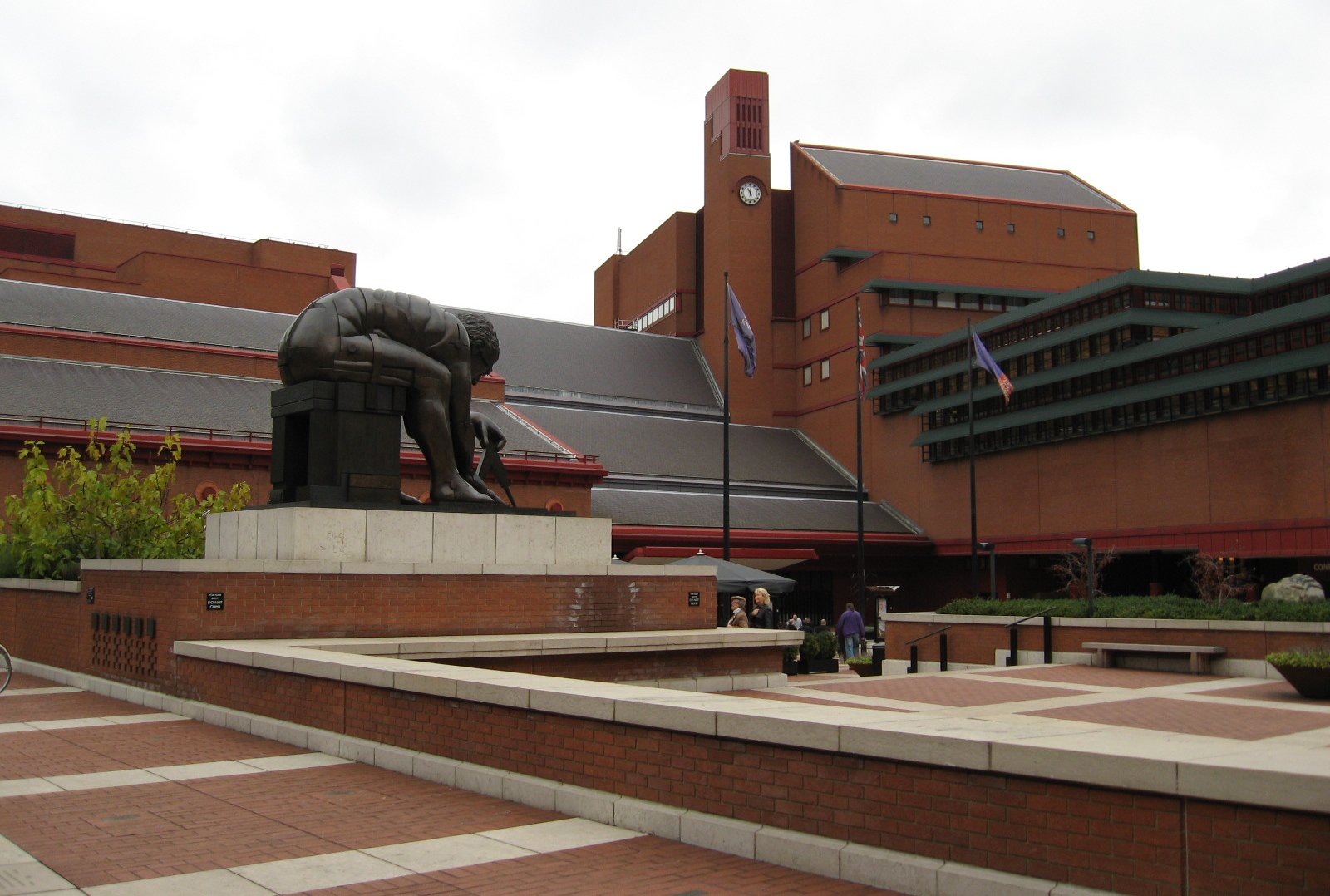
Sir Isaac Newton famously wrote, “If I have seen further, it is by standing on the shoulders of giants”. Scientific contributions are rarely developed in isolation, but build upon prior contributions, such as problem framings, experimental methods, and empirical findings. Understanding these prerequisite relationships is important for studying scientific progress, and for automated scientific discovery systems that must reason about which existing capabilities can be used to develop new ones (e.g. Lu et al., 2024; Jansen et al., 2025b; Baek et al., 2025).
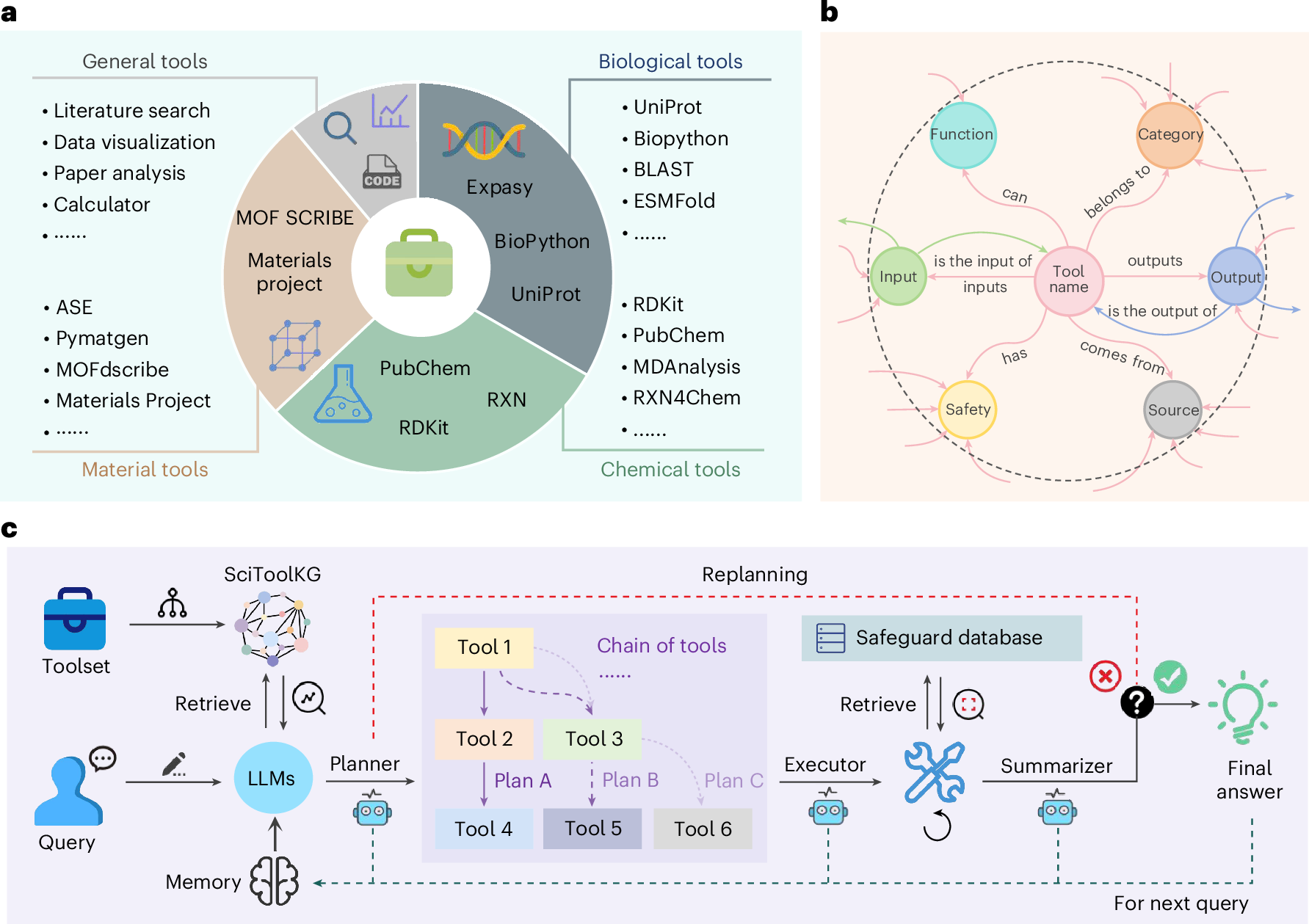
SciToolAgent: a knowledge-graph-driven scientific agent for multitool integration
Scientific research increasingly relies on specialized computational tools, yet effectively utilizing these tools requires substantial domain expertise. While large language models show promise in tool automation, they struggle to seamlessly integrate and orchestrate multiple tools for complex scientific workflows. Here we present SciToolAgent, a large language model-powered agent that automates hundreds of scientific tools across biology, chemistry and materials science. At its core, SciToolAgent leverages a scientific tool knowledge graph that enables intelligent tool selection and execution through graph-based retrieval-augmented generation. The agent also incorporates a comprehensive safety-checking module to ensure responsible and ethical tool usage. Extensive evaluations on a curated benchmark demonstrate that SciToolAgent outperforms existing approaches. Case studies in protein engineering, chemical reactivity prediction, chemical synthesis and metal–organic framework screening further demonstrate SciToolAgent’s capability to automate complex scientific workflows, making advanced research tools accessible to both experts and nonexperts.
The new way we’ll do science
Papers should become human-readable views over a graph of data, tools, results, and certificates.
Outcomes Graph: A protocol for applied science coordination - DeepScience Ventures
In this article, we explain how our Outcomes Graph works, including how the functions of scientific knowledge shape the features we've developed and how we're using it to harness the collective intelligence of venture scientists.

Home - Open science monitoring initiative - OSMI
News All news OSMI is an original idea from the French Ministry of Higher Education and Research, the Université de Lorraine and Inria. Other initiators of OSMI include Unesco, Charité Universitaetsmedizin Berlin, PLOS, and SPARC Europe. The initiative is coordinated by Université de Lorraine, SPARC Europe and Unesco. To receive the latest news from OSMI, ...

LABGLASS — Peer-to-Peer Biotech Data Workbench
Your notebook will be saved as ATProto records on your personal data server.
Scientific Content Management System | Curvenote
Create, manage, and publish interactive research with connected workflows, modular content, and built-in provenance. Book a demo
A Data Utopia for Science-of-Science
Here I want to briefly sketch out a vision for how to solve a key set of problems facing science-of-science researchers, using the relatively new idea of a ‘data trust.’ In my ideal wor…

You are Crossref - Crossref
Crossref runs open infrastructure to link research objects, entities, and actions—creating a lasting and reusable scholarly record that underpins open science. Together with our >25,000 members in 167 countries, we drive metadata exchange and support 2.1 billion monthly API queries, facilitating global research communication, for the benefit of society.

Pydata Paris Virtual Meetup June 2021
How and When to Involve Crowds in Scientific Research | James Evans
The lone academic in a basement lab is an endangered species. Years ago I asked Paul Ginsparg, who founded arXiv, what features his machine-learning filter used to flag speculative submissions. The top three: single-authored, submitted on a weekend, and heavy citation of Newton and Einstein. Science is a contact sport now. Marion Poetz and Henry Sauermann's How and When to Involve Crowds in Scientific Research (https://lnkd.in/g5pwVbfD) is the field manual. What crowds can do: Volume. Zooniverse mobilizes 2.7 million people to classify galaxies and court records. Galaxy Zoo's co-founder hand-classified 50,000 galaxies in one week before concluding that isolation would break him. Reach. NASA spent years failing to predict solar flares, then broadcast the problem. The winner was a semi-retired radio engineer in rural New Hampshire who swapped satellite data for radio data. Experience. Patients and caregivers asked to generate research questions produced 826 that scientists had missed, including the link between aging and wound healing. Bench-to-bedside runs backward. One caution the book underplays: an open call is not an inclusive one. Participation costs in time, money, and access screen people out. Self-selection can narrow the very diversity that makes crowds thrive. As AI floods the labor supply of routine, homogeneous cognition, human crowds become more valuable, not less. Machines process. People notice what nobody thought to ask. Check out my review @ https://lnkd.in/gkzvWrRC and the book @ https://lnkd.in/g5pwVbfD!
