District officials announced Wednesday that software now blocks all generative artificial intelligence tools from LAUSD student laptops and tablets.
‘BLOCKADE’: The Right Is Using AI Content Scanners to Try to Supercharge Book Banning
Groups that challenge books have begun using Gemini, ChatGPT, xAI, and other AI tools to try to get books banned.

Meet the academics refusing to use generative AI
Researchers say they have their reasons for avoiding AI tools — and they’re sick of arguing about it.

Meet the academics refusing to use generative AI
Researchers say they have their reasons for avoiding AI tools — and they’re sick of arguing about it.
NYC school system to ban AI for elementary, middle school students
The Department of Education is unveiling new guidelines following backlash.

Privacy Considerations with AI Tools
Artificial intelligence (AI) tools come in all sorts of flavors. There are notetaking and transcription tools, chatbots, device-wide agentic AI features, grammar and writing tools, translation assistants, AI summaries, and research tools, among others. As a term, “AI” may refer to features in apps, apps themselves, third-party plug-ins, or a...
The fight over downloadable AI is not really about a ban - Sensemaker
Companies want access, Anthropic wants testing, and Washington and Beijing are arguing over alleged copying.
How to Opt Out of AI Tools or Training Made by Big Tech
It seems like every software or website update brings new AI features. Some people find these features useful and immediately integrate them into their work. Others find them annoying or in the way.
Your Software Is Not Sentient
Software simulacrum is not true consciousness, the stripper at the strip club doesn't actually love you, and nearly all of the biggest problems with "AI" have very ordinary human origins.
Sosc Core to Institute AI Ban, Technology-Free Classrooms This Fall
All social science Core classes will transition to an “analog” approach for the upcoming academic year, restricting in-classroom technology use and banning AI-assisted writing and grading for students and professors.
Mastodon updates terms of service to ban AI model training on user data
Scraping user data to train AI models is a growing concern, and Mastodon has responded by banning the use of its content for such purposes.
AI Is a Waste of Time
The newest AI tools are accelerating basic research and scaring the general public. But many people are simply using them as toys.
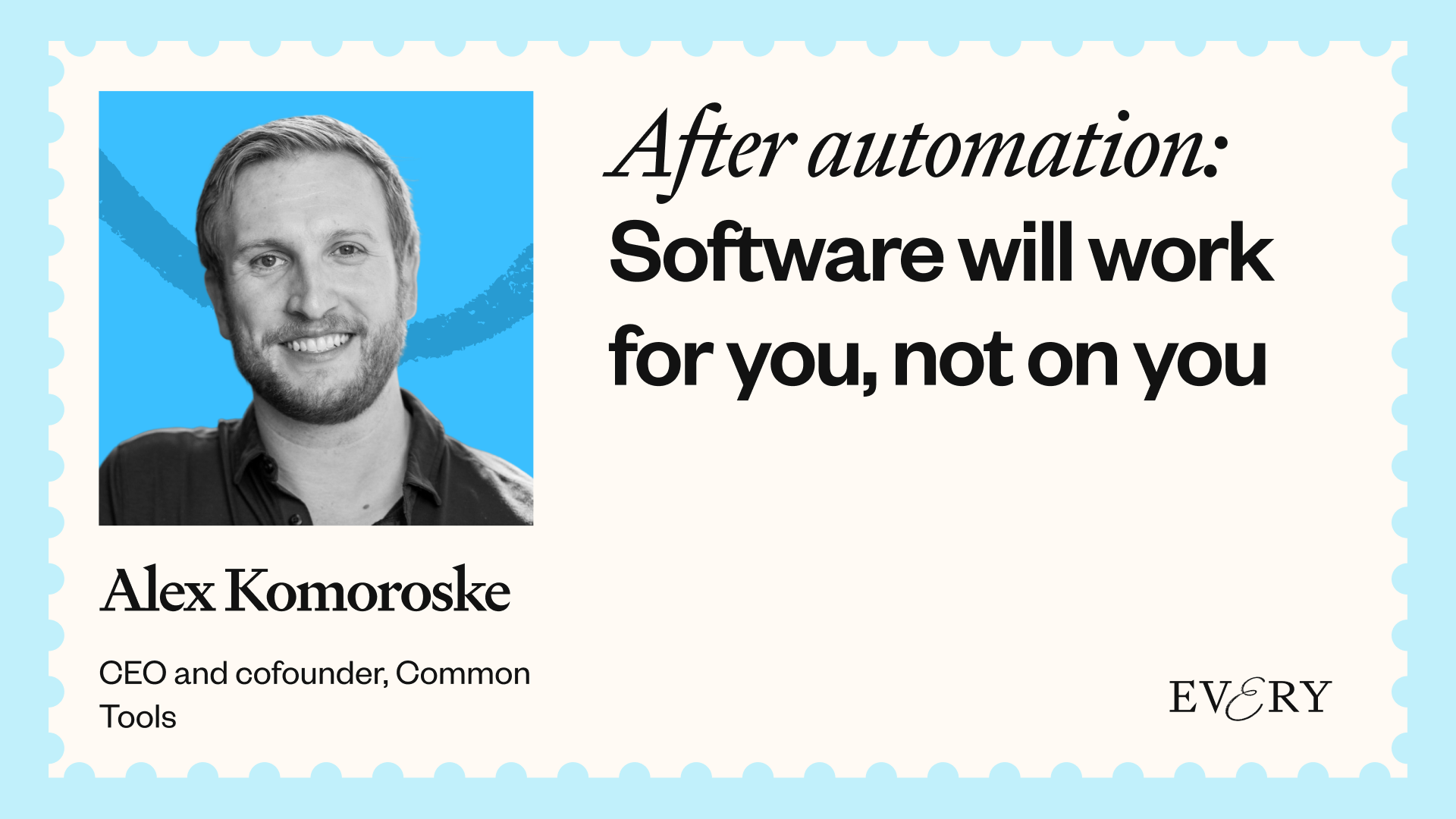
After automation: Software will work for you, not on you
Alex Komoroske, CEO and cofounder, Common Tools — AI promises “infinite software”—endless tools tailored to every need—but funneled through today's app stores, that abundance just means more silos, more trapped data, and more to orchestr...
Open source project contains hidden instruction for “AI” agents: delete my code
It’s no secret there’s a war going on inside the open source community, with people adopting “AI” on one side, and those that want nothing to do with it on the other. While the former are, by nature, using destructive tactics like mass website scraping, license washing, taking people’s creative works without permission, taking all the RAM and GPUs, and oh, destroying the planet, the latter have mostly stuck to fairly benign things like policies banning “AI” use, “AI” bot blockers, and the occasional honey pot mazes to trap “AI” crawlers.
Banning Open Source AI Would Be A Mistake
This post was originally an op-ed co-authored with Kevin Xu of Interconnected for a general, non-technical audience.
Mayor Mamdani and Chancellor Samuels Put Students First with Nation’s Broadest Generative AI Moratorium in Schools
NEW YORK – Mayor Zohran Kwame Mamdani and Schools Chancellor Kamar H. Samuels today announced a moratorium on student-facing generative Artificial Intelligence (AI) use in schools, alongside a new screen time policy, a decision that will impact nearly 600,000 public school students, or two-thirds of the system’s total enrollment. The policy establishes a one-year moratorium, effective in the 2026-2027 school year, on student-facing generative AI for children in 2-K through 8th grade. It also introduces twice-yearly AI critical thinking modules for high schoolers, limited AI pilots for a small number of high school classrooms and age-appropriate screen time restrictions.

LukeW | Common AI Product Issues
At this point, almost every software domain has launched or explored AI features. Despite the wide range of use cases, most of these implementations have been t...