

:quality(75)/https%3A%2F%2Fassets.lareviewofbooks.org%2Fuploads%2F201712theattentionmerchants.jpg)
A new book on how attention became a commodity.
Rethinking the cognitive foundations of the attention economy
The attention economy is the economic system in which human attention is the scarce resource. This literature takes a particular passage in Herbert Simon’s seminal Chapter Designing Organization fo...

Almost anything you give sustained attention to will begin to loop on itself and bloom
When people talk about the value of paying attention and slowing down, they often make it sound prudish and monk-like. But we shouldn’t forget how interesting and overpoweringly pleasurable sustained attention can be.

The attention market—and what is wrong with it
Attention is described as a “scarce commodity” that is traded in “a marketplace.” This, it is further claimed, contributes to a “widespread sense of attentional crisis.” But is there really an attention market, and if so, what, if anything, is wrong with it? We defend the claim that there are markets in attention. We provide an account of such attention markets and use that account to address what is morally wrong with them. Our account draws on knowledge of how attention works and what roles it plays in the mind. The attention market trades in an ability to influence our attention – somewhat (though not exactly) like the labor market trades in an ability to influence how we use our capacity for work. Specifically, the commodity it trades in is attentional landscaping potential, viz. the ability to systematically influence patterns of attention by changes to the sensory environment individuals are exposed to. Attention markets thus, we argue, commodify influence over a human capacity that plays a central role in shaping individual experience, agency, and belief formation. This feature of attention markets makes them ethically problematic. As markets in access to external influence, attention markets pose a special threat to individual autonomy and escape the classical liberal defense of free markets. Those who value autonomy should worry about the attention markets that exist today.

Chris Hayes on the attention economy
A conversation about how attention was commodified, why it's so easy to steal, where industry is looking for new supplies, and whether democracy can survive this.
How to reclaim your attention from the distraction economy | Psyche Videos
Could you watch this video on full screen, 1x speed, with no distractions? Here are five steps to rebuild your attention span

Dec 2020 -- Jelle Bruineberg -- Embodied cognition and the attention crisis
Overcoming information overload with circular attention economies - Cosmik Labs
Exploring the Frontier of Feeds - The Open Garden
Reorienting distribution and monetization in the attention economy.
Exploring the Frontier of Feeds - The Open Garden
Reorienting distribution and monetization in the attention economy.
Movements of the Mind: A Theory of Attention, Intention and Action
Abstract. Movements of the Mind explains what it is to be an agent. Focusing on mental agency, the book’s eponymous topic, it investigates an agent’s doing
Profit, cost, price, learned societies; further thoughts on Samuel A. Moore's Publishing Beyond the Market
Since I last wrote, I have had a few more thoughts on Samuel Moore’s book. Again, these are not necessarily things that he does not discuss or things that he should have discussed. They are merely thoughts that occurred to me in response to reading his work.

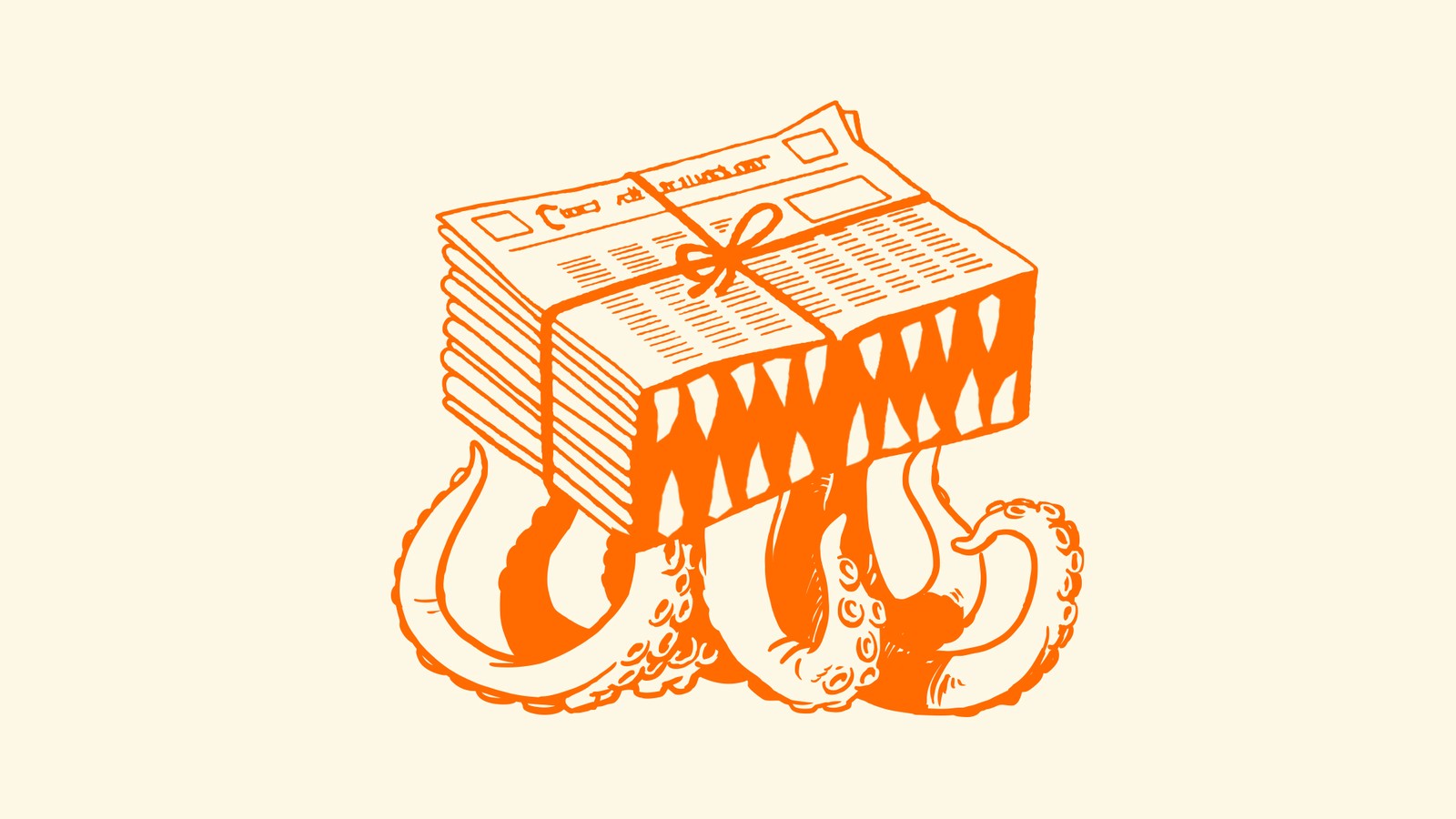
The Birth of the Attention Economy
The rise of the cheap, daily newspaper in the 19th century remade how Americans engaged with the world.
An attention economic perspective on the future of the information age
In this paper, we apply an attention economic perspective to explain current and predict future trends in our society. We first describe the rise of the attention economy, and we highlight one important mechanism of this economy: a spiral of attention scarcity. Second, we show that an attention economic perspective provides glimpses of a potential future. In particular, we predict an information environment that increasingly targets citizens with attention-grabbing content, form, and technology; a continuing trend toward excessive media consumption levels; and a continuing trend toward inattentive uses of information. We also predict increasing problems of public misinformation and misconceptions; an increased prevalence of certain mental and physical health issues; and an increased reliance on technology to perform mental tasks. At the end of this paper, we show why and how despite these predictions, alternative futures are conceivable. These alternatives largely depend on the behavior of various social actors. We discuss resistance to the attention economy by consumers and producers, a laissez-faire policy toward the attention economy, a policy of taxing attention-seeking efforts, and the promotion of public values in regulatory policies toward the internet.
Authorship, division of labour, material and digital form; thoughts on Samuel A. Moore's Publishing Beyond the Market
On Christmas day, we had a quiet time this year. One of the things I did was to read Moore, Samuel A., Publishing Beyond the Market: Open Access, Care, and the Commons (University of Michigan Press, 2025). This is a most enjoyable book that outlines a project and worldview that I know Sam has been cultivating and refining for many years. I should stress that I am not writing a “review” here. I would be conflicted anyway as I am thanked in the acknowledgements. But it did, like all good books, make me think and I wanted to jot down some thoughts. These thoughts are not necessarily novel – sometimes Sam even explores some of them in the book – but I thought it would be enjoyable to express them nonetheless.
Ultra-Processed Minds: The End of Deep Reading and What It Costs Us
A reflection on the reading life. What formed it, what threatens it, and what remains.

attention economy and media critique

I don't enjoy the Internet any more
neilpostman.org
AI Is a Waste of Time
This life gives you nothing

Are We Having Too Much Fun?
Do Not Research | Substack